.webp&w=384&q=75)

Loading, please wait...
Loading, please wait...
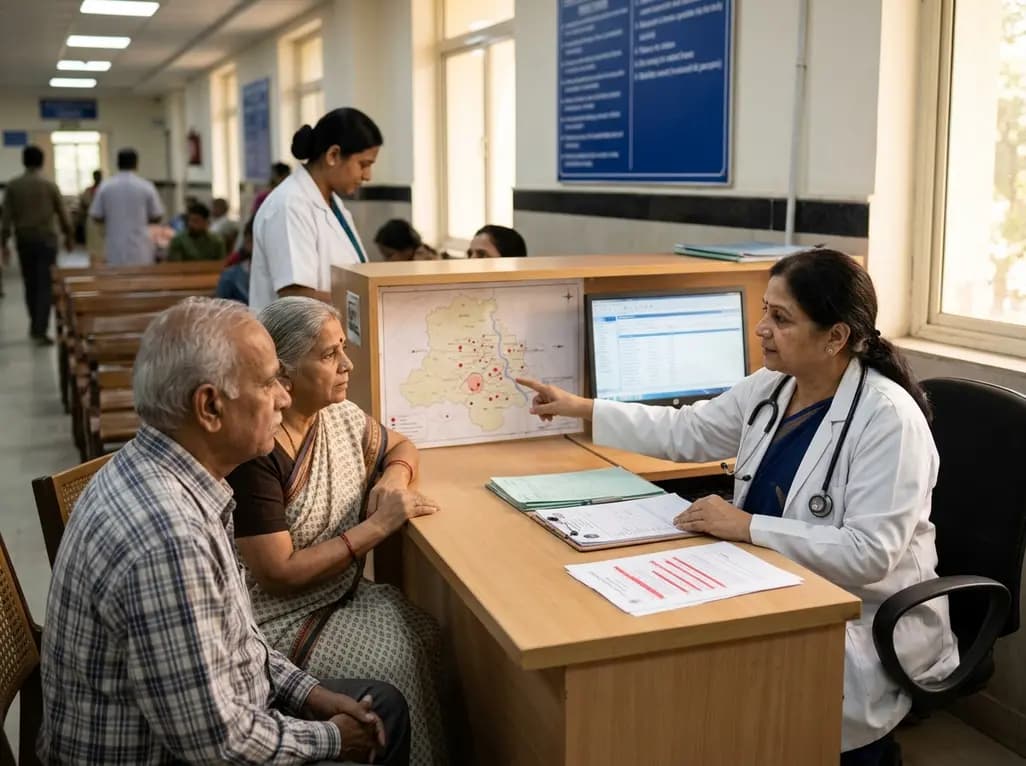
The landscape of central government medical coverage in the national capital recently faced substantial administrative shifts. Consequently, thousands of beneficiaries are navigating updated service rosters following major regulatory actions. The status of CGHS hospital empanelment has altered significantly for numerous primary clinics, diagnostic hubs, and tertiary institutions across Delhi and neighboring urban districts. Healthcare administrators and clinical practitioners must understand these administrative developments to guide eligible families appropriately during routine consultations.
The Central Government Health Scheme recently witnessed a major institutional modification across the National Capital Region. Specifically, the empanelment status of ninety-nine private medical centres officially lapsed on September 16. Authorities clarified that this decisive action did not arise from patient safety failures or poor clinical performance. Instead, these private organizations failed to complete formal renewal protocols under newly revised central administrative directives. Consequently, regulatory authorities removed these establishments from the active service directory after an earlier deadline extension concluded on September 15. The designated empanelment framework requires all participating facilities to execute fresh agreements periodically. Therefore, hospitals that missed the submission deadlines lost their active status immediately. Participating healthcare establishments must now submit fresh applications through designated digital portals to regain authorized recognition. Furthermore, hospital administrators must satisfy updated quality benchmarks, fee schedules, and governance protocols. In addition, healthcare facilities must present relevant accreditation documents, including certified national laboratory and hospital quality credentials. Until these facilities finish complete re-application procedures, they cannot function as accredited network partners. Medical professionals practicing within these institutions should track these administrative developments closely. Clinicians can actively advise patients regarding alternative local options, preventing unexpected administrative complications during outpatient visits.
The recent regulatory transition introduces distinct operational rules for active inpatients versus incoming individuals. Fortunately, central authorities designed specific safeguards to preserve clinical continuity for vulnerable persons. Patients admitted under institutional care prior to September 16 continue to receive their complete treatment course under the standard credit framework. Furthermore, the health ministry explicitly prohibited these institutions from discharging active patients prematurely or denying essential medical interventions. As a result, ongoing intensive care, surgical recovery, and inpatient therapies proceed without financial disruption. However, incoming beneficiaries encounter immediate and rigid operational restrictions. Specifically, de-empanelled facilities cannot register new patients, arrange elective admissions, or process digital pre-authorisations under scheme privileges. Beneficiaries who scheduled upcoming diagnostic scans or elective surgeries must relocate their treatment plans to authorized network centres. Moreover, patients receiving outpatient consultations or recurring investigations without inpatient protection must transfer to active accredited hospitals. Therefore, hospital billing desks and administrative staff must inform visitors promptly about these legal constraints. Attending physicians should assist chronic patients in obtaining updated transfer documentation. Consequently, timely communication prevents severe delays in oncology regimens, cardiology follow-ups, and urgent surgical interventions.
The geographic footprint of this administrative measure spans several major districts within the extensive national capital territory. Consequently, central government employees and retired pensioners across North India feel the practical impact. The affected directory includes prominent tertiary facilities located in Delhi, Noida, Greater Noida, Ghaziabad, Gurugram, Faridabad, and Sonipat. Notably, major multi-specialty centres such as BLK-Max Super Speciality Hospital, Umkal Hospital, and Jeevan Jyoti Hospital appear on the list. Furthermore, regional medical academies like the Noida International Institute of Medical Sciences must also halt fresh scheme admissions. The official list additionally includes Medstar Hospital, SG Hospital, Yashroop Hospital, and dozens of standalone dental and radiologic clinics. As a result, several suburban pockets face a temporary reduction in nearby cashless network access. In response, beneficiaries residing in suburban townships must commute to alternative accredited institutions across municipal borders. Similarly, private diagnostic chains must explain billing modifications to beneficiaries seeking high-end imaging or specialized pathology services. Because regional patient volume will concentrate heavily among remaining accredited facilities, public and empaneled private hospitals must prepare for higher foot traffic. Healthcare administrators should therefore optimize outpatient workflow to accommodate incoming patient relocations seamlessly.
Behind this widespread administrative adjustment lies a comprehensive modernization of the government digital infrastructure. Specifically, authorities are migrating all hospital engagements into the Hospital Engagement Module and Transaction Management System 2.0. This advanced online architecture streamlines claim adjudication, verifies institutional compliance, and eliminates fraudulent invoicing. Consequently, central administrators mandated that all partnering health institutions transition onto the unified National Health Authority software platform. The ministry had previously extended the compliance timeline until mid-September to allow sufficient onboarding time for participating facilities. However, centres that failed to execute updated digital agreements were systematically detached from the digital gateway. Therefore, the portal automatically blocks new authorization requests, beneficiary verifications, and claim submissions for non-renewed establishments. Hospital management teams must now navigate these digital requirements diligently if they wish to restore institutional ties. Furthermore, facilities must upload updated performance bank guarantees and statutory licenses onto the centralized digital interface. National quality accreditations, particularly from hospital and diagnostic quality boards, serve as essential requirements during digital verification. Ultimately, this rigorous digital oversight aims to establish transparent billing mechanisms and improve financial efficiency across public healthcare funds.
For medical practitioners across the region, understanding practical referral alternatives remains essential to patient welfare. Beneficiaries facing sudden disruption require clear guidance from primary wellness centres and treating physicians. When an ongoing clinical investigation falls outside protected inpatient care, clinicians must direct the family toward alternate authorized providers. Furthermore, doctors serving at government wellness centres can issue updated electronic referrals to nearby active network facilities. As a result, chronic patients maintain regular access to vital maintenance medications, chemotherapy infusions, and dialysis sessions. In addition, healthcare organizations must educate patient helpdesks regarding transparent communication. Frontline hospital staff should never turn away emergency patients arbitrarily without providing essential stabilization. If an acute medical crisis occurs, clinical teams must stabilize the individual prior to coordinating formal transfer. Meanwhile, government authorities continue to process fresh empanelment batches to replenish regional healthcare capacity. Numerous multi-specialty facilities have recently joined the approved panel under three-year operational agreements. Consequently, beneficiaries can readily identify alternative empanelled options across adjacent neighborhoods. By maintaining close communication with local wellness centres, clinicians help central government families navigate this regulatory transition with minimal personal anxiety.
Q1: Why were 99 healthcare facilities de-empanelled from the Central Government Health Scheme?
The facilities lost their empanelment status because their formal agreements were not renewed prior to the September 15 deadline. Crucially, the official order indicates that this administrative action does not stem from medical negligence or compromised patient safety standards. Facilities failed to complete the mandatory onboarding procedures required under the updated digital management framework. However, these healthcare organizations retain the opportunity to submit fresh applications once they fulfill all prescribed statutory and quality criteria.
Q2: What happens to CGHS patients who were already admitted before September 16?
Patients admitted to these facilities prior to September 16 retain full protection under existing scheme provisions. Consequently, these inpatients can complete their ongoing medical or surgical treatments under the cashless credit facility without interruption. Health authorities strictly instructed all affected hospitals not to discharge such individuals prematurely or deny necessary interventions. However, these protective measures apply exclusively to existing inpatients, meaning outpatients and new elective admissions must seek alternative empanelled centres.
Q3: How can de-empanelled hospitals regain their official empanelment status under CGHS?
Hospitals and clinics seeking reinstatement must complete a fresh application process through the digital Hospital Engagement Module. In addition, institutions must satisfy updated eligibility criteria, submit required performance bank guarantees, and agree to standardized package tariffs. Furthermore, organizations must demonstrate compliance with quality benchmarks established by national accreditation bodies for healthcare and diagnostics. Once the central empanelment committee reviews and approves the digital submission, the facility signs a new memorandum of agreement to restore active benefits.
Disclaimer: This content is for informational and educational purposes only. It does not constitute medical advice or replace professional judgment. Refer to the latest local and national guidelines for clinical practice.
References

Read summarized clinical updates, watch expert medical content, and earn CME certifications right from your smartphone.
Open your smartphone camera to scan and install.





The Ministry of Health has de-empanelled 99 medical facilities across Delhi-NCR under CGHS due to lapsed renewals. While active inpatients retain coverage, fresh registrations and pre-authorisations have ceased, requiring attending doctors and hospitals to guide patients toward valid network providers promptly.
Today

A cross-sectional study reveals significant gaps in palliative care quality within nursing homes. Physicians report discrepancies between perceived importance and actual delivery in pain relief, psychological support, and existential care, highlighting urgent needs for clinical and systemic improvements.
Today

A ten-year cohort study of ABU case logs reveals that URPS fellowship training significantly drives higher annual case volumes, advanced surgical complexity, and increased female representation in pelvic floor reconstruction, underscoring the vital need for structured subspecialty training.
Today
Cardiovascular-kidney-metabolic (CKM) syndrome links metabolic, renal, and cardiovascular diseases along a shared continuum. This review examines holistic CKM management, PREVENT risk assessment, multi-organ pharmacotherapies like SGLT2i and GLP-1 RAs, and multidisciplinary care models to improve patient outcomes.
Today
Posttraumatic pisotriquetral instability is a rare wrist injury causing severe hypothenar pain and weakness. Explore clinical examination, imaging, and pisiformectomy.
Today
The Italian CardioMET registry evaluated guideline-directed cardioprotective therapy in 2,527 outpatients with type 2 diabetes. Despite high cardiovascular risk, SGLT2 inhibitors and GLP-1 receptor agonists remain underutilized, highlighting the urgent need for multidisciplinary cardiometabolic care.
Today
