.webp&w=384&q=75)

Loading, please wait...
Loading, please wait...
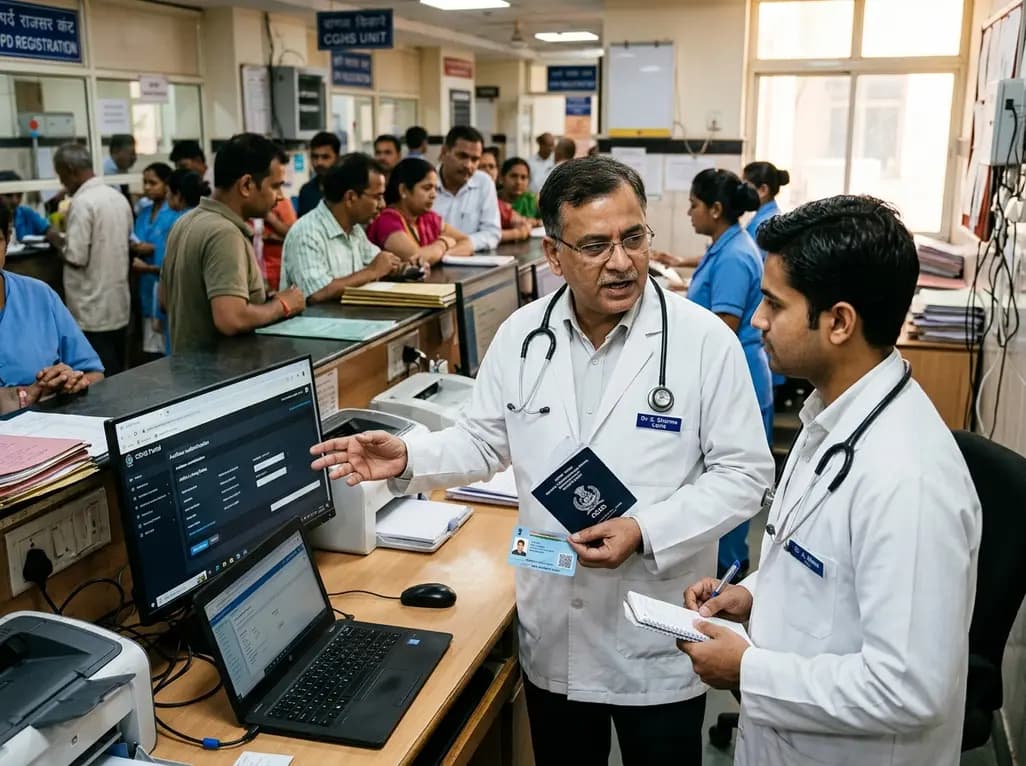
The ongoing discourse surrounding CGHS Aadhaar linking highlights a critical intersection between digital health architecture and administrative equity in India. While biometric verification safeguards targeted public welfare distribution across several national initiatives, health schemes for central civil servants have experienced substantial delays in adopting similar authentication standards. Understanding these structural changes is essential for healthcare providers and clinical administrators who navigate public scheme referrals, empanelment obligations, and patient record management.
Consequently, the controversy around biometric integration reflects conflicting views on scheme governance. The Central Government Health Scheme serves serving employees, pensioners, members of parliament, and retired judicial officers. Over the past decade, administrative circulars consistently mandated the integration of beneficiary credentials with unique biometric identifiers. However, repeated employee representations caused the Ministry of Health and Family Welfare to suspend mandatory compliance.
Furthermore, civil servant associations argue that the program constitutes a contributory scheme rather than a direct benefit transfer initiative. Therefore, they contend that welfare-specific biometric mandates should remain optional. Nevertheless, public finance analyses reveal that national exchequer appropriations fund approximately ninety percent of annual program expenditures. Because patient contributions represent only a fraction of total costs, health economists continue to advocate for equitable biometric authentication rules across all state-supported health mechanisms.
In contrast to civil service beneficiaries, other defense and transport personnel operate under stricter accountability measures. Both the Ex-Servicemen Contributory Health Scheme and the Indian Railway Health Service have enforced mandatory biometric identification. These agencies require systematic authentication to eliminate duplicate cards and verify ongoing eligibility.
Additionally, nationwide rural development programs require rigorous biometric verification before releasing modest daily wages. Health analysts argue that maintaining voluntary status for administrative beneficiaries while enforcing mandatory rules on underprivileged citizens creates a perceptible regulatory divide. In addition, comparative spending data reveals that per-capita expenditure remains noticeably higher within central civil service dispensaries than in defense facilities. Standardizing credential verification therefore represents a crucial step toward establishing administrative parity among publicly supported health systems across the country.
Moreover, institutional governance directly influences clinical practice and resource allocation. Without periodic beneficiary re-authentication, obsolete pensioner profiles dating back to initial computerization in 2005 remain active within hospital databases. This persistent data gap increases the risk of fraudulent billing, unauthorized dispensary access, and illegitimate pharmacy disbursements.
Consequently, secondary and tertiary empanelled hospitals struggle to verify dependent eligibility during elective and emergency admissions. When empanelled facilities submit cashless claims for deceased or ineligible individuals, administrative audits eventually trigger claim denials and protracted disputes. Therefore, structured credential integration provides clinical teams with verifiable patient records. By removing obsolete cards from hospital registries, administrators can allocate constrained clinical resources to authentic recipients, thereby safeguarding hospital financial viability and maintaining regulatory compliance during internal health audits.
Simultaneously, the union government envisioned integrating beneficiary registries with the Ayushman Bharat Digital Mission through unique health account identification numbers. Under directives issued in early 2024, authorities mandated connecting beneficiary profiles with fourteen-digit health accounts created via biometric authentication. However, subsequent circulars placed compulsory enforcement in abeyance, rendering digital linking entirely voluntary for personnel.
Despite this administrative pause, digital integration offers undeniable advantages for modern healthcare delivery. A synchronized digital account permits seamless laboratory result sharing, longitudinal prescription tracking, and interoperable clinical summaries across public and private hospitals. Furthermore, interoperability prevents duplicate diagnostic investigations, reduces adverse drug interactions, and accelerates emergency referrals. As health systems transition toward integrated electronic health records, establishing unified patient registries remains a foundational requirement for improving clinical continuity and diagnostic efficiency nationwide.
Ultimately, treating physicians and empanelled hospital networks face distinct operational challenges amidst these shifting policy directives. Because card validation remains voluntary, hospital reception desks must rely on physical plastic cards and outdated manual paperwork. As a result, processing times at registration desks lengthen, producing significant administrative friction during outpatient registrations.
Accordingly, empanelled healthcare providers must maintain robust internal verification protocols to prevent fraudulent consultations and pharmacy leakages. Clinical directors should ensure that billing departments reconcile beneficiary identities meticulously before initiating expensive inpatient interventions. Although executive unions continue to resist mandatory digital linkages, private partner hospitals benefit significantly from voluntary digital health account creation. Encouraging patients to synchronize their records proactively reduces reimbursement disputes, simplifies claims settlement, and elevates overall clinical documentation standards across empanelled healthcare ecosystems.
Q1: What is the current regulatory status of CGHS Aadhaar linking for central government beneficiaries?
Currently, the linkage of beneficiary identification with biometric credentials and digital health accounts remains voluntary. Although the central government issued directives mandating synchronization in early 2024, authorities subsequently placed compulsory enforcement in abeyance following representations from employee associations. Beneficiaries may still choose to synchronize their credentials voluntarily at wellness centers to facilitate smoother digital access.
Q2: Why do policy experts recommend mandatory identity verification in central public health schemes?
Policy experts advocate mandatory verification because the national treasury finances approximately ninety percent of program expenditures. Without systematic periodic verification, active databases carry obsolete records of deceased pensioners or ineligible dependents. Universal biometric authentication eliminates duplicate entries, prevents identity misuse, curbs fraudulent billing, and ensures equitable stewardship of public healthcare financial resources.
Q3: How does linking health beneficiary records to digital IDs benefit clinical hospital workflows?
Synchronizing beneficiary profiles with digital health identifiers allows empanelled hospitals to access longitudinal medical histories, past prescriptions, and previous diagnostic reports instantly. This seamless data exchange minimizes redundant testing, avoids harmful polypharmacy, simplifies cashless admission verification, and significantly shortens administrative processing time during both elective consultations and acute clinical emergencies.
Disclaimer: This content is for informational and educational purposes only. It does not constitute medical advice or replace professional judgment. Refer to the latest local and national guidelines for clinical practice.
References

Read summarized clinical updates, watch expert medical content, and earn CME certifications right from your smartphone.
Open your smartphone camera to scan and install.





The debate over Aadhaar and ABHA linking in the Central Government Health Scheme highlights persistent systemic challenges in digital health integration, beneficiary authentication, and public expenditure oversight across India.
last month

Explore vital recurrent stroke predictors in lacunar stroke patients managed with intensive blood pressure lowering. This analysis examines trial findings from SPS3 to uncover residual vascular risks, metabolic factors, and targeted secondary prevention strategies for high-risk neurological patients.
Today

Odisha has established India's first state-level clinical protocol specifically tailored for pregnant women with sickle cell disease. Developed with NHM and UNICEF, the framework provides structured antenatal screening, crisis mitigation, standardized referral pathways, and specialized interdisciplinary care.
Today

The Directorate General of Health Services directs Indian states to halt the hazardous reuse and reprocessing of single-use medical devices. Discover regulatory implications under the Drugs and Cosmetics Act, critical infection risks, legal liabilities, and operational changes required across clinical specialties.
Today

A randomized controlled trial demonstrates that an eight-week dual-task training intervention significantly improves static and dynamic postural control over standard balance exercises in individuals with chronic ankle instability, addressing critical neurocognitive deficits during athletic and daily activities.
Today

India is advancing preventive healthcare by integrating genomics, artificial intelligence, and quantum technologies. With the SANGAM programme sequencing one million Indian genomes, clinicians can unlock personalized therapies, detect cardiometabolic risks early, and curb the burden of diabetes and heart disease.
Today
