

Loading, please wait...
Loading, please wait...

When treating degenerative spinal cord compression, cervical spondylotic myelopathy surgery serves as the primary intervention to arrest progressive neurological deterioration. Surgeons traditionally evaluate surgical success through objective neurological examinations and validated patient-reported outcome measures. Specifically, clinicians routinely utilize the Neck Disability Index to track postoperative functional recovery and residual neck impairment. In modern clinical research, achieving the minimal clinically important difference denotes a quantifiable, clinically meaningful benefit. However, statistical improvements on standardized disability questionnaires do not always mirror patient satisfaction. Indeed, an intriguing discordance often emerges between numerical functional scores and subjective individual perceptions of surgical value. Consequently, spine specialists must look beyond generic disability metrics to evaluate total therapeutic efficacy. Understanding why some patients remain discontented despite substantial functional improvement is vital for spine practices worldwide. Therefore, analyzing robust registry data provides crucial insights into long-term outcomes and patient expectations. By examining multi-year clinical trajectories, clinicians can better appreciate the holistic determinants of surgical success. Furthermore, this broader clinical perspective helps surgical teams tailor their preprocedural counseling to individual lifestyle demands and psychological needs.
The Neck Disability Index represents one of the most widely accepted instruments for assessing cervical spine disability. This ten-item patient questionnaire measures pain intensity, personal care capabilities, headache severity, lifting capacity, and sleep disruption. In addition, it evaluates vocational productivity, reading ability, driving tolerance, and social functioning. Clinicians calculate total scores ranging from zero to one hundred percent to define the degree of physical limitation. To interpret these scores meaningfully, researchers apply the minimal clinically important difference threshold. This threshold defines the smallest change in outcome that an individual patient recognizes as beneficial. Consequently, achieving the designated difference implies that the surgical decompression provided measurable physical relief. Nevertheless, an inherent limitation exists when relying entirely on threshold scores. Fixed numerical benchmarks cannot capture personalized personal values, employment stress, or nuanced domestic demands. Moreover, a patient may recover motor strength but still experience persistent emotional or lifestyle burdens. Because these complex personal dimensions evade questionnaire scores, outcome measures occasionally misclassify true surgical recovery. Thus, spine teams must recognize that numerical recovery does not automatically represent comprehensive life satisfaction.
To investigate long-term surgical concordance, the multi-center Spine CORe study group analyzed prospective Quality Outcomes Database records. The investigators tracked 1,085 individuals undergoing decompression for degenerative myelopathy across fourteen high-volume surgical centers. After five years of rigorous follow-up, researchers successfully analyzed comprehensive disability and satisfaction data for 782 patients. Notably, 497 patients, representing nearly sixty-four percent of the cohort, achieved the minimal clinically important difference in their functional disability scores. Among these successful achievers, an overwhelming ninety-three percent reported full satisfaction on the North American Spine Society satisfaction index. However, seven percent of these patients remained dissatisfied despite achieving clear functional milestones. This specific subgroup of thirty-four individuals highlights an important clinical phenomenon known as outcome discordance. Furthermore, comparative analyses revealed striking behavioral and lifestyle distinctions between satisfied and dissatisfied responders. Dissatisfied patients exhibited significantly higher rates of active cigarette smoking compared to their satisfied peers. Additionally, dissatisfied individuals demonstrated substantially lower participation rates in regular outside recreational activities. Therefore, these findings emphasize that long-term satisfaction involves far more than simple mechanical decompression of the spinal cord.
The emergence of dissatisfaction among functionally improved individuals raises critical questions regarding surgical success criteria. Specifically, lifestyle factors appear to exert a powerful influence on subjective well-being following complex spinal procedures. Active tobacco consumption impairs microvascular perfusion, impedes bone union, and amplifies persistent pain perception. Consequently, nicotine dependence can diminish perceived surgical benefits even when objective neurological recovery occurs. In addition, physical inactivity and social isolation heavily degrade postoperative satisfaction. When patients cannot resume community engagement or meaningful hobbies, they often deem the surgical intervention inadequate. Furthermore, unrealistic preoperative expectations may drive persistent dissatisfaction. Many individuals anticipate a complete return to youthful physiological function rather than realistic neurological stabilization. When minor sensory deficits or residual neck stiffness persist, patients may feel profound disappointment. Thus, psychological distress, chronic systemic inflammation, and unmet functional aspirations collectively erode patient satisfaction. Spine specialists must therefore address these systemic risk factors before and after intervention. Moreover, understanding these behavioral dynamics enables clinicians to identify vulnerable individuals early during postoperative rehabilitation. Clinicians can thereby intervene proactively to support holistic physical and emotional healing.
These five-year registry findings deliver immediate practical implications for orthopedic surgeons, neurosurgeons, and primary care physicians. First, surgical teams should avoid promising absolute functional restoration when presenting cervical spondylotic myelopathy surgery to patients. Instead, clinicians must frame decompressive surgery primarily as a protective measure to halt progressive neurological destruction. Second, surgical teams must incorporate aggressive lifestyle modification protocols into routine preoperative planning. For instance, structured smoking cessation programs and cardiovascular prehabilitation can markedly enhance long-term patient-reported satisfaction. Additionally, healthcare providers should evaluate mental health comorbidities, including depression and health-related anxiety, before scheduling elective procedures. Multidisciplinary teams, including physical therapists and pain specialists, play an indispensable role in maintaining functional mobility. By encouraging regular physical activity, clinicians help patients regain social participation and outdoor independence. Ultimately, holistic perioperative care aligns clinical goals with personal patient values, bridging the gap between statistical outcomes and subjective fulfillment. Furthermore, routine long-term follow-up beyond the standard two-year window ensures sustained support as patients navigate age-related physical challenges. Consequently, comprehensive care teams can foster durable contentment across decades of survivorship.
No, achieving the minimal clinically important difference does not guarantee satisfaction. Although ninety-three percent of patients who achieved this threshold reported positive satisfaction at five years, seven percent remained dissatisfied. Consequently, numerical functional gains do not always address individual expectations, lifestyle limitations, or persistent subjective discomfort.
Dissatisfaction among functionally improved patients strongly correlates with active tobacco smoking and reduced participation in outdoor recreational activities. Additionally, unrealistic preoperative expectations, unaddressed mental health disorders, and persistent mild neurological symptoms significantly impair subjective well-being. These unmeasured lifestyle and psychological burdens outweigh simple functional score improvements.
Surgeons can minimize discordance by providing realistic preoperative education, emphasizing neurological preservation rather than complete symptom eradication. In addition, clinical teams should institute structured smoking cessation programs and encourage post-surgical physical reconditioning. Addressing behavioral health and supporting active community participation ensures that functional improvements translate into enduring patient satisfaction.
Disclaimer: This content is for informational and educational purposes only and does not constitute formal medical advice. Refer to the latest local and national guidelines for clinical practice.
References
Alan N et al. Is there discordance between achieving the minimal clinically important difference in Neck Disability Index score and patient satisfaction after surgery for cervical spondylotic myelopathy? A Spine CORe™ 5-year analysis of QOD data. Neurosurg Focus. 2026 May 01. doi: 10.3171/2025.12.FOCUS25946. PMID: 42066376.
Kim PK, Tahir I, McGirt MJ, et al. Is baseline Neck Disability Index a predictor of 5-year postoperative satisfaction in cervical spondylotic myelopathy? A Spine CORe™ analysis of QOD data. Neurosurg Focus. 2026;60(5):E12. doi: 10.3171/2025.12.FOCUS25944.
Fehlings MG, Tetreault LA, Riew KD, et al. A Clinical Practice Guideline for the Management of Patients With Degenerative Cervical Myelopathy: Recommendations for Patients With Mild, Moderate, and Severe Disease and Nonmyelopathic Patients With Evidence of Cord Compression. Global Spine J. 2017;7(3 Suppl):70S-83S. doi: 10.1177/2192568217701914.

Read summarized clinical updates, watch expert medical content, and earn CME certifications right from your smartphone.
Open your smartphone camera to scan and install.





A 5-year Spine CORe analysis of 782 cervical spondylotic myelopathy patients reveals that 7% of those achieving the Neck Disability Index MCID remain dissatisfied. Active smoking and lack of outdoor activities strongly predict dissatisfaction, underscoring the need for holistic perioperative care.
Today

Review how tailored exercise programs benefit frail older patients with heart failure. Explore pathophysiological mechanisms, individualized training prescriptions, and strategies to overcome adherence barriers in clinical practice.
Today
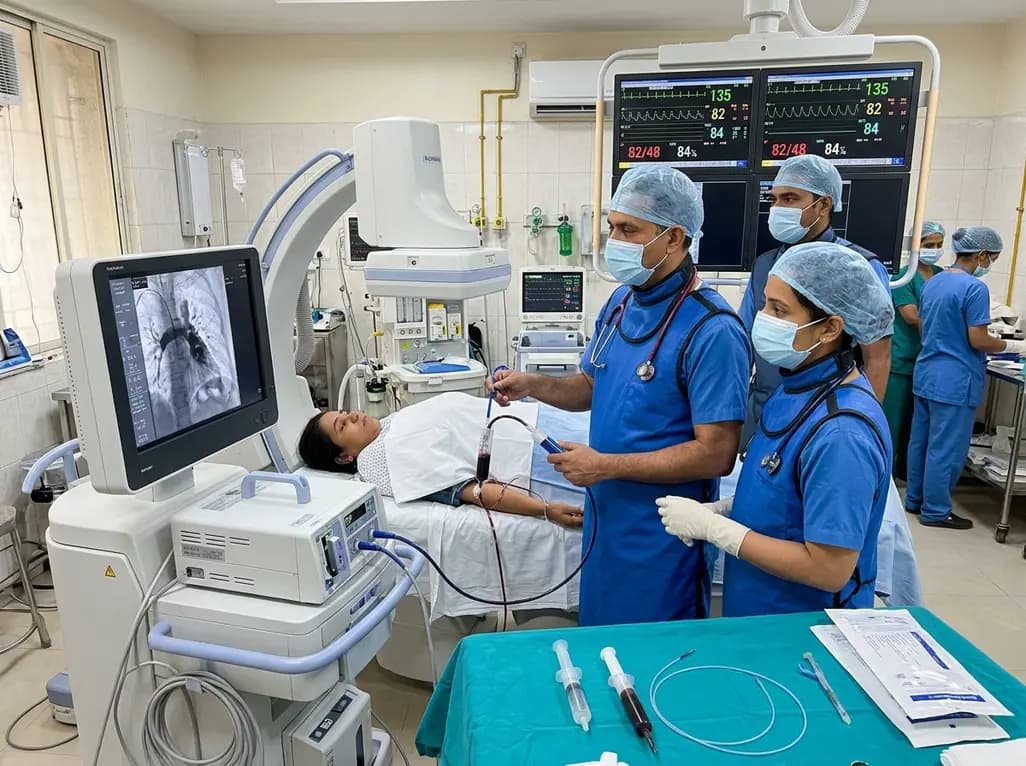
In high-risk pulmonary embolism complicated by severe anemia and active uterine bleeding, systemic thrombolysis is contraindicated. Large-bore aspiration thrombectomy provides rapid hemodynamic rescue without fibrinolysis, supported by inferior vena cava filter placement and multidisciplinary critical care.
Today

A cross-sectional study in Zanzibar reveals that 46.5% of adults with type 2 diabetes experience multidomain autonomic dysfunction on the COMPASS-31 tool, primarily orthostatic intolerance, while 45.9% exhibit cardiovascular autonomic neuropathy, highlighting the urgent need for structured clinical screening.
Today

This comparative study evaluates posterior labral tears with and without glenohumeral instability, highlighting distinct demographic patterns, MRI underestimation in stable shoulders, and successful arthroscopic repair outcomes.
Today

A recent case-control study reveals that urinary clusterin provides superior diagnostic performance for early diabetic kidney disease detection in pediatric type 1 diabetes mellitus, identifying tubular damage before conventional microalbuminuria occurs.
Today
