.webp&w=384&q=75)

Loading, please wait...
Loading, please wait...

Cervical cancer remains a major public health concern, particularly in low- and middle-income countries like India. Consequently, identifying cervical intraepithelial lesions risk factors is vital for effective screening. A recent case-control study analyzed familial, sociodemographic, and sexual history factors associated with these lesions. Surprisingly, some traditional factors like smoking or parity showed no association in this specific population. Instead, the researchers found that a history of abnormal cytology and a family history of cervical cancer were the strongest predictors.
Specifically, women with a history of abnormal cytology faced a significantly higher risk of developing squamous intraepithelial lesions (SIL). This finding underscores the critical importance of rigorous follow-up for every abnormal result. Furthermore, a family history of cervical cancer nearly tripled the likelihood of identifying these lesions. These results highlight that risk profiles can vary significantly between different geographic regions. For example, in the Indian context, factors such as low education and early age at delivery are also frequently cited in clinical research.
However, the primary takeaway for clinicians remains the same across all populations. You must prioritize the monitoring of patients with a history of cervical cell changes. Consistent screening and context-sensitive approaches are necessary to reduce the global burden of disease. This study reminds us that while HPV is the causal agent, clinical history often serves as the best map for identifying those at highest risk.
The strongest predictor is a previous history of abnormal cytology, which carries a very high odds ratio for the presence of future lesions.
Yes, research shows that women with a family history of cervical cancer have a significantly higher risk of developing intraepithelial lesions.
Disclaimer: This content is for informational and educational purposes only. It is not a substitute for professional medical advice, diagnosis, or treatment. Always seek the advice of your physician or other qualified health provider with any questions you may have regarding a medical condition. Refer to the latest local and national guidelines for clinical practice.
References
Pérez-Santomé I et al. [Risk factors for cervical intraepithelial lesions among beneficiaries of second-level care]. Rev Med Inst Mex Seguro Soc. 2026 May 06. doi: 10.5281/zenodo.18715370. PMID: 42090725.
Umakanthan S, Bukelo MM, Ghany S, Fraser J. The Correlation of Papanicolaou Smears and Clinical Features to Identify the Common Risk Factors for Cervical Cancer: A Retrospective and Descriptive Study from a Tertiary Care Hospital in Trinidad. Cureus. 2023 Mar 15;15(3):e36334.
Nethra NR, Hiremath R, Chandramouli, Muralidhar. Risk factors and prevalence of cervical squamous intraepithelial lesions among women in south India: A community-based cross-sectional study. J Family Med Prim Care. 2022 Jan;11(1):153-158.

Read summarized clinical updates, watch expert medical content, and earn CME certifications right from your smartphone.
Open your smartphone camera to scan and install.





History of abnormal cytology and family history are major risk factors for cervical lesions, highlighting the need for context-sensitive follow-up....
5 months ago
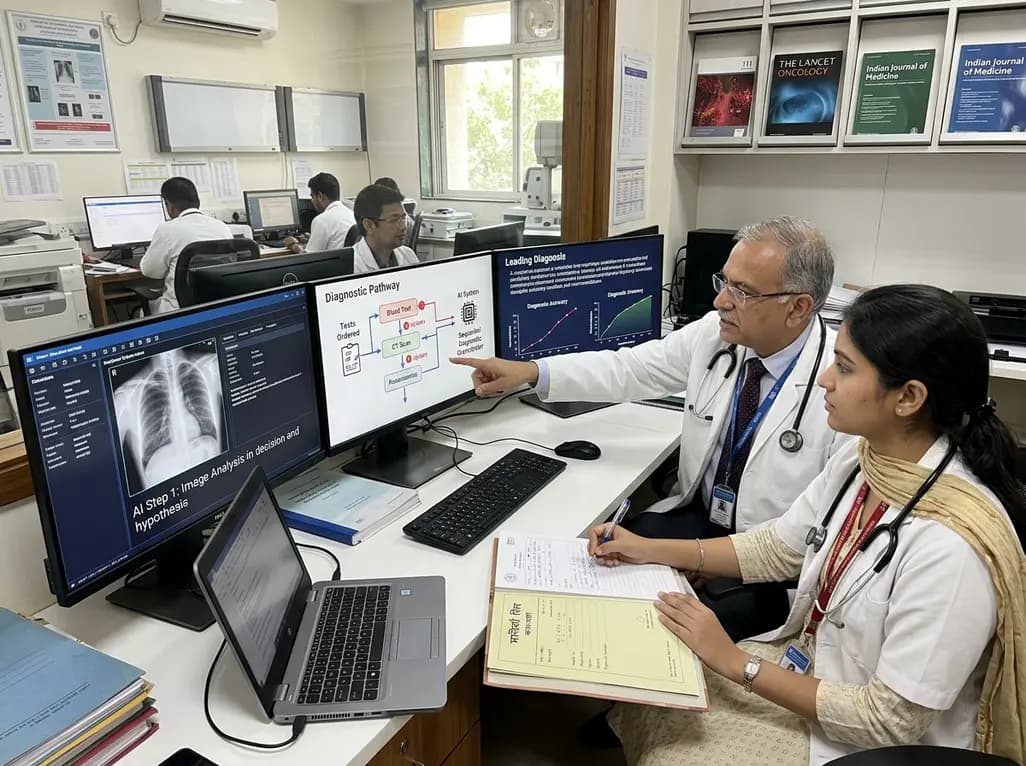
A breakthrough peer-reviewed study demonstrates that a sequential AI diagnosis system can mirror real-world clinical reasoning. By ordering stepwise tests and updating hypotheses dynamically, this multi-agent orchestrator achieved superior diagnostic accuracy while reducing investigative costs.
Today

A prenatal case highlights severe glutaric acidemia type II presenting as bilateral hyperechoic cystic kidneys at 18 weeks. Whole-exome sequencing revealed a novel homozygous ETFDH frameshift variant, demonstrating the power of rapid genetic testing in fetal renal anomalies.
Today

Review how tailored exercise programs benefit frail older patients with heart failure. Explore pathophysiological mechanisms, individualized training prescriptions, and strategies to overcome adherence barriers in clinical practice.
Yesterday

This comparative study evaluates posterior labral tears with and without glenohumeral instability, highlighting distinct demographic patterns, MRI underestimation in stable shoulders, and successful arthroscopic repair outcomes.
Yesterday

A clinical study demonstrates that early intervention with tocilizumab, either as monotherapy or bridged with corticosteroids, achieves significant proptosis reduction and resolves active inflammation in treatment-naive thyroid eye disease.
Yesterday
