

Loading, please wait...
Loading, please wait...

Acute cervical artery dissection represents a leading cause of ischemic stroke among young and middle-aged adults. Therefore, understanding vascular recovery patterns is essential for clinical decision-making. In neurovascular medicine, cervical artery dissection recanalization serves as a vital prognostic marker for arterial healing and functional recovery. The sudden development of an intramural hematoma frequently compromises the arterial lumen, creating high-grade luminal stenosis or occlusion. Consequently, clinicians must evaluate both the speed and likelihood of successful lumen restoration.
Historically, multicenter data describing six-month vascular outcomes remained scarce and heterogeneous. Physicians regularly debated whether persistent arterial narrowing posed prolonged thromboembolic risks for patients. Moreover, therapeutic choices between antiplatelet agents and anticoagulants often relied on empirical assumptions rather than longitudinal evidence. Fortunately, contemporary international registries provide robust insights into these post-dissection vascular pathways. By reviewing standardized serial imaging, investigators have precisely quantified how damaged arteries remodel over time. Furthermore, identifying these recovery timelines assists clinicians in scheduling follow-up neuroimaging examinations. Thus, examining luminal restitution refines acute management and secondary stroke prevention protocols across tertiary care centers.
A recent international multicenter cohort study provides clear evidence regarding six-month vascular recovery. Specifically, investigators analyzed 1,095 patients presenting with single-vessel cervical artery dissection causing acute luminal stenosis. All participants completed standardized vascular imaging at baseline and at the six-month clinical follow-up. Remarkably, 57.9 percent of these individuals achieved complete arterial recanalization within six months. This finding indicates that more than half of affected arteries experience robust anatomical healing.
In addition, researchers utilized an accelerated failure time Weibull model to analyze the precise trajectory of luminal restoration. They observed that most vascular remodeling occurs within the initial three months following the acute dissection event. Afterward, the velocity of lumen restoration gradually plateaus. However, partial recanalization also occurred in a substantial subset of the remaining cohort. Consequently, these findings reassure clinicians that vessel wall repair progresses favorably in most patients. Furthermore, this large international sample reinforces the prognostic reliability of six-month vascular imaging in clinical practice. Therefore, routine follow-up protocols can accurately categorize long-term vascular stability.
Multivariable logistic regression revealed distinct demographic and imaging variables that independently predict vascular healing. First, patient age demonstrated a strong inverse relationship with complete lumen restoration. Specifically, each additional year of age reduced the odds of complete recanalization by approximately three percent. Thus, younger individuals exhibit a significantly higher biological propensity for robust vascular remodeling. Investigators hypothesize that preserved endothelial elasticity and superior tissue regeneration explain this youthful advantage.
Moreover, baseline imaging characteristics heavily influenced subsequent luminal patency. Patients presenting with complete occlusion showed reduced likelihoods of full recovery compared to those with moderate narrowing. Similarly, the specific anatomical location of the dissection played a measurable role in vessel reopening. In contrast, cardiovascular risk factors like hypertension or diabetes did not independently prevent lumen restoration. Therefore, clinicians should prioritize anatomical baseline severity and age rather than traditional vascular comorbidities when predicting arterial repair. Accordingly, individualized risk stratification helps guide patient counseling during rehabilitation. Furthermore, understanding these predictive factors allows clinicians to tailor imaging surveillance schedules appropriately.
Beyond anatomical curiosity, arterial patency directly impacts long-term clinical outcomes. In this international investigation, researchers compared ischemic recurrence rates between patients with and without complete lumen recovery. Importantly, the overall risk of recurrent ischemic stroke remained remarkably low across the entire cohort. Most recurrent thromboembolic events occurred early during the acute phase rather than during late follow-up.
Furthermore, patients who achieved complete recanalization demonstrated minimal risk of secondary ischemic events. Persistent arterial stenosis or occlusion, however, did not cause an excessive surge in late ischemic strokes either. Consequently, chronic residual narrowing appears to carry a relatively benign subsequent trajectory under appropriate medical therapy. This observation suggests that mature intimal scars and stabilized pseudoaneurysms rarely generate fresh distal emboli. Nevertheless, clinicians must maintain diligent clinical surveillance during the initial vulnerable weeks. As a result, aggressive antithrombotic management during the hyperacute window provides the greatest protection against recurrent cerebral infarction. Additionally, these findings reassure healthcare teams that persistent structural irregularities do not mandate invasive rescue interventions in asymptomatic individuals.
These multicenter findings offer practical guidance for antithrombotic selection and imaging surveillance schedules. Currently, international guidelines endorse either antiplatelet therapy or therapeutic anticoagulation for acute cervical dissection. Because complete recanalization occurs in nearly sixty percent of patients by six months, serial vascular imaging provides critical clinical milestones. Specifically, clinicians should perform non-invasive vascular imaging at three to six months following symptom onset.
Moreover, demonstrating complete lumen restoration allows safe de-escalation of intensive antithrombotic regimens. If follow-up imaging confirms vessel resolution, physicians can confidently transition patients to standard single antiplatelet prophylaxis. Conversely, in patients with persistent severe stenosis or dissecting pseudoaneurysms, clinicians should maintain extended antiplatelet coverage. In addition, invasive endovascular stenting remains reserved strictly for patients with recurrent symptoms despite medical therapy. Therefore, objective imaging evidence directly informs therapeutic duration and reduces unnecessary prolonged anticoagulation. Ultimately, adopting this structured approach minimizes bleeding complications while preventing secondary cerebrovascular events. Furthermore, regular vascular follow-up reassures patients and ensures evidence-based, personalized neurovascular care.
Approximately 58 percent of patients achieve complete arterial recanalization within six months after acute cervical artery dissection. Most vessel wall remodeling and lumen restoration take place during the first three months. Subsequent recanalization rates gradually plateau thereafter, although partial lumen restoration occurs in many remaining patients.
Advancing age independently reduces the likelihood of achieving complete recanalization. In multivariable analyses, each additional year of age decreases the odds of complete healing by approximately three percent. Younger individuals demonstrate enhanced vascular elasticity and intrinsic tissue repair mechanisms, which facilitate more effective and rapid arterial lumen reconstruction.
Recurrent ischemic stroke remains rare after the acute phase of cervical artery dissection. Even among patients with persistent arterial narrowing or non-recanalized vessels, long-term stroke recurrence rates remain remarkably low under medical therapy. Initial early stabilization with appropriate antithrombotic medications provides the principal defense against secondary ischemic events.
Disclaimer: This content is for informational and educational purposes only. It does not constitute medical advice, diagnosis, or treatment. Healthcare professionals should rely on their clinical judgment and review complete prescribing information and medical literature before making management decisions. Guidelines and approved indications may vary by geographic region and regulatory agency. Refer to the latest local and national guidelines for clinical practice.
References

Read summarized clinical updates, watch expert medical content, and earn CME certifications right from your smartphone.
Open your smartphone camera to scan and install.





A multicenter international study of 1,095 patients reveals that 57.9% achieve complete cervical artery dissection recanalization by 6 months. Younger age predicts higher recanalization rates, while recurrent stroke risks remain remarkably low, guiding optimal follow-up imaging and antithrombotic therapy.
Today

Review how tailored exercise programs benefit frail older patients with heart failure. Explore pathophysiological mechanisms, individualized training prescriptions, and strategies to overcome adherence barriers in clinical practice.
Today
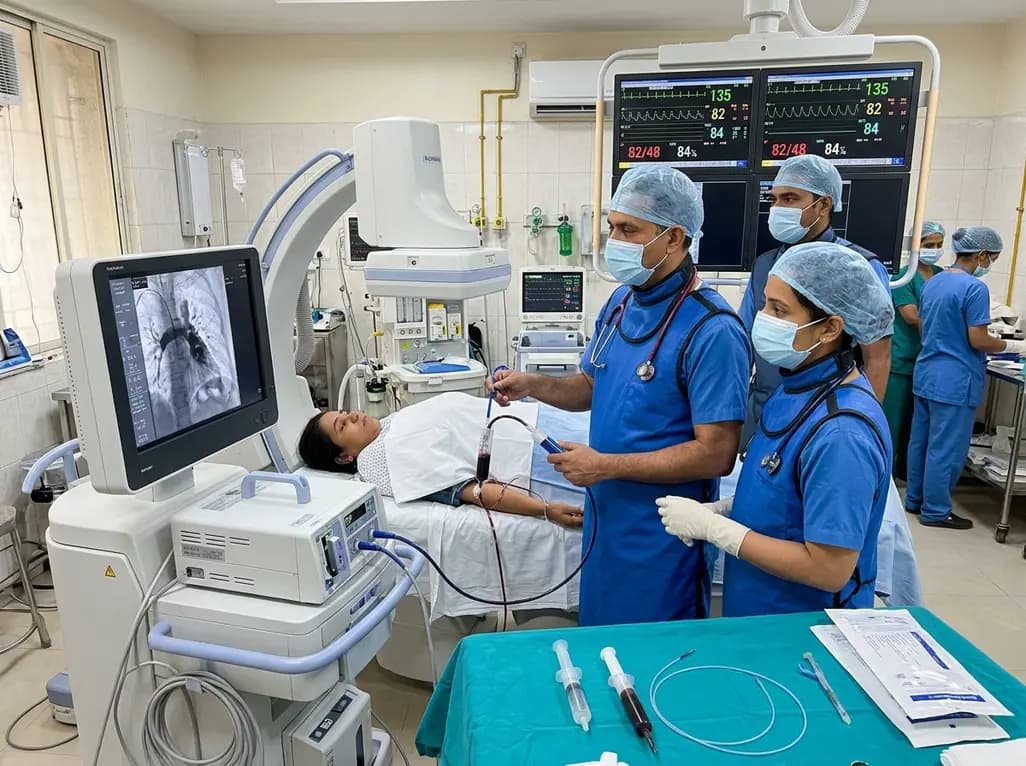
In high-risk pulmonary embolism complicated by severe anemia and active uterine bleeding, systemic thrombolysis is contraindicated. Large-bore aspiration thrombectomy provides rapid hemodynamic rescue without fibrinolysis, supported by inferior vena cava filter placement and multidisciplinary critical care.
Today

A cross-sectional study in Zanzibar reveals that 46.5% of adults with type 2 diabetes experience multidomain autonomic dysfunction on the COMPASS-31 tool, primarily orthostatic intolerance, while 45.9% exhibit cardiovascular autonomic neuropathy, highlighting the urgent need for structured clinical screening.
Today

This comparative study evaluates posterior labral tears with and without glenohumeral instability, highlighting distinct demographic patterns, MRI underestimation in stable shoulders, and successful arthroscopic repair outcomes.
Today

A recent case-control study reveals that urinary clusterin provides superior diagnostic performance for early diabetic kidney disease detection in pediatric type 1 diabetes mellitus, identifying tubular damage before conventional microalbuminuria occurs.
Today
