.webp&w=384&q=75)

Loading, please wait...
Loading, please wait...

Moyamoya disease and moyamoya syndrome present severe hemodynamic challenges for vascular neurologists and neurosurgeons. These unique, progressive arteriopathies trigger severe bilateral stenosis across the terminal internal carotid arteries and adjacent branches. Consequently, the brain recruits fragile, dilated microvascular collateral channels that resemble puffs of smoke on diagnostic angiograms. Although routine neuroimaging reliably identifies luminal stenosis, it fails to quantify dynamic cerebrovascular physiology. Specifically, traditional assessments measure static vascular anatomy and regional tissue perfusion without testing dynamic real-time autoregulatory competence. Intact cerebral autoregulation stabilizes cerebral blood flow despite continuous fluctuations in systemic arterial blood pressure. However, progressive chronic arterial narrowing exhaustively consumes downstream vasodilatory capacity in chronically hypoperfused territories. Therefore, compromised vascular reserves leave patients acutely susceptible to hemodynamic failure and ischemic stroke during everyday blood pressure variations. Additionally, sudden surges in arterial pressure can rupture delicate collateral vessels, causing life-threatening intracerebral hemorrhage. Comprehensive physiological assessment of dynamic flow regulation provides critical clinical insights beyond baseline anatomic imaging. Thus, evaluating these mechanisms is vital for preventing stroke and tailoring medical interventions in affected individuals.
Under physiological conditions, cerebral autoregulation preserves constant capillary blood flow despite substantial shifts in mean arterial pressure. Intrinsic myogenic responses, autonomic innervation, and metabolic signals coordinate vascular resistance across terminal pial arterioles. However, progressive chronic steno-occlusive arteriopathy profoundly disrupts this delicate protective equilibrium. Because large-vessel stenoses severely restrict baseline inflow, distal microvascular beds dilate maximally to sustain adequate parenchymal oxygen delivery. Consequently, downstream arteriolar vessels deplete their compensatory vasodilatory reserve, leaving them unable to dilate further during transient hypotensive episodes. When systemic blood pressure declines, cerebral blood flow drops passively, directly inducing regional tissue ischemia. Furthermore, damaged autoregulatory mechanisms prevent arterioles from constricting appropriately when systemic arterial pressure spikes. As a result, unchecked arterial pressure waves transmit directly into thin-walled, fragile basal collateral networks. This mechanical stress can precipitate blood-brain barrier disruption, vasogenic edema, and catastrophic intracranial hemorrhage. Standard acetazolamide or hypercapnia challenges measure static cerebrovascular reserve, but they cannot assess spontaneous dynamic pressure buffering. Therefore, continuous dynamic autoregulation monitoring reveals vital functional vulnerabilities that conventional stress tests routinely miss.
A prospective cross-sectional study conducted by Webb and colleagues provides compelling clinical evidence regarding autoregulatory failure in moyamoya arteriopathy. The researchers enrolled fourteen adult patients with moyamoya disease or syndrome and fifteen healthy, age- and sex-matched control participants. They recorded continuous middle cerebral artery blood flow velocities using transcranial doppler ultrasound alongside noninvasive beat-to-beat arterial blood pressure tracings. To evaluate dynamic cerebral autoregulation, the team applied transfer function analysis adhering to International Cerebral Autoregulation Research Network guidelines. They quantified gain, phase shift, and coherence across very low, low, and high-frequency spectral bands. Notably, patients with moyamoya exhibited significantly diminished phase shifts in both very low frequency and low frequency ranges compared to healthy controls. A lower phase shift demonstrates that arterial pressure oscillations transmit directly into cerebral circulation without rapid autoregulatory buffering. In contrast, healthy individuals showed robust positive phase leads, demonstrating effective, instantaneous arteriolar resistance adjustments. Furthermore, these dynamic phase deficits occurred even when baseline resting velocities appeared deceptively normal. Consequently, transfer function analysis detects subclinical hemodynamic failure that routine clinical assessments overlook.
These physiological findings carry profound diagnostic and therapeutic implications for clinicians managing patients with moyamoya vasculopathy. In healthy populations, robust autoregulatory capacity readily buffers transient systemic hypotension, maintaining stable cerebral perfusion. In stark contrast, moyamoya patients with impaired dynamic autoregulation rely almost entirely on systemic blood pressure to drive cerebral flow. Therefore, even modest blood pressure reductions can induce critical hypoperfusion, triggering transient ischemic attacks or completed watershed strokes. Clinicians must consequently avoid aggressive blood pressure reduction during acute hospital admissions. Elevating systemic pressure often functions as a necessary compensatory physiological response to overcome proximal stenoses. However, lowering systemic blood pressure toward standard normative guidelines can inadvertently precipitate catastrophic ischemic damage. Conversely, severe unmanaged hypertension exposes fragile collateral vessels to hazardous shear stress, heightening hemorrhagic rupture risks. Treating physicians must therefore identify personalized, narrow blood pressure targets that balance tissue perfusion against vessel rupture. Moreover, clinicians should implement bedside hemodynamic monitoring in intensive care units to detect sudden autoregulatory failure and guide precision hemodynamic therapy.
Surgical revascularization represents the primary therapeutic strategy to prevent ischemic stroke and restore hemispheric perfusion in moyamoya arteriopathy. Neurosurgeons perform direct superficial temporal artery to middle cerebral artery bypasses, indirect synangiosis, or combined surgical revascularization procedures. Nevertheless, the perioperative timeframe involves significant hemodynamic risks because bypass conduits suddenly introduce pulsatile high-pressure blood flow into chronically hypoperfused vascular territories. Because downstream microvessels suffer from impaired cerebral autoregulation, they cannot immediately constrict to accommodate this abrupt perfusion surge. Consequently, patients face an elevated risk of cerebral hyperperfusion syndrome, which manifests with severe headaches, seizures, focal neurological deficits, and intracerebral hemorrhage. Postoperative critical care teams must strictly manage mean arterial pressure to protect both fragile donor anastomoses and vulnerable capillary beds. Furthermore, serial transcranial doppler ultrasound offers a practical bedside tool to monitor flow velocities and assess postoperative autoregulatory normalization. In Indian tertiary neurovascular centers, implementing accessible transcranial doppler protocols will expand physiological monitoring capabilities. Ultimately, integrating dynamic autoregulatory assessment into perioperative management plans improves surgical safety and optimizes long-term functional recovery for patients.
Impaired cerebral autoregulation leaves cerebral perfusion directly dependent on systemic blood pressure. Consequently, minor blood pressure decreases trigger severe regional hypoperfusion and watershed ischemic strokes. Conversely, acute blood pressure surges transmit excessive kinetic energy into fragile collateral vessels, dramatically increasing the risk of vessel rupture, intracranial hemorrhage, and secondary neurological deterioration.
Transfer function analysis quantifies dynamic cerebral autoregulation by analyzing spontaneous fluctuations in blood pressure and cerebral blood flow velocity. Unlike resting anatomical neuroimaging, this transcranial Doppler technique objectively calculates phase shift, gain, and coherence. Consequently, clinicians can identify microvascular regulatory failure and hidden hemodynamic vulnerability before irreversible ischemic stroke occurs.
Clinicians must maintain blood pressure within carefully individualized, narrow ranges. Because exhausted autoregulation prevents physiological compensation, aggressive antihypertensive therapy can precipitate immediate cerebral infarction. Medical teams must avoid both severe hypotension and excessive hypertension, using continuous monitoring to prevent hypoperfusion while protecting fragile collateral networks from shear stress and catastrophic hemorrhagic rupture.
Disclaimer: This content is for informational and educational purposes only and should not be considered professional medical advice. It is not intended to replace consultation with a qualified healthcare provider. Refer to the latest local and national guidelines for clinical practice.
References

Read summarized clinical updates, watch expert medical content, and earn CME certifications right from your smartphone.
Open your smartphone camera to scan and install.





A prospective study demonstrates significant impairment of cerebral autoregulation in patients with moyamoya disease and syndrome using transcranial Doppler transfer function analysis. This dysfunction increases stroke vulnerability and highlights the need for tailored blood pressure targets.
Today

A North Texas pilot study reveals that combining virtual physician consultations with in-person house calls safely manages adult pneumonia. By utilizing CRB-65 severity scores, clinicians effectively triaged patients, providing home-based recovery while directing higher-risk individuals to emergency care.
Today

A quasi-experimental study demonstrates that culturally tailored educational interventions significantly boost HPV knowledge and vaccination intentions. These findings provide actionable strategies for healthcare providers in India to overcome vaccine hesitancy and advance cervical cancer prevention.
Today

A comprehensive meta-analysis evaluates the association between Body Mass Index and outcomes following abdominal aortic aneurysm repair. Discover how overweight and obesity correlate with lower mortality while underweight status confers heightened risk, challenging conventional preoperative risk stratification.
Today

The SOLARIO trial shows that a short course (≤7 days) of systemic antibiotic therapy is noninferior to long courses (≥4 weeks) in orthopedic infections treated with local antibiotic carriers, with significantly fewer adverse events.
Today
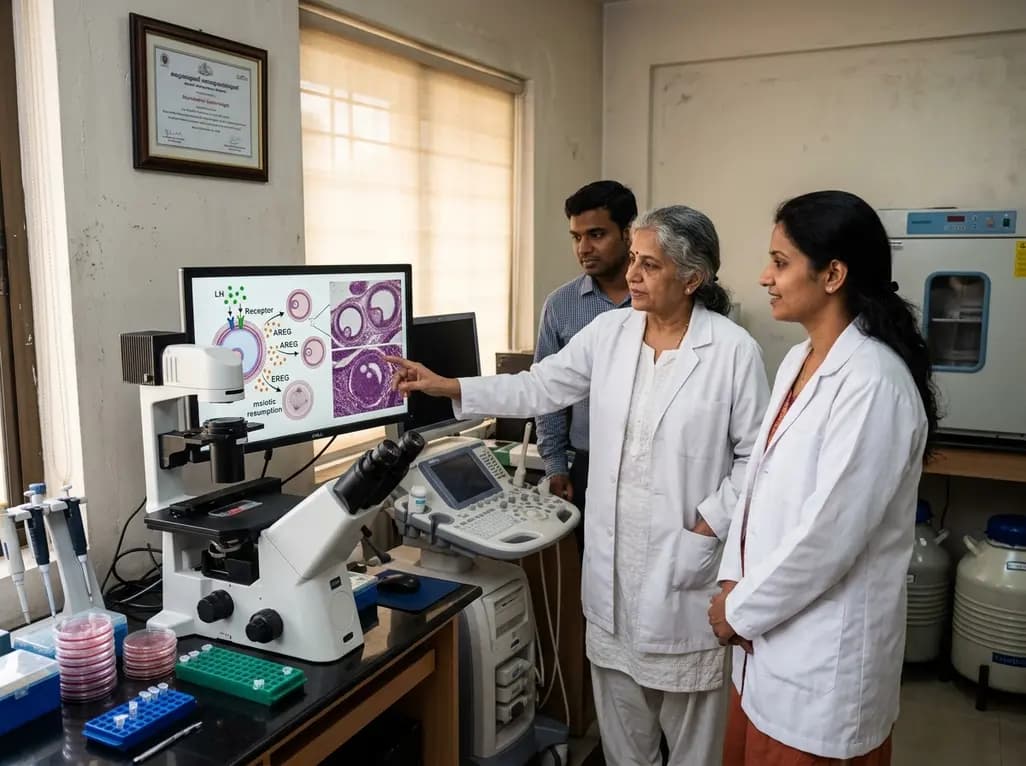
New research reveals that preovulatory follicles communicate via LH-induced paracrine signaling. Diffusible EGF ligands epiregulin and amphiregulin coordinate oocyte meiotic resumption across neighboring follicles, challenging traditional concepts of follicular autonomy.
Today
