.webp&w=384&q=75)

Loading, please wait...
Loading, please wait...

Recent research highlights a growing health concern regarding central hypertension in women who are young and overweight. A study focusing on women aged 18 to 35 found that aortic pressure varies significantly based on body weight. Even when office blood pressure readings appear normal, many overweight women show elevated central arterial pressure. This finding suggests that traditional monitoring may not capture the full cardiovascular risk in this demographic.
Moreover, the study discovered that nearly half of normotensive overweight women had elevated central pressure. In contrast, only 10% of their normal-weight peers showed similar findings. These results indicate a strong link between metabolic risk factors and hemodynamics. Consequently, waist circumference and body mass index significantly influence intra-aortic pressure levels. Therefore, clinicians must look beyond standard cuff measurements to assess true vascular health.
Furthermore, the research categorized different hypertension phenotypes, such as masked and white-coat hypertension. Notably, almost all women with masked hypertension exhibited elevated aortic pressure. This high prevalence suggests that young age does not guarantee vascular protection. Similarly, isolated central hypertension appeared predominantly in overweight subjects. Thus, preventive strategies should include wider implementation of central pressure assessments in primary care settings, such as student polyclinics and health centers.
Central hypertension refers to elevated blood pressure in the aorta, which directly affects vital organs like the heart and brain. It can differ from the pressure measured at the arm.
Yes, research shows that nearly 50% of overweight young women with normal office blood pressure actually have central hypertension, posing a hidden cardiovascular risk.
Increased BMI and waist circumference are metabolic risk factors that link directly to changes in intra-aortic pressure, leading to higher central readings even in young adults.
Disclaimer: This content is for informational and educational purposes only. It is not a substitute for professional medical advice, diagnosis, or treatment. Always seek the advice of your physician or other qualified health provider with any questions you may have regarding a medical condition. Refer to the latest local and national guidelines for clinical practice.
References
1. Evsevyeva ME et al. Aortic Pressure in Different Phenotypes of Hypertension in Young Women, Taking Into Account Their Body Weight. Kardiologiia. 2026 Feb 11. doi: 10.18087/cardio.2026.1.n2972. PMID: 41671020.
2. Williams B, et al. 2018 ESC/ESH Guidelines for the management of arterial hypertension. Eur Heart J. 2018;39(33):3021-3104.
3. Shah AS, et al. Central Blood Pressure in the Management of Hypertension. J Clin Hypertens (Greenwich). 2021;23(4):720-725.

Read summarized clinical updates, watch expert medical content, and earn CME certifications right from your smartphone.
Open your smartphone camera to scan and install.





A study reveals that central hypertension is highly prevalent in young overweight women, even those with normal office blood pressure readings....
8 months ago

Recent epidemiological data reveals a dramatic surge in summer heat mortality driven by human-induced climate warming. This analysis explores the pathophysiological impacts on cardiac and renal systems, diagnostic dilemmas in death certification, and essential emergency cooling protocols for acute clinical care.
Today

Odisha has established India's first state-level clinical protocol specifically tailored for pregnant women with sickle cell disease. Developed with NHM and UNICEF, the framework provides structured antenatal screening, crisis mitigation, standardized referral pathways, and specialized interdisciplinary care.
Today

India is advancing preventive healthcare by integrating genomics, artificial intelligence, and quantum technologies. With the SANGAM programme sequencing one million Indian genomes, clinicians can unlock personalized therapies, detect cardiometabolic risks early, and curb the burden of diabetes and heart disease.
Today
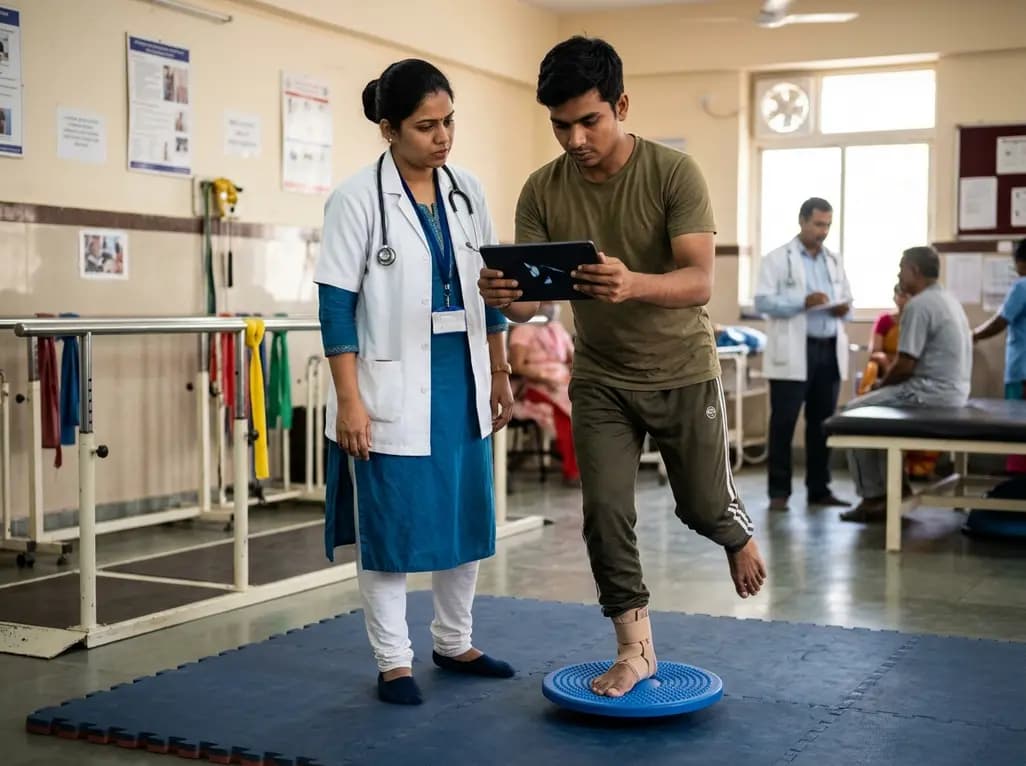
A randomized controlled trial demonstrates that an eight-week dual-task training intervention significantly improves static and dynamic postural control over standard balance exercises in individuals with chronic ankle instability, addressing critical neurocognitive deficits during athletic and daily activities.
Today

A retrospective cohort study of 7,716 ICU patients from the MIMIC-IV database demonstrates that Gradient Boosting Decision Trees significantly outperform traditional SOFA scores in predicting in-hospital mortality among patients with sepsis and diabetes, with SHAP analysis providing clinical interpretability.
Today
