.webp&w=384&q=75)

Loading, please wait...
Loading, please wait...

Modern orthopedic surgeons face significant challenges when managing symptomatic focal articular cartilage damage. Knee cartilage repair represents an essential clinical objective because articular cartilage lacks native vascularity and intrinsic healing potential. Consequently, untreated chondral lesions often cause persistent pain, joint swelling, and early-onset osteoarthritis. Orthopedic researchers continuously develop cell-based regenerative technologies to restore durable hyaline cartilage surfaces.
These advanced modalities generally fall into three distinct categories: cartilage-derived procedures, mesenchymal stromal cell strategies, and innovative hybrid models. Furthermore, a comprehensive scoping review evaluated seventy-five publications to map the clinical and preclinical distribution across these interventions. The findings demonstrate a pronounced divergence in scientific evidence between established autologous techniques and newer stem cell therapies. Therefore, orthopedic specialists must critically appraise the biologic mechanisms, evidentiary strength, and practical limitations of each strategy. Specifically, understanding how structural components interact with biological signaling will help clinicians optimize individual patient outcomes.
Autologous cartilage-based interventions boast the most robust translational evidence in modern orthopedic practice. Specifically, the literature review revealed that over seventy-two percent of cartilage-derived publications represent clinical trials and patient cohorts. First-generation autologous chondrocyte implantation laid the foundation for modern cell therapy by transplanting cultured chondrocytes under a periosteal patch. Subsequently, bioengineers introduced matrix-applied chondrocyte technologies that utilize collagen scaffolds to improve surgical handling and cell distribution.
In addition, surgeons frequently utilize minced autologous cartilage as an effective single-stage alternative. These autologous cartilage strategies provide direct chondrogenic input with pre-differentiated cells that readily synthesize type two collagen and aggrecan. Moreover, long-term clinical trials consistently demonstrate durable pain reduction, improved Lysholm scores, and defect filling on magnetic resonance imaging. However, these techniques require specialized laboratory facilities and often involve costly two-stage surgical procedures. Thus, while autologous chondrocytes remain the primary clinical benchmark, their logistical complexity drives the search for streamlined regenerative alternatives.
Mesenchymal stromal cells have generated tremendous enthusiasm as potential game-changers in joint preservation. Unlike chondrocyte procedures, however, research on mesenchymal stromal cells remains predominantly preclinical. In fact, over seventy-two percent of identified mesenchymal stromal cell publications evaluate animal models rather than human subjects. Investigators extract these multipotent cells from diverse tissue reservoirs, including bone marrow, adipose tissue, and synovium.
Mesenchymal stromal cells exhibit profound immunomodulatory capabilities and secrete anti-inflammatory cytokines that mitigate catabolic joint microenvironments. Furthermore, their trophic signaling stimulates local progenitor cells and promotes tissue regeneration without requiring donor site articular harvest. Consequently, clinicians increasingly test bone marrow aspirate concentrate and expanded stromal cells in early human trials. Nevertheless, comparative human studies have not demonstrated clear clinical superiority of mesenchymal stromal cells over traditional autologous chondrocytes. Additionally, stromal cells frequently suffer from phenotypic instability and terminal hypertrophic differentiation. Therefore, extensive randomized clinical trials must confirm long-term tissue durability before widespread clinical adoption.
To overcome individual limitations of pure cell strategies, bioengineers designed hybrid cartilage regeneration platforms. These approaches combine autologous chondrogenic material with allogeneic or autologous mesenchymal stromal cells. Specifically, the technique mixes a small quantity of harvested autologous chondrons with a larger volume of stromal cells within a fibrin matrix. Proponents suggest that mesenchymal cells act primarily as biological factories rather than permanent structural building blocks.
Furthermore, these stromal cells secrete anabolic growth factors that stimulate native chondrons to produce hyaline matrix while preventing chondrocyte dedifferentiation. Clinical investigators initially evaluated this concept in a landmark thirty-five patient cohort, reporting outcomes at eighteen months and five years. Patients experienced notable pain relief and sustained functional improvement without significant adverse events. However, published evidence for hybrid treatments remains extremely sparse across global literature. Only one preclinical study and two clinical publications from that single cohort currently exist. Consequently, while the synergistic concept shows immense theoretical promise, surgeons should view this combined model as an emerging hypothesis rather than a validated standard of care.
A primary barrier impeding regenerative cartilage repair is the substantial methodological heterogeneity across published trials. Specifically, researchers employ vastly disparate surgical techniques, defect inclusion criteria, cell handling protocols, and rehabilitation regimens. Moreover, investigators utilize conflicting outcome assessment tools, alternating between subjective patient scores and structural magnetic resonance imaging. Consequently, systematic comparisons between cartilage-based, stromal, and hybrid strategies remain extraordinarily difficult to synthesize quantitatively.
Comparative clinical studies repeatedly fail to establish whether more complex cell manipulations yield superior clinical outcomes over simpler techniques. In addition, regulatory frameworks and economic constraints severely influence clinical translation across different healthcare jurisdictions. For instance, good manufacturing practice facilities for cell expansion require massive capital investments, limiting widespread accessibility in routine orthopedic practice. Thus, future clinical research requires rigorously standardized core outcome sets, validated biomarker tracking, and harmonized multi-center registries. Only through rigorous standardization can the orthopedic community discern which patient phenotypes benefit most from specific cell-based therapies.
Currently, autologous cartilage methods provide the most established clinical track record for focal defect repair. Surgeons have utilized procedures like autologous chondrocyte implantation for decades with verified long-term functional scores. Conversely, clinicians investigate mesenchymal stromal cells primarily in preclinical protocols. Although mesenchymal stromal cells offer exciting off-the-shelf and minimally invasive potential, high-level comparative human trials have not yet confirmed functional superiority over conventional chondrocyte implantation.
Hybrid cartilage repair strategies combine autologous chondrogenic units, such as minced cartilage fragments or chondrons, with mesenchymal stromal cells. Researchers hypothesize that stromal cells supply crucial paracrine signaling and trophic factors that stimulate native chondrocytes to synthesize durable hyaline matrix. However, clinical evidence remains strictly preliminary. Only a single prospective cohort with eighteen-month and five-year evaluations has documented outcomes, demonstrating feasibility but underscoring the urgent need for wider multicenter validation.
Standardizing outcome measures is vital because existing clinical literature evaluates knee cartilage repair using widely disparate assessment tools. Investigators alternate between subjective patient scores, structural magnetic resonance imaging parameters, and second-look arthroscopic evaluations. Consequently, clinicians struggle to compare therapeutic efficacy across trials or determine whether novel cell-based interventions justify higher financial costs. Establishing uniform patient-reported metrics and quantitative imaging protocols will accelerate regulatory approvals and guide evidence-based surgical decision-making.
Disclaimer: This content is for informational and educational purposes only... Refer to the latest local and national guidelines for clinical practice.
References

Read summarized clinical updates, watch expert medical content, and earn CME certifications right from your smartphone.
Open your smartphone camera to scan and install.





A scoping review of 75 studies compares autologous cartilage, mesenchymal stromal cells, and hybrid models for knee cartilage repair. Findings highlight extensive clinical evidence for chondrocyte approaches, while stem cell strategies remain mostly preclinical without proven clinical superiority.
Today

Health authorities in the Democratic Republic of Congo confirmed the spread of Ebola to North Ubangi province. With cross-border infections and high case counts, healthcare professionals worldwide must review early clinical recognition, differential diagnosis, infection control measures, and isolation protocols.
Today
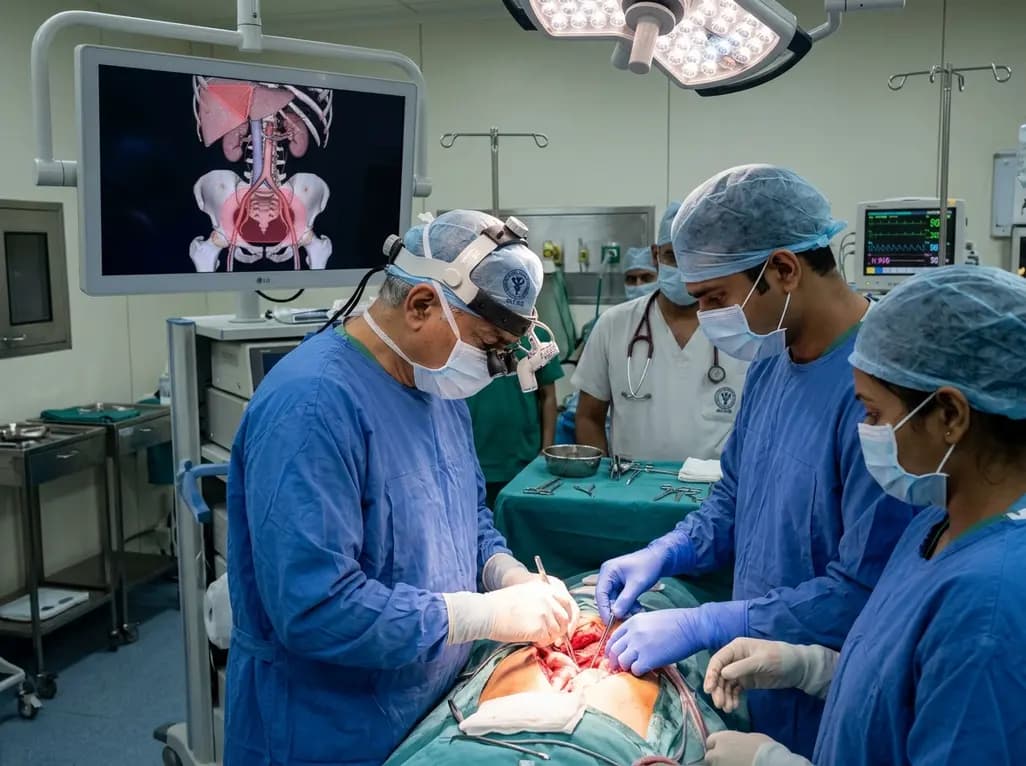
Surgical oncologists at AIIMS Delhi have mapped two critical anatomical landmarks: Ray's Zone in the deep pelvis and Ray's Hepatocaval Triangle near the liver. These predefined hazard boundaries guide dissection, dramatically reduce severe intraoperative bleeding, and preserve vital nerves and visceral organs.
Today

A study reveals that the MYLK c.4079G>A, p.(Gly1360Asp) variant is linked to high-penetrance heritable thoracic aortic disease and early-onset aortic dissection, showing a founder effect in Finnish cohorts. Findings emphasize early cascade screening and vigilant surveillance.
Today
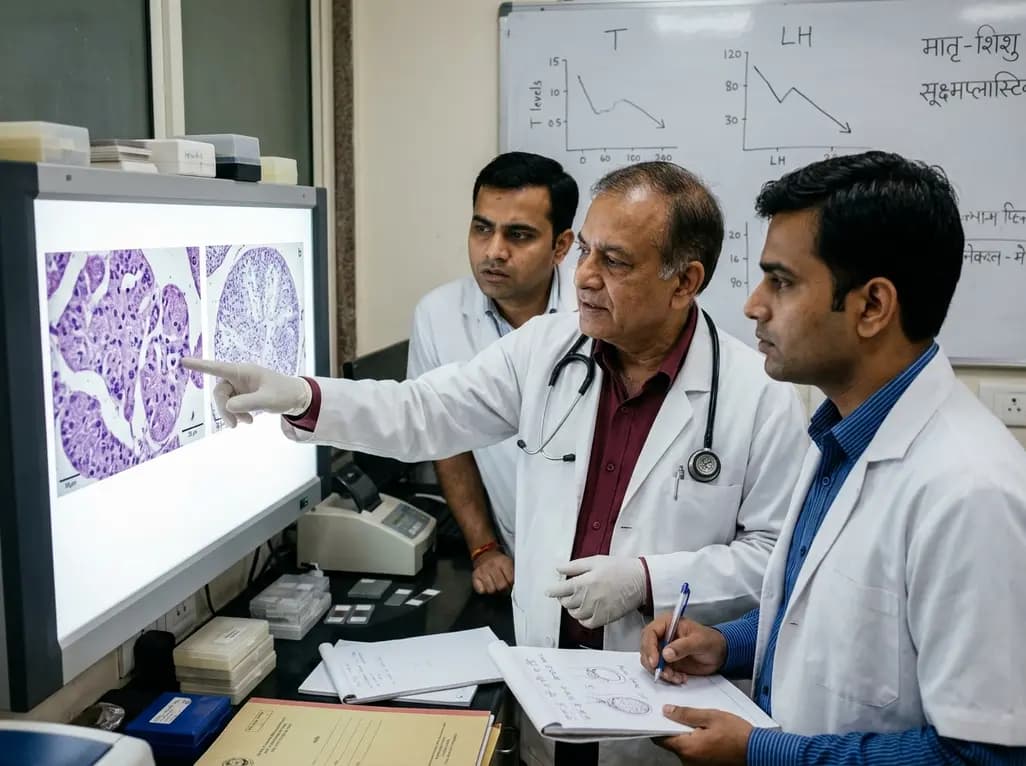
An animal model study reveals that gestational exposure to polystyrene microplastics causes persistent intrauterine growth restriction, testicular hypoplasia, Leydig cell depletion, and an atypical low-testosterone, low-LH endocrine profile in male offspring from birth into adulthood.
Today
