.webp&w=384&q=75)

Loading, please wait...
Loading, please wait...

Prophylactic intracameral antibiotics have revolutionized modern ophthalmic surgery by markedly decreasing the incidence of postoperative endophthalmitis. Consequently, anterior segment surgeons routinely employ cefuroxime ocular administration during phacoemulsification to safeguard visual outcomes. However, despite widespread international acceptance, ocular injection remains an off-label route in official drug monographs. Recently, a comprehensive pharmacovigilance analysis of the FDA Adverse Event Reporting System database revealed critical safety concerns regarding this practice. Furthermore, the investigative findings highlighted substantial reporting differences across geographic regions, patient sexes, and dosing schedules.
Ophthalmic surgeons across the world administer intracameral cephalosporins directly into the anterior chamber after uneventful lens extraction. Major landmark clinical trials demonstrated that prophylactic cefuroxime reduces postoperative infection rates nearly fivefold. Therefore, prestigious ophthalmic societies have widely integrated intracameral cefuroxime into routine clinical guidelines. Nevertheless, official regulatory labeling in many countries only authorizes systemic intravenous or intramuscular administration. Because pharmaceutical manufacturers have not registered intraocular indications on standard package inserts, intraocular delivery remains strictly off-label. Consequently, hospitals must prepare intraocular aliquots through manual reconstitution of commercial systemic vials. Unfortunately, in-house operating room compounding introduces substantial risks of dilution errors and accidental chemical contamination. In addition, variations in local pharmacy capabilities frequently lead to unpredictable osmolarity and pH deviations in delivered solutions. Thus, clinicians require robust post-marketing safety data to understand real-world risks associated with off-label usage. Operating room teams must maintain heightened vigilance during every step of drug preparation.
The recent pharmacovigilance evaluation utilized four distinct disproportionality algorithms to detect adverse event reporting signals within the FAERS database. Importantly, the investigation revealed that 88.7 percent of the reported ocular adverse event cases resulted in severe patient outcomes. Researchers identified sixteen significant signals within the eye disorders system organ class. Furthermore, three additional signals emerged under procedural complications, accidental injury, and toxic exposure. Common reported ocular conditions included toxic anterior segment syndrome, severe corneal endothelial edema, and acute macular edema. In addition, several submitted reports documented significant visual acuity loss and persistent intraocular inflammation. These severe reactions frequently mimic infectious endophthalmitis, thereby creating urgent diagnostic challenges for ophthalmologists. Because toxic damage requires immediate anti-inflammatory intervention rather than antimicrobial re-injection, accurate diagnosis is vital. Consequently, surgeons must maintain vigilant postoperative monitoring whenever atypical intraocular inflammation appears. Prompt recognition helps prevent permanent visual disability.
Precise dosing is critical during intraocular delivery because the eye represents an exceptionally delicate and closed biological compartment. The standard therapeutic dosage for intracameral cefuroxime is precisely 1.0 mg prepared in 0.1 mL of balanced salt solution. However, inadvertent dosage escalations occur when operating theater teams perform rushed multi-step dilutions. Previous clinical studies confirm that accidental overdosing causes profound endothelial cell loss and acute macular edema. For instance, tenfold dilution errors frequently cause serous macular detachments and severe ellipsoid zone disruption. Moreover, electroretinogram evaluations in overdosed eyes demonstrate marked photoreceptor dysfunction that can persist for months. Although prompt treatment with intensive topical steroids promotes fluid reabsorption, some patients suffer permanent visual deficits. Accordingly, the dose-dependent heterogeneity observed in pharmacovigilance reports reflects the severe dangers of compounding inaccuracies. Therefore, ophthalmic facilities must eliminate manual dilution at the surgical trolley and enforce strict verification protocols.
The FAERS pharmacovigilance analysis uncovered noticeable reporting heterogeneity across different continents, sexes, and dosing tiers. Specifically, reporting odds ratio calculations demonstrated distinct disparities in adverse event profiles between North America, Europe, and Asia. Geographic differences likely reflect variable access to commercial unit-dose cefuroxime formulations approved in European markets. In contrast, regions lacking licensed preparations rely heavily on local compounding, which naturally increases reporting of procedural complications. Furthermore, researchers detected intriguing sex-based differences in adverse reaction reporting rates. Anatomical variations, such as shallower anterior chamber depth in female eyes, could theoretically alter intraocular drug concentration dynamics. Similarly, systemic physiological factors might influence tissue sensitivity to off-label chemical exposure. As a result, the authors emphasize that these demographic patterns represent valuable hypothesis-generating associations. Ultimately, future confirmatory trials must evaluate whether specific patient demographics require modified prophylactic strategies. Clinicians must account for individual patient anatomy during surgical planning.
Because off-label intracameral injections carry substantial medical liability, ophthalmic centers must establish rigorous safety protocols. First, surgical facilities should procure approved pre-mixed commercial cefuroxime formulations whenever locally available. Pre-packaged single-dose ampoules eliminate dilution steps and virtually abolish accidental compounding errors. Alternatively, if pre-mixed commercial products are unavailable, hospital pharmacies must prepare intracameral syringes in certified cleanrooms. In addition, surgical staff must perform dual-person verification checks before handing syringes to operating surgeons. Typically, patients experiencing cefuroxime toxicity present on postoperative day one with marked corneal edema and anterior uveitis. However, affected individuals generally do not complain of the severe ocular pain typical of bacterial endophthalmitis. Optical imaging often reveals subtle subretinal fluid, macular edema, or distinct outer retinal disruption. Furthermore, clinicians must promptly initiate intensive topical corticosteroids to resolve intraocular inflammation. In severe overdose situations, performing prompt anterior chamber washout can clear residual drug and mitigate endothelial damage. Consequently, rapid intervention minimizes permanent photoreceptor injury and fosters favorable visual rehabilitation.
The internationally recommended dose for intracameral cefuroxime is precisely 1.0 mg dissolved in 0.1 mL of normal saline solution. Surgical teams must inject this volume into the anterior chamber at the conclusion of surgery. If dilution errors elevate the dose beyond this threshold, severe complications like toxic anterior segment syndrome or retinal edema emerge. Therefore, meticulous preparation or the use of licensed commercial unit-dose formulations remains essential for preventing inadvertent intraocular drug toxicity.
Cefuroxime toxicity typically manifests on postoperative day one with painless corneal edema and anterior chamber reaction without severe vitreous exudates. In contrast, bacterial endophthalmitis generally develops three to seven days after surgery with severe ocular pain, profound hypopyon, and progressive vitritis. Clinicians use optical coherence tomography and serial slit-lamp examinations to evaluate foveal morphology. However, if diagnostic ambiguity persists, anterior chamber paracentesis and aggressive treatment protocols are necessary to protect visual acuity.
Manufacturer drug labels approve cefuroxime exclusively for systemic administration through intravenous, intramuscular, or oral formulations. Consequently, administering the antibiotic into the anterior chamber constitutes an off-label application because pharmaceutical manufacturers never registered specific intraocular indications on standard drug inserts. Even though international ophthalmic guidelines strongly endorse this technique, surgeons bear clinical responsibility for safety. Therefore, surgical centers must maintain strict sterile compounding protocols to minimize concentration discrepancies and prevent toxic anterior segment reactions.
Disclaimer: This content is for informational and educational purposes only... Refer to the latest local and national guidelines for clinical practice.
References

Read summarized clinical updates, watch expert medical content, and earn CME certifications right from your smartphone.
Open your smartphone camera to scan and install.





A FAERS pharmacovigilance study investigates cefuroxime ocular administration, finding that 88.7% of reported adverse events were severe. Discover critical insights into dose-dependent toxicities, compounding hazards, and demographic heterogeneity across cataract surgery populations.
Today
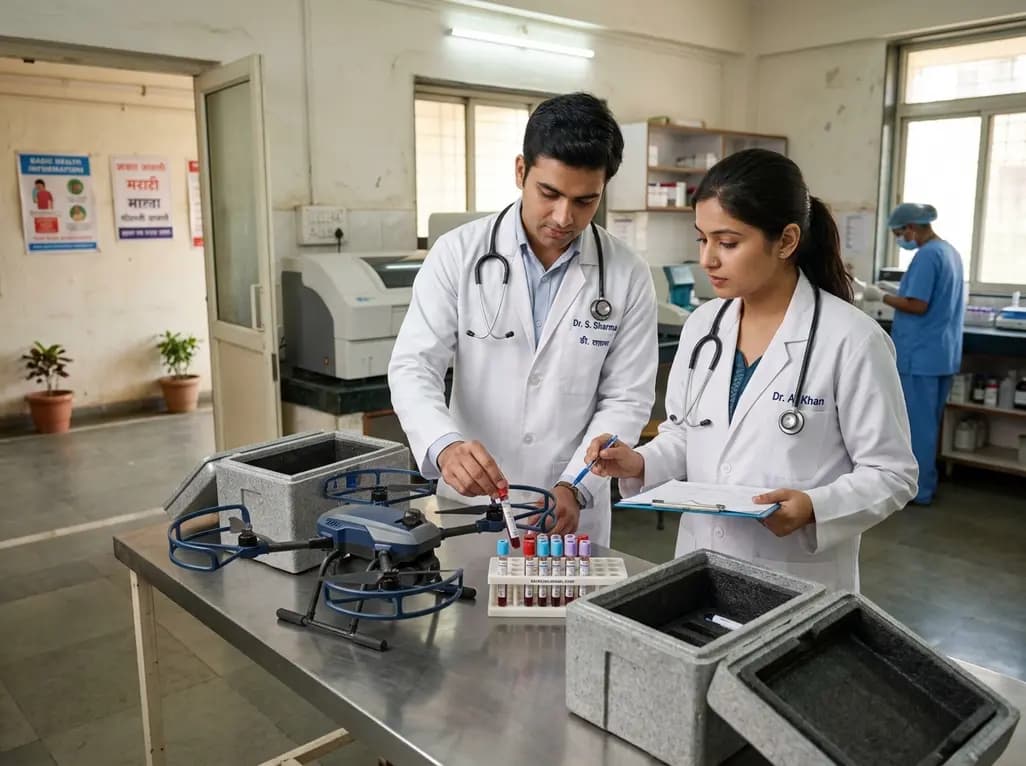
A study evaluating drone transport of blood samples across winter and summer found 31 of 32 routine biochemical analytes remained stable compared to ground transport. While plasma LDH showed minor increases, separation gel caused greater preanalytical alterations, showing aviation rules are the main barrier.
Today

A recent case highlights favorable maternal and neonatal survival in a patient presenting at 34 weeks with probable Eisenmenger physiology and suspected double outlet right ventricle (DORV). Here is a critical review of hemodynamic challenges, delivery strategies, and peripartum management in complex cardiac disease.
Today

A novel multiscale computational model calibrated with Bayesian algorithms demonstrates that full reverse remodeling after mitral valve regurgitation demands both mechanical correction of volume overload and neurohormonal restoration, shedding light on persistent postoperative left ventricular dysfunction.
Today

Systematic review comparing labral repair and reconstruction in primary hip arthroscopy shows comparable short- to mid-term patient-reported outcomes, with lower THA conversion after repair but superior outcomes for reconstruction in patients aged 40 and older.
Today

A preclinical study reveals that alpinetin significantly alters glimepiride pharmacokinetics by inhibiting CYP2C9. This drug-herb interaction enhances hypoglycemic potency and underscores critical safety concerns regarding severe hypoglycemia in diabetic management.
Today
