.webp&w=384&q=75)

Loading, please wait...
Loading, please wait...

CD19 CAR T-cell outcomes in children and young adults with relapsed or refractory B-cell acute lymphoblastic leukemia (B-ALL) vary significantly based on the disease site. While CAR T-cell therapies effectively eliminate bone marrow leukemia, clinicians often question their performance in extramedullary and central nervous system (CNS) sites. Furthermore, a recent multi-site retrospective review provides critical insights into survival and relapse rates across these diverse disease compartments.
The study analyzed 308 patients to evaluate survival metrics across isolated bone marrow (iBM), extramedullary disease (EMD), and CNS involvement. Consequently, researchers found that the 24-month overall survival (OS) was 71.5% for the iBM cohort. In contrast, the OS for the EMD and CNS cohorts reached 66.7% and 57.0%, respectively. Similarly, the 24-month event-free survival (EFS) showed a significant drop for patients with CNS disease at only 35.2%, compared to 51.8% for iBM.
Notably, isolated disease presentations yielded more favorable results. All five patients in the isolated EMD cohort achieved complete remission without subsequent relapse. Additionally, 80% of patients with isolated CNS disease cleared the leukemia from the nervous system. However, 37.5% of those patients later experienced a relapse. This suggests that while initial clearance is achievable, maintaining long-term remission in CNS sites remains a difficult clinical hurdle.
Specifically, the total disease burden at the time of infusion acts as a primary driver of outcomes. High disease burden (HD) in concurrent EMD or CNS disease led to inferior survival compared to low disease burden (LD). For instance, patients with EMD-HD had an OS of 41.7%, while those with EMD-LD achieved 100%. Moreover, the CNS-HD group showed an OS of only 33.3%, which significantly pales in comparison to the 92.3% observed in the CNS-LD group.
Yes, patients with active CNS disease typically experience lower overall and event-free survival rates compared to those with isolated bone marrow disease. Although initial CNS clearance is common, the risk of systemic or local relapse is higher in this specific cohort.
Disease burden is a critical prognostic factor. Patients with low disease burden in extramedullary or CNS sites have significantly better survival outcomes, often reaching 90-100%, compared to those with a high disease burden who show much lower survival rates.
Disclaimer: This content is for informational and educational purposes only. It does not constitute professional medical advice, diagnosis, or treatment. Always seek the advice of your physician or other qualified health provider with any questions you may have regarding a medical condition. Refer to the latest local and national guidelines for clinical practice.
References
Rankin AW et al. CD19 CAR T-cell outcomes in relapsed/refractory extramedullary B-ALL: a multi-site, retrospective cohort review. Blood Adv. 2026 Feb 17. doi: undefined. PMID: 41701972.
Holland EM, et al. Characterization of extramedullary disease in B-ALL and response to CAR T-cell therapy. Blood Adv. 2022.
Leahy AB, et al. CD19-targeted CAR T-cell therapy for CNS relapsed or refractory acute lymphocytic leukaemia: a post-hoc analysis of pooled data from five clinical trials. Lancet Haematol. 2021.

Read summarized clinical updates, watch expert medical content, and earn CME certifications right from your smartphone.
Open your smartphone camera to scan and install.





A multi-site study evaluates the efficacy of CD19 CAR T-cell therapy in patients with extramedullary and CNS-involved relapsed/refractory B-ALL....
8 months ago
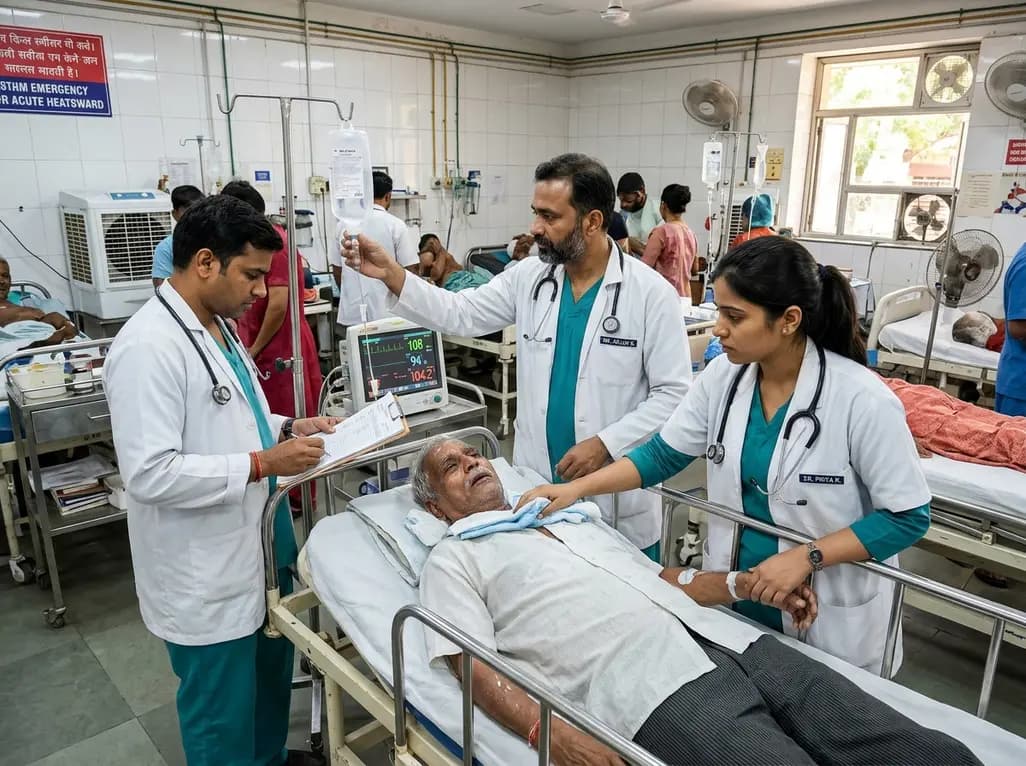
Recent epidemiological data reveals a dramatic surge in summer heat mortality driven by human-induced climate warming. This analysis explores the pathophysiological impacts on cardiac and renal systems, diagnostic dilemmas in death certification, and essential emergency cooling protocols for acute clinical care.
Today

Odisha has established India's first state-level clinical protocol specifically tailored for pregnant women with sickle cell disease. Developed with NHM and UNICEF, the framework provides structured antenatal screening, crisis mitigation, standardized referral pathways, and specialized interdisciplinary care.
Today

India is advancing preventive healthcare by integrating genomics, artificial intelligence, and quantum technologies. With the SANGAM programme sequencing one million Indian genomes, clinicians can unlock personalized therapies, detect cardiometabolic risks early, and curb the burden of diabetes and heart disease.
Today

A randomized controlled trial demonstrates that an eight-week dual-task training intervention significantly improves static and dynamic postural control over standard balance exercises in individuals with chronic ankle instability, addressing critical neurocognitive deficits during athletic and daily activities.
Today

A retrospective cohort study of 7,716 ICU patients from the MIMIC-IV database demonstrates that Gradient Boosting Decision Trees significantly outperform traditional SOFA scores in predicting in-hospital mortality among patients with sepsis and diabetes, with SHAP analysis providing clinical interpretability.
Today
