.webp&w=384&q=75)

Loading, please wait...
Loading, please wait...

Global investment firm Carlyle recently announced its acquisition of majority stakes in Knack RCM and EqualizeRCM. This strategic move aims to establish a sophisticated AI Healthcare RCM platform. Consequently, the new entity will serve a multi-specialty global market, addressing the growing complexities of healthcare administration. By combining these two players, Carlyle seeks to deliver tech-enabled financial operations to various providers.
India serves as a central innovation hub in this strategy. The platform leverages India’s talent for global delivery. Furthermore, the investment highlights the 'India for the world' thesis. This approach ensures that advanced technology supports healthcare systems across the United States and other regions.
The core of this new platform lies in its advanced technological capabilities. Specifically, EqualizeRCM utilizes large language models and agentic AI systems. These tools help predict and prevent insurance claim denials. Additionally, Knack RCM provides a proprietary orchestration platform known as Workmate. Together, they offer end-to-end solutions for physician groups, rural hospitals, and specialty clinics.
Success is measured through tangible financial stability. For instance, rural hospitals often face severe financial constraints. This new AI Healthcare RCM platform aims to mitigate those risks. Moreover, the leadership emphasizes that the focus remains on financial outcomes rather than just the level of automation. This ensures providers can sustain services and meet payroll requirements effectively.
The platform currently caters to several specialty segments. These include anesthesia, behavioral health, and urgent care. Moreover, Carlyle plans to pursue further acquisitions to expand its reach. This trend of consolidation reflects a broader shift in the industry. Investors are increasingly seeking scaled, technology-driven service providers to manage complex financial tasks.
The integration of India-based operations with US-based clinical needs creates a robust delivery network. Consequently, healthcare providers can expect more efficient workflows. This integration allows for a more responsive and data-driven approach to revenue management. Ultimately, the move positions Carlyle as a leader in the tech-enabled healthcare services sector.
Q1: What is the primary goal of the Carlyle acquisition?
The acquisition aims to create an AI-native, multi-specialty global platform. This platform will provide comprehensive revenue cycle management solutions for diverse healthcare providers.
Q2: How does AI improve revenue cycle management?
AI improves RCM by using large language models to predict insurance claim denials. It also automates complex financial tasks, which reduces errors and enhances financial outcomes for hospitals.
Q3: Why is India significant in this global platform?
India acts as a global delivery and innovation hub. It provides the necessary technical talent and infrastructure to support the 'India for the world' delivery model.
Disclaimer: This content is for informational and educational purposes only. It does not constitute medical advice or replace professional judgment. Refer to the latest local and national guidelines for clinical practice.
References

Read summarized clinical updates, watch expert medical content, and earn CME certifications right from your smartphone.
Open your smartphone camera to scan and install.





Carlyle acquires Knack RCM and EqualizeRCM to launch an AI-native healthcare platform focusing on efficiency and financial outcomes for providers globally....
5 months ago
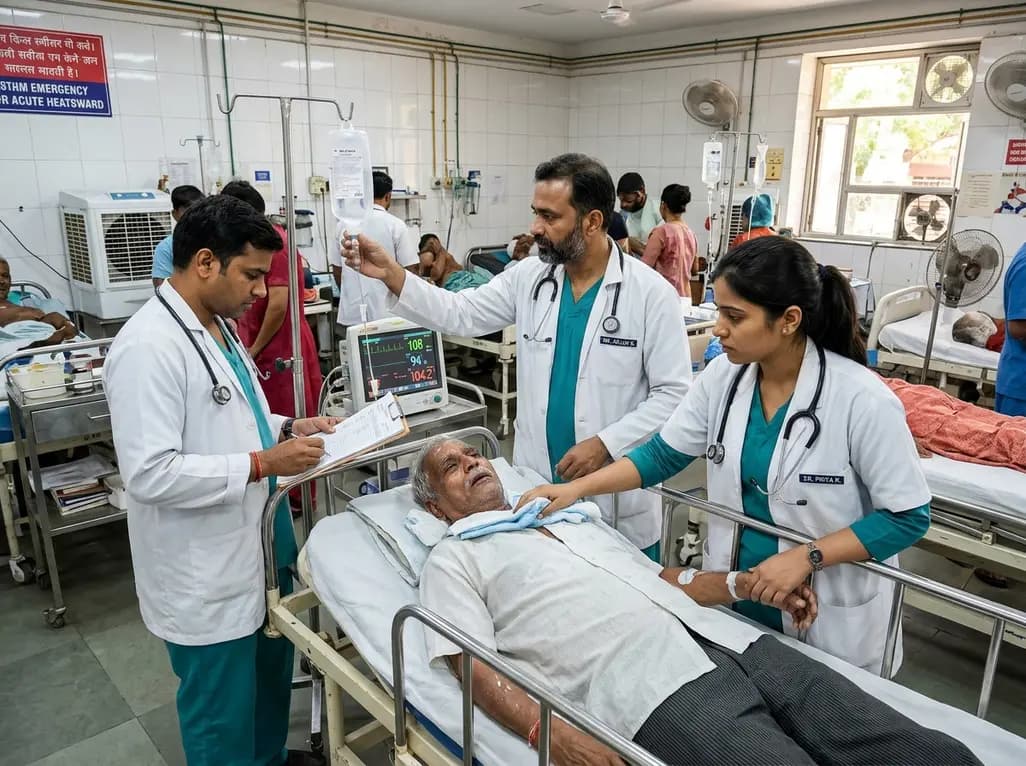
Recent epidemiological data reveals a dramatic surge in summer heat mortality driven by human-induced climate warming. This analysis explores the pathophysiological impacts on cardiac and renal systems, diagnostic dilemmas in death certification, and essential emergency cooling protocols for acute clinical care.
Today

Odisha has established India's first state-level clinical protocol specifically tailored for pregnant women with sickle cell disease. Developed with NHM and UNICEF, the framework provides structured antenatal screening, crisis mitigation, standardized referral pathways, and specialized interdisciplinary care.
Today

India is advancing preventive healthcare by integrating genomics, artificial intelligence, and quantum technologies. With the SANGAM programme sequencing one million Indian genomes, clinicians can unlock personalized therapies, detect cardiometabolic risks early, and curb the burden of diabetes and heart disease.
Today

A randomized controlled trial demonstrates that an eight-week dual-task training intervention significantly improves static and dynamic postural control over standard balance exercises in individuals with chronic ankle instability, addressing critical neurocognitive deficits during athletic and daily activities.
Today

A retrospective cohort study of 7,716 ICU patients from the MIMIC-IV database demonstrates that Gradient Boosting Decision Trees significantly outperform traditional SOFA scores in predicting in-hospital mortality among patients with sepsis and diabetes, with SHAP analysis providing clinical interpretability.
Today
