

Loading, please wait...
Loading, please wait...

Geriatric medicine increasingly confronts complex disease clustering in aging populations. Recent epidemiological data highlight a crucial relationship between cardiovascular comorbidities and depression among older adults. In daily clinical practice, cardiovascular conditions rarely occur in isolation. Instead, hypertension, coronary heart disease, and heart failure frequently compound one another. When these circulatory conditions accumulate, they compromise physical independence and exert a profound toll on mental health. Clinicians often observe that emotional decline accompanies physical deterioration in older individuals. However, historical studies yielded conflicting outcomes due to small sample sizes and inconsistent diagnostic criteria. A large-scale investigation evaluated 11,960 older participants with an average age of 82 years to address this knowledge gap. The findings demonstrate that cardiovascular multimorbidity directly correlates with an escalating risk of late-life depressive disorders. Conversely, the analysis revealed a markedly weaker connection with psychological anxiety. Consequently, healthcare providers must understand this clinical divergence to tailor psychiatric screening and cardiovascular management for vulnerable seniors.
The burden of multiple circulatory disorders substantially amplifies depressive vulnerability. Among the cohort of nearly twelve thousand older individuals, the prevalence of psychological depression reached 25.8 percent. Furthermore, almost a quarter of participants presented with two or more cardiovascular conditions. Multivariable logistic regression revealed a striking dose-response relationship between disease accumulation and psychiatric illness. Compared to participants without vascular ailments, individuals with two cardiovascular conditions exhibited a 23 percent higher risk of depression. Moreover, the risk climbed by 50 percent in patients managing three cardiovascular disorders. For patients with four distinct circulatory diagnoses, the odds ratio rose to 1.91. Trend analysis further clarified this clinical trajectory. Specifically, each additional cardiovascular diagnosis increased the relative risk of depression by 15 percent. These statistics show that cardiovascular disease burden produces exponential psychiatric vulnerability. Therefore, clinicians must treat each new cardiovascular diagnosis as an independent risk indicator for concurrent affective decompensation.
Although affective disorders frequently co-occur, cardiovascular disease accumulation affects mood and anxiety differently. In the investigated cohort, the baseline prevalence of psychological anxiety stood at 11.7 percent. However, statistical evaluations demonstrated that the association between cardiovascular comorbidities and anxiety lacked significance. While depressive symptoms increased with disease complexity, anxiety scores showed no corresponding dose-dependent surge. Several clinical reasons explain this unexpected divergence. First, late-life anxiety often centers on acute somatic sensations and catastrophic health worries. Consequently, patients with chronic circulatory illness might habituate to somatic sensations over decades. In contrast, chronic cardiovascular diseases enforce sustained functional limitations, persistent fatigue, and social isolation. These chronic lifestyle restrictions directly fuel hopelessness and anhedonia, which define depressive disorders. Furthermore, biological vascular damage preferentially disrupts frontal-subcortical pathways that regulate emotional drive rather than acute fear circuits. Therefore, physicians should recognize that affective decline in cardiovascular patients predominantly manifests as depressive apathy rather than persistent overt anxiety.
The pronounced link between circulatory disease and late-life depression stems from shared biological mechanisms. Chronic atherosclerosis, arterial stiffness, and systemic endothelial dysfunction frequently induce cerebral microvascular disease. Consequently, subclinical ischemic white matter lesions disrupt deep frontal-striatal neural circuits. This vascular depression process explains why cumulative vascular damage directly triggers psychomotor slowing, apathy, and executive dysfunction. In addition, chronic heart failure and ischemic heart disease sustain low-grade systemic inflammation. Circulating pro-inflammatory cytokines, including interleukin-6 and tumor necrosis factor-alpha, readily cross the blood-brain barrier. These cytokines alter monoamine neurotransmitter metabolism and suppress neurotrophic factor synthesis in the hippocampus. Furthermore, autonomic dysregulation and impaired heart rate variability disrupt neuroendocrine homeostasis. Chronic elevation of cortisol levels damages limbic architecture over time. Therefore, depressive symptoms in cardiovascular patients reflect neurobiological damage driven by cumulative vascular stress. Understanding these pathways enables clinicians to approach geriatric mood disorders with targeted medical and supportive strategies.
The investigation revealed a crucial interaction between social participation and mental resilience. Specifically, statistical analysis demonstrated that social activities served as both additive and multiplicative protective factors against depression. Older adults who engaged in regular social activities exhibited significantly lower rates of depressive illness, even when managing multiple cardiovascular diagnoses. Social engagement effectively countered the destructive psychiatric impact of chronic physical disease. Several behavioral and psychological factors explain this robust protective effect. First, communal participation reduces perceived loneliness and mitigates depressive rumination. Engaging with peers stimulates cognitive function and reinforces a sense of personal purpose. Furthermore, socially active seniors frequently maintain better medication adherence and adopt healthier lifestyle behaviors. Social networks also provide practical assistance, which helps patients manage complex cardiovascular treatment regimens. Consequently, community programs offer powerful non-pharmacological protection. Therefore, physicians must recognize that social prescription represents an indispensable component of chronic disease management.
Managing multimorbid elderly patients requires an integrated model that bridges cardiology and mental health. Primary care doctors and cardiologists must incorporate validated depression screening tools into routine geriatric evaluations. Instruments such as the Geriatric Depression Scale provide rapid, reliable baseline assessments. Identifying depressive symptoms early prevents medication non-compliance and poor functional outcomes. In addition, clinicians must carefully review polypharmacy in patients with multiple cardiovascular conditions. Certain cardiovascular drugs, including specific beta-blockers, can exacerbate fatigue or mimic depressive symptoms. Conversely, selective serotonin reuptake inhibitors require cautious selection due to potential bleeding risks or QT interval prolongation. Furthermore, multidisciplinary care teams should formulate structured survivorship plans that include gentle physical rehabilitation and social support. Coordinating care between geriatricians, cardiologists, and mental health specialists ensures holistic disease management. Therefore, healthcare systems must dismantle traditional clinical silos to enhance both cardiovascular stability and emotional well-being.
Cardiovascular multimorbidity substantially increases depression risk through cumulative vascular brain damage, systemic inflammation, and functional disability. Each additional circulatory diagnosis increases depression risk by fifteen percent. These combined physical restrictions foster chronic hopelessness, while compromised cerebral perfusion directly impairs frontostriatal brain circuits responsible for regulating mood and motivation.
Unlike depression, anxiety does not demonstrate a significant dose-response relationship with cumulative cardiovascular diseases. Elderly patients often habituate psychologically to long-standing somatic cardiovascular symptoms over time. Moreover, vascular pathology preferentially damages subcortical pathways governing emotional drive and mood regulation, rather than the amygdala-driven fear circuitry that primarily triggers late-life generalized anxiety symptoms.
Social activities serve as both additive and multiplicative protective buffers against geriatric depression. Regular social interaction reduces loneliness, mitigates depressive rumination, and encourages adherence to cardiac medications. Furthermore, community participation stimulates cognitive reserve and provides crucial emotional support, thereby counteracting the debilitating psychological stress imposed by multiple chronic cardiovascular illnesses.
Disclaimer: This content is for informational and educational purposes only and does not constitute medical advice, diagnosis, or treatment. Healthcare professionals should exercise their clinical judgment when interpreting these findings. Refer to the latest local and national guidelines for clinical practice.
References

Read summarized clinical updates, watch expert medical content, and earn CME certifications right from your smartphone.
Open your smartphone camera to scan and install.





A study of 11,960 older adults reveals that each additional cardiovascular comorbidity increases depression risk by 15%, while anxiety shows no strong link. Social activities provide critical additive and multiplicative protection, emphasizing the need for integrated psychiatric and cardiovascular geriatric care.
Today
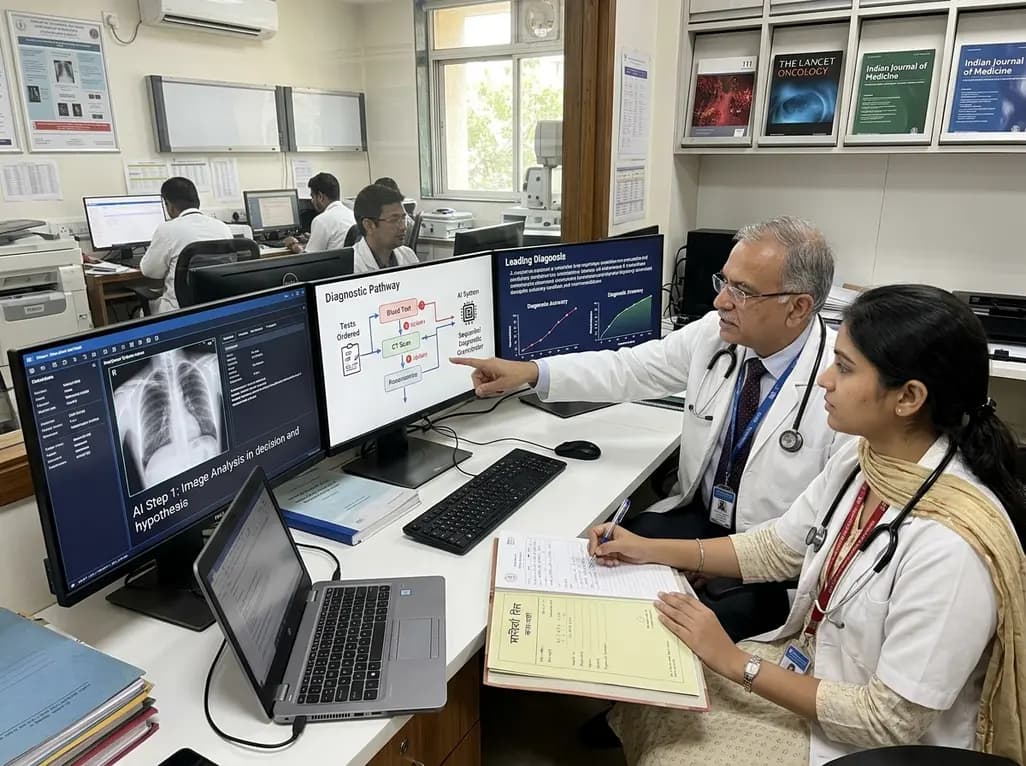
A breakthrough peer-reviewed study demonstrates that a sequential AI diagnosis system can mirror real-world clinical reasoning. By ordering stepwise tests and updating hypotheses dynamically, this multi-agent orchestrator achieved superior diagnostic accuracy while reducing investigative costs.
Today

A prenatal case highlights severe glutaric acidemia type II presenting as bilateral hyperechoic cystic kidneys at 18 weeks. Whole-exome sequencing revealed a novel homozygous ETFDH frameshift variant, demonstrating the power of rapid genetic testing in fetal renal anomalies.
Today

Review how tailored exercise programs benefit frail older patients with heart failure. Explore pathophysiological mechanisms, individualized training prescriptions, and strategies to overcome adherence barriers in clinical practice.
Yesterday

This comparative study evaluates posterior labral tears with and without glenohumeral instability, highlighting distinct demographic patterns, MRI underestimation in stable shoulders, and successful arthroscopic repair outcomes.
Yesterday

A clinical study demonstrates that early intervention with tocilizumab, either as monotherapy or bridged with corticosteroids, achieves significant proptosis reduction and resolves active inflammation in treatment-naive thyroid eye disease.
Yesterday
