.webp&w=384&q=75)

Loading, please wait...
Loading, please wait...
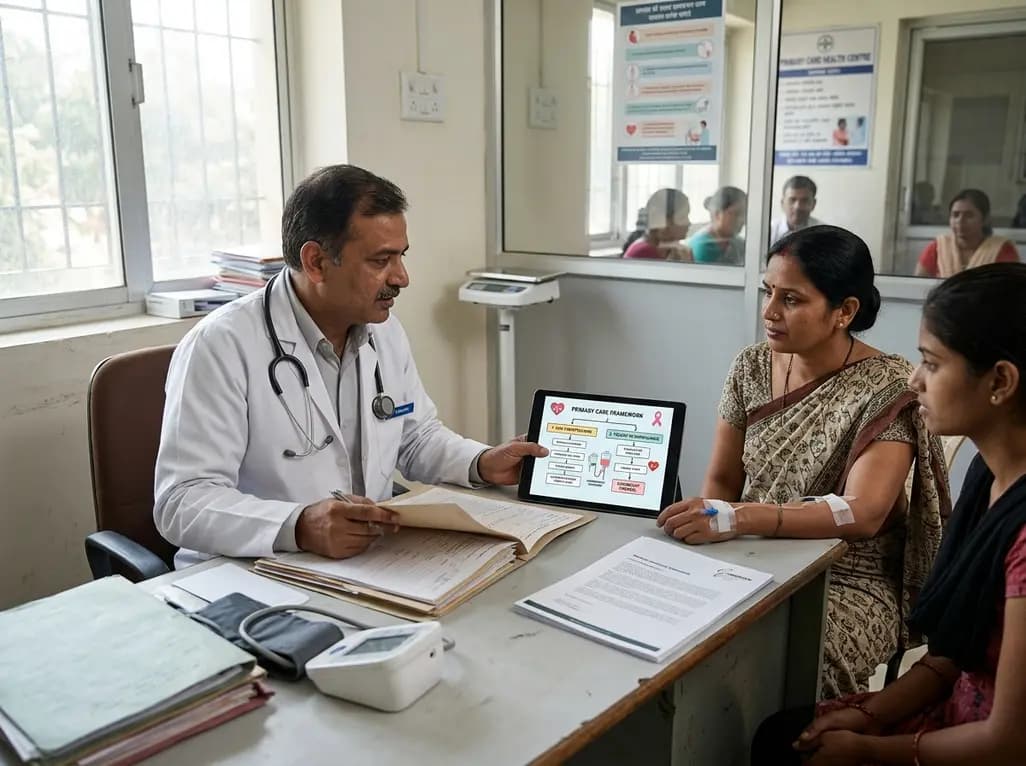
Modern anticancer therapies have significantly improved survival rates across various malignancies. However, these advancements often come at a cost to cardiovascular health. Managing cardiotoxicity in oncology patients has now become a critical component of long-term cancer care. The SEMERGEN position statement establishes a vital framework for primary care (PC) practitioners to address these complications. This document emphasizes the role of family doctors in prevention, early detection, and long-term surveillance. Consequently, integrated care models are essential to improve patient outcomes within the National Health System.
Primary care physicians serve as the first line of defense in identifying cardiovascular risks. Before treatment begins, they must perform thorough risk stratification and optimize existing comorbidities. Furthermore, they play a central role during the active treatment phase by monitoring for early signs of toxicity. Tailored surveillance allows clinicians to adjust care based on the specific anticancer therapy and individual baseline risk. Therefore, proactive management of risk factors like hypertension and diabetes is necessary to mitigate cardiac damage. Additionally, clear referral pathways between primary care, cardiology, and oncology ensure that patients receive timely interventions when complications arise.
The growing population of cancer survivors faces a persistent risk of late-onset cardiovascular events. These complications can manifest years after the completion of chemotherapy or thoracic radiotherapy. Because these risks often increase over time, continuous monitoring in primary care is crucial. Moreover, the SEMERGEN statement highlights the need for equitable and patient-centered care. Standardized definitions from international guidelines help reduce clinical variability in daily practice. Finally, the focus remains on enhancing the quality of life for survivors through coordinated multidisciplinary efforts.
Primary care physicians lead in early detection, cardiovascular risk optimization, and lifelong follow-up of cancer survivors to identify late-onset toxicity from treatments.
It identifies high-risk individuals before therapy begins, allowing for proactive interventions and personalized monitoring strategies to prevent severe cardiac damage.
Thoracic radiotherapy can cause structural damage to the heart and coronary arteries, leading to complications like pericarditis or accelerated atherosclerosis even years after exposure.
Disclaimer: This content is for informational and educational purposes only. It does not constitute medical advice or a professional relationship. Always seek the advice of a qualified healthcare provider for any medical condition or treatment. Refer to the latest local and national guidelines for clinical practice.
References
Pallarés-Carratalá V et al. [SEMERGEN Position Statement on the management of the Oncologic Patient: Comprehensive Approach to Cardiotoxicity in Primary Care]. Semergen. 2026 Jun 04. doi: undefined. PMID: 42241740.
Lyon AR et al. 2022 ESC Guidelines on cardio-oncology developed in collaboration with the European Hematology Association (EHA), the European Society for Therapeutic Radiology and Oncology (ESTRO) and the International Cardio-Oncology Society (IC-OS). European Heart Journal. 2022.
Curigliano G et al. Management of cardiac disease in cancer patients throughout oncological treatment: ESMO Consensus Recommendations. Annals of Oncology. 2020.

Read summarized clinical updates, watch expert medical content, and earn CME certifications right from your smartphone.
Open your smartphone camera to scan and install.





The SEMERGEN position statement outlines a primary care framework for managing cardiotoxicity in cancer patients, focusing on risk stratification and follow...
4 months ago

Review how tailored exercise programs benefit frail older patients with heart failure. Explore pathophysiological mechanisms, individualized training prescriptions, and strategies to overcome adherence barriers in clinical practice.
Today

Recent clinical studies reveal maternal autoantibodies targeting IL-1RA as potential triggers for preterm labor, opening avenues for targeted cytokine therapies. Concurrently, new perioperative findings show inhaled cannabis increases propofol requirements during upper endoscopy compared to oral edible consumption.
Today

In high-risk pulmonary embolism complicated by severe anemia and active uterine bleeding, systemic thrombolysis is contraindicated. Large-bore aspiration thrombectomy provides rapid hemodynamic rescue without fibrinolysis, supported by inferior vena cava filter placement and multidisciplinary critical care.
Today

This comparative study evaluates posterior labral tears with and without glenohumeral instability, highlighting distinct demographic patterns, MRI underestimation in stable shoulders, and successful arthroscopic repair outcomes.
Today

A clinical study demonstrates that early intervention with tocilizumab, either as monotherapy or bridged with corticosteroids, achieves significant proptosis reduction and resolves active inflammation in treatment-naive thyroid eye disease.
Today
