.webp&w=384&q=75)

Loading, please wait...
Loading, please wait...
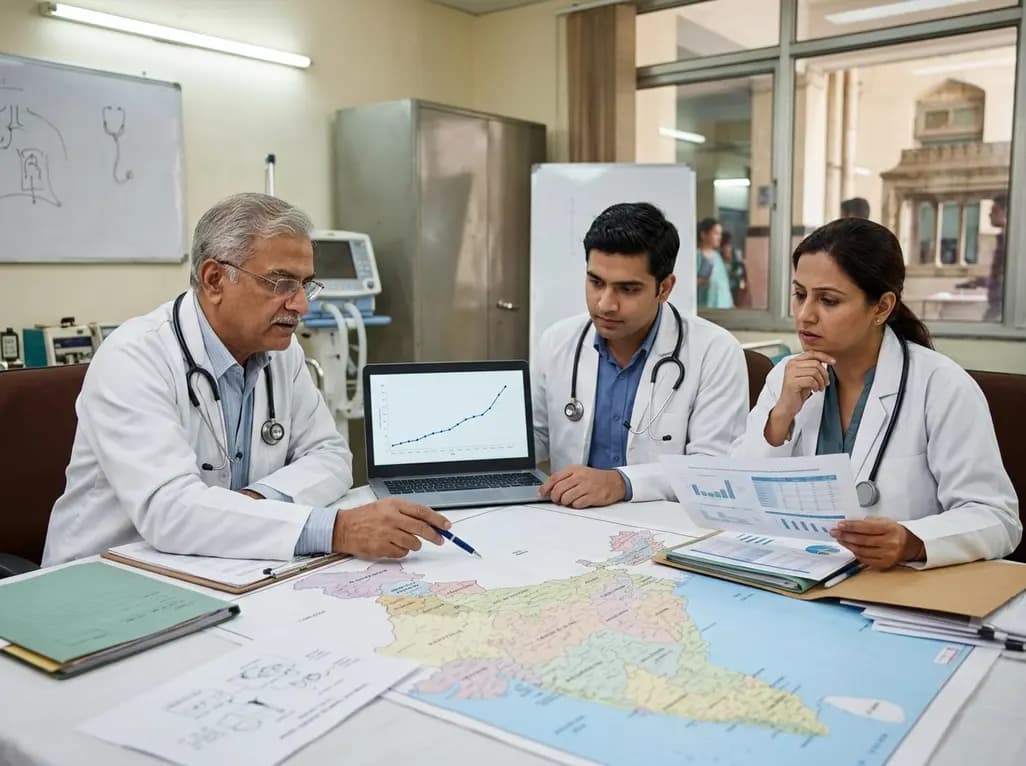
Recent data tabled in Parliament by the Union Ministry of Health and Family Welfare highlights a notable growth in cancer cases in North India over a five-year period from 2021 to 2025. Based on projections by the Indian Council of Medical Research National Cancer Registry Programme, the regional incidence increased by nearly 10 percent. Specifically, combined figures across Haryana, Punjab, and Himachal Pradesh expanded from 78,514 cases to 86,352 cases. This regional trajectory closely mirrors national trends, where total estimated cases across India rose from 1,426,447 in 2021 to 1,569,793 in 2025, marking a 10.05 percent growth. Furthermore, this epidemiological expansion underscores the critical necessity for robust healthcare interventions, early diagnostic screening, and improved treatment infrastructure. Consequently, clinicians and public health planners must understand these shifting regional patterns to optimize resource allocation and clinical management strategies.
Although the entire northern belt experienced an upward trajectory, individual state metrics reveal distinct epidemiological patterns. Haryana recorded the sharpest percentage increase among the three states. Specifically, its estimated incidence climbed from 30,015 in 2021 to 33,395 in 2025, representing an 11.26 percent surge. This growth rate comfortably exceeds both the regional average of 9.98 percent and the overall national growth rate. In contrast, Punjab maintained the highest overall volume of oncological burden throughout the study period. Punjab projected cases expanded from 39,521 in 2021 to 43,196 in 2025, which reflects a 9.29 percent increase and adds 3,675 new annual cases over five years. Meanwhile, Himachal Pradesh documented the lowest percentage growth in the region. Its incidence rose from 8,978 cases in 2021 to 9,761 cases in 2025, representing an 8.72 percent increase. Consequently, these regional variations highlight the complex interplay between changing demographic profiles, environmental exposures, diagnostic reporting efficiency, and lifestyle risk factors across neighboring territories. Additionally, the steady year-on-year numerical increases demand targeted health strategies tailored to each state specific healthcare ecosystem.
To address this rising burden, medical professionals must examine the underlying drivers behind these epidemiological statistics. The Union Health Ministry notes that enhanced diagnostic infrastructure significantly contributes to higher case reporting across states. Modern imaging techniques and wider pathology services allow clinicians to detect malignancies at earlier stages. Furthermore, increasing life expectancy and an expanding geriatric population naturally elevate total cancer incidence, as age remains a primary unmodifiable risk factor for cellular transformation. Beyond demographic shifts, behavioral and environmental risk factors play a decisive role. High prevalence of tobacco use, hazardous alcohol consumption, dietary transitions toward ultra-processed foods, and physical inactivity continue to drive non-communicable disease burden across North India. Additionally, environmental determinants such as industrial pollutants, agricultural chemical exposure, and contaminated groundwater sources present ongoing clinical challenges, particularly in intensive farming regions. Therefore, medical practitioners should integrate detailed environmental and occupational history taking into routine outpatient evaluations. Simultaneously, expanding population-based health registries ensures more accurate tracking of emerging disease hotspots, facilitating early clinical referral and comprehensive preventative interventions across both rural and urban patient communities.
Early identification remains the cornerstone of effective oncological intervention and improved clinical prognosis. Under the National Health Mission, the Indian government has established population-based screening programs for common non-communicable diseases. These initiatives target oral, breast, and cervical cancers among all individuals aged thirty years and older. Primary screening occurs at local Ayushman Arogya Mandirs, where trained frontline health personnel deliver frontline diagnostic care. Specifically, Accredited Social Health Activists and Auxiliary Nurse Midwives conduct opportunistic screening, clinical breast examinations, visual inspection with acetic acid, and oral cavity evaluations. When frontline workers identify suspicious lesions or abnormal clinical findings, patients undergo swift referral to secondary and tertiary medical centers. Furthermore, integrating standardized clinical algorithms into primary care ensures prompt diagnostic workups, thereby minimizing presentation delays. Clinicians operating at district facilities must maintain high diagnostic suspicion and establish clear communication links with community health workers. Consequently, strengthening primary-to-tertiary referral pathways directly enhances early-stage detection rates, reduces treatment complexity, lowers patient mortality, and significantly improves overall long-term survival outcomes across both urban and rural patient populations.
Financial toxicity often creates significant barriers to optimal oncological treatment and continuity of care. To alleviate economic hardship, the Ayushman Bharat Pradhan Mantri Jan Arogya Yojana provides health coverage up to five lakh rupees per family annually. This entitlement supports secondary and tertiary hospitalization across empanelled public and private hospitals. Additionally, government initiatives facilitate access to affordable pharmaceutical agents and medical devices. The Pradhan Mantri Bhartiya Janaushadhi Pariyojana and Affordable Medicines and Reliable Implants for Treatment pharmacies supply heavily discounted generic anti-cancer medications and essential surgical supplies. Furthermore, the National Free Drugs Initiative and Free Diagnostic Services ensure that public health facilities provide baseline laboratory testing and core therapeutics without financial burden. Crucially, selected anti-cancer therapeutics are included in the Essential Drugs List at district and sub-divisional hospitals under the National Programme for Prevention and Control of Non-Communicable Diseases. These structured financial safeguards prevent catastrophic health expenditure for vulnerable families. Consequently, medical oncologists and hospital administration teams should actively guide eligible patients toward these state financial assistance programs to promote strict treatment adherence.
Building robust treatment capacity is vital to accommodate the growing volume of cancer patients across northern states. The Central Government continues to support the establishment of State Cancer Institutes, Tertiary Care Cancer Centres, and District Cancer Care Centres nationwide. These dedicated facilities aim to decentralize specialized oncological management and offer comprehensive services, including surgical resection, radiation therapy, systemic chemotherapy, and palliative care. Furthermore, expanding localized treatment hubs reduces the necessity for long-distance travel, which frequently leads to treatment abandonment and poor clinical follow-up. In addition to physical infrastructure, strengthening human resource capacity remains paramount. Comprehensive training programs for medical officers, surgical teams, radiation oncologists, and specialized nursing staff ensure standardized quality of care. Moreover, expanding multidisciplinary tumor boards across regional institutions fosters collaborative treatment planning, optimizes complex clinical decision-making, and aligns practice patterns with global guidelines. By harmonizing primary screening with advanced tertiary management, healthcare systems can effectively manage the rising regional cancer burden. Ultimately, continuous investment in infrastructure and clinical training will improve equitable patient access and elevated therapeutic standards across all administrative levels.
Q1: What are the key drivers behind the rising estimated cancer burden in North India?
The increase in estimated cancer incidence stems from several converging factors. Key drivers include enhanced diagnostic accessibility, increased public health awareness, an aging population, and rising life expectancy. Additionally, behavioral risk factors such as high tobacco and alcohol usage, unhealthy dietary habits, physical inactivity, and environmental exposures significantly contribute to the growing oncological burden across Haryana, Punjab, and Himachal Pradesh.
Q2: How does the National Health Mission support early cancer detection at the primary care level?
Under the National Health Mission, population-based screening targets individuals over thirty years of age at Ayushman Arogya Mandirs. Frontline health staff, including Accredited Social Health Activists and Auxiliary Nurse Midwives, perform screening for oral, breast, and cervical cancers. Patients presenting with suspicious symptoms or abnormal screening results are promptly referred to secondary and tertiary health facilities for definitive diagnostic evaluation and therapeutic intervention.
Q3: What financial schemes exist in India to assist cancer patients with treatment costs?
The Ayushman Bharat Pradhan Mantri Jan Arogya Yojana provides up to five lakh rupees per family annually for secondary and tertiary care hospitalization. Additionally, Affordable Medicines and Reliable Implants for Treatment pharmacies and Pradhan Mantri Bhartiya Janaushadhi Pariyojana offer discounted anti-cancer drugs. Furthermore, essential oncology medications are provided free at designated public hospitals under the National Free Drugs Initiative.
Disclaimer: This content is for informational and educational purposes only. It does not constitute medical advice or replace professional judgment. Refer to the latest local and national guidelines for clinical practice.
References

Read summarized clinical updates, watch expert medical content, and earn CME certifications right from your smartphone.
Open your smartphone camera to scan and install.





New ICMR data reveals a 10% surge in projected cancer incidence across Haryana, Punjab, and Himachal Pradesh from 2021 to 2025. This comprehensive analysis evaluates regional epidemiological shifts, state-level growth disparities, and government infrastructure strategies under the National Health Mission.
last month

A 2026 meta-analysis evaluates PDE5 inhibitors in advanced ILD with severe gas exchange impairment. While overall mortality was not significantly reduced, a targeted subgroup with pulmonary hypertension showed a 49% risk reduction, underscoring the necessity of precise hemodynamic phenotyping.
Today

At the 79th Regional Committee session, the World Health Organization commended India's public health advancements. Key achievements include the operationalization of 160,000 Ayushman Arogya Mandirs, higher institutional delivery rates, strong ASHA networks, and persistent efforts to eliminate tuberculosis nationwide.
Today

The Supreme Court questioned FSSAI's phased warning approach, urging single-phase implementation for foods exceeding limits in any nutrient of concern. Backed by ICMR-NIN recommendations, the proposed red hexagonal warnings target added sugar, salt, and fat to combat India's escalating chronic disease epidemic.
Today
A premature neonate developed upper limb compartment syndrome after uterine rupture extruded the arm through a scar defect. Conservative management with continuous monitoring yielded complete functional recovery and normal limb growth at 10-year follow-up, highlighting non-operative safety in selected cases.
Today
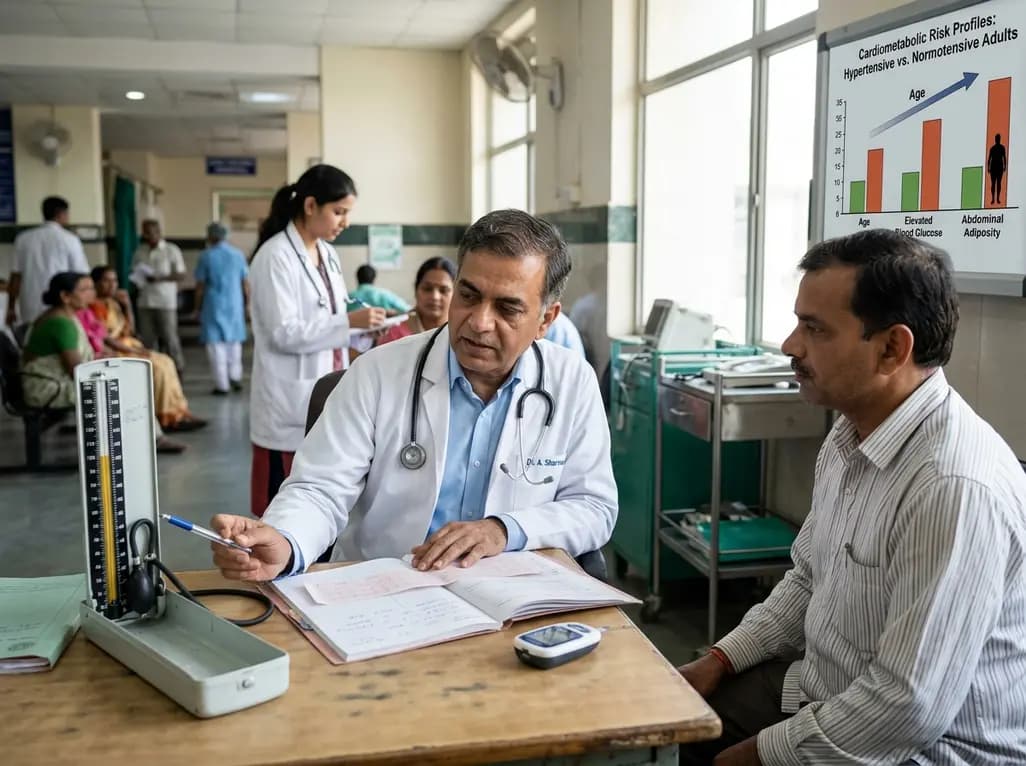
A comparative analysis shows that older age, elevated blood glucose, and abdominal adiposity are primary drivers of hypertension. Comprehensive evaluation of cardiometabolic risk profiles enables clinicians to detect overlapping metabolic dysfunctions early and optimize targeted prevention strategies.
Today
