

Loading, please wait...
Loading, please wait...

Recognizing camouflaging autistic traits has emerged as a fundamental priority in adult neuropsychiatric evaluation. Historically, diagnostic criteria for autism spectrum disorder focused primarily on overt childhood behaviors observed in young males. Consequently, clinicians frequently overlooked individuals who developed sophisticated behavioral adaptations to mask their social differences. Social camouflaging encompasses the conscious or unconscious strategies individuals deploy to navigate challenging social environments. These coping mechanisms allow autistic adults to blend into neurotypical settings. However, masking often conceals intense internal confusion and chronic sensory overload. Adults presenting with interpersonal difficulties, affective disorders, or chronic fatigue frequently hide underlying neurodivergence. Therefore, standard behavioral observations during routine outpatient consultations may completely fail to identify autism. In recent years, researchers introduced specialized psychometric instruments to capture these subtle compensatory mechanisms. Understanding how individuals manage social friction provides essential insights into delayed diagnoses. Ultimately, recognizing these concealed behavioral patterns enables practitioners to formulate accurate clinical appraisals and deliver timely, individualized support.
To address persistent diagnostic disparities, investigators completed a comprehensive psychometric evaluation of the Korean Camouflaging Autistic Traits Questionnaire. The team translated the original 25-item instrument and administered it to 1,079 Korean adults. Investigators categorized participants into high and low autistic trait groups using validated screening tools. Through exploratory and confirmatory factor analyses, the researchers refined the questionnaire into a concise 13-item instrument. This streamlined version demonstrated superior structural fit indices compared to longer alternatives. Furthermore, the 13-item measure maintained robust internal consistency across all domains, verifying its reliability for clinical practice. In addition, advanced psychometric testing established full measurement invariance across trait levels and biological sex. This invariance demonstrates that the tool assesses camouflaging behaviors equivalently regardless of gender or autistic trait severity. Consequently, mental health professionals can dependably apply this refined inventory across diverse demographic groups without introducing measurement bias.
The refined inventory captures three distinct behavioral dimensions that define social coping strategies in neurodivergent populations. First, Compensation involves active cognitive techniques that individuals employ to overcome social communication barriers. For example, patients deliberately script conversations, practice facial expressions, and study interpersonal cues from television or literature. Second, Masking reflects conscious efforts to suppress overt autistic behaviors to project a neurotypical presentation. Individuals frequently suppress repetitive motor mannerisms, force direct eye contact, or hide sensory sensitivities. Third, Assimilation describes the powerful drive to blend into social environments despite feeling fundamentally alienated. Patients alter their authentic personas, tolerate severe discomfort, and pretend to relate effortlessly to peers. Moreover, these three dimensions operate concurrently, requiring continuous executive effort. While these strategies promote short-term social acceptance, they demand exhausting mental stamina. Therefore, individuals who score high across these three domains often present with marked cognitive fatigue and subjective distress.
The psychometric study revealed prominent sex-related differences, demonstrating that females with high autistic traits engaged in camouflaging most frequently. Societal expectations impose rigorous demands on women regarding emotional attunement, social reciprocity, and verbal expression. Consequently, autistic women face intense pressure to camouflage autistic traits to prevent peer rejection or workplace isolation. This social dynamic explains why clinicians disproportionately miss or delay autism diagnoses in female patients. During clinical consultations, healthcare professionals often attribute patient distress to secondary manifestations, such as generalized anxiety or chronic depression. Meanwhile, the underlying neurodevelopmental etiology remains hidden behind effective social adaptations. Furthermore, statistical analyses revealed that women scored significantly higher in compensation and assimilation than men. However, sustained camouflaging extracts a severe emotional price. Because patients present with apparent social competence, family members and clinicians overlook their profound inner distress. Recognizing these gendered patterns is vital for eliminating historical diagnostic biases.
The study demonstrated a robust association between elevated camouflaging scores and substantial psychological morbidity. Participants reporting frequent camouflaging behaviors exhibited significantly elevated levels of social anxiety, depressive symptoms, and interpersonal impairment. Constantly repressing natural reactions triggers unrelenting sympathetic arousal and emotional depletion. Over time, this chronic cognitive load precipitates autistic burnout, a state marked by functional regression and extreme physical exhaustion. Furthermore, camouflage complicates standard clinical assessment. Because individuals present an image of effective social functioning, clinicians often minimize their actual day-to-day impairment. In addition, persistent self-concealment degrades self-esteem, causing individuals to feel completely disconnected from their true identity. Therefore, healthcare providers must not interpret social adaptability as genuine psychological wellbeing. Instead, multidisciplinary teams should evaluate the hidden costs of continuous masking during diagnostic assessments. Integrating validated camouflaging scales into routine practice helps clinicians identify vulnerable adults and provide neurodiversity-affirming care.
The questionnaire evaluates the conscious or unconscious strategies individuals utilize to mask or compensate for autistic traits during social interactions. It quantifies behaviors across three primary domains: compensation, masking, and assimilation. By examining these strategies, clinicians can identify neurodivergent adults whose outward behaviors appear socially typical. Consequently, the instrument helps uncover hidden cognitive strain and explains why individuals with high autistic traits may elude standard diagnostic screening assessments.
Females experience intense cultural and social expectations regarding interpersonal connection, nonverbal reciprocity, and peer relationships from an early age. Consequently, autistic women often develop sophisticated compensatory techniques, such as mimicking peers and memorizing social scripts, to avoid ostracization. Furthermore, this intense pressure encourages continuous masking of sensory sensitivities and repetitive movements. As a result, autistic females often mask their struggles effectively, leading to frequent diagnostic delays or misdiagnoses in clinical practice.
Continuous camouflaging requires exhaustive cognitive and emotional control, which substantially increases the risk of chronic psychiatric distress. Clinical research consistently correlates high camouflaging scores with severe social anxiety, major depressive episodes, and persistent psychological exhaustion. Moreover, prolonged concealment frequently triggers autistic burnout, characterized by severe functional decline and loss of daily coping skills. Ultimately, maintaining a perpetual facade alienates individuals from their authentic identities, exacerbating emotional isolation and profound despair.
Disclaimer: This content is for informational and educational purposes only. It is not intended to substitute for professional medical advice, diagnosis, or treatment. Always seek the advice of your physician or other qualified health provider with any questions you may have regarding a medical condition. Never disregard professional medical advice or delay in seeking it because of something you have read here. The mentions of products or services do not constitute an endorsement. Clinicians should exercise their clinical judgment when evaluating clinical scenarios. Refer to the latest local and national guidelines for clinical practice.
References

Read summarized clinical updates, watch expert medical content, and earn CME certifications right from your smartphone.
Open your smartphone camera to scan and install.





A psychometric evaluation validates a refined 13-item Korean Camouflaging Autistic Traits Questionnaire (CAT-Q). Measuring compensation, masking, and assimilation reveals critical sex disparities and ties to psychological distress, aiding clinicians in diagnosing adult autism.
Today

Patients with cardiovascular conditions face heightened health risks during extreme heatwaves. Discover findings from the ESC Patient Forum on climate change impacts, medication dilemmas, and actionable strategies for proactive heatwave preparedness in clinical practice.
Today

A large cohort study demonstrates that fetal growth restriction in a first pregnancy raises maternal cardiovascular risk within five years postpartum, including elevated rates of heart failure, stroke, and myocardial infarction. Clinicians must initiate proactive postpartum screening and cardiovascular prevention.
Today
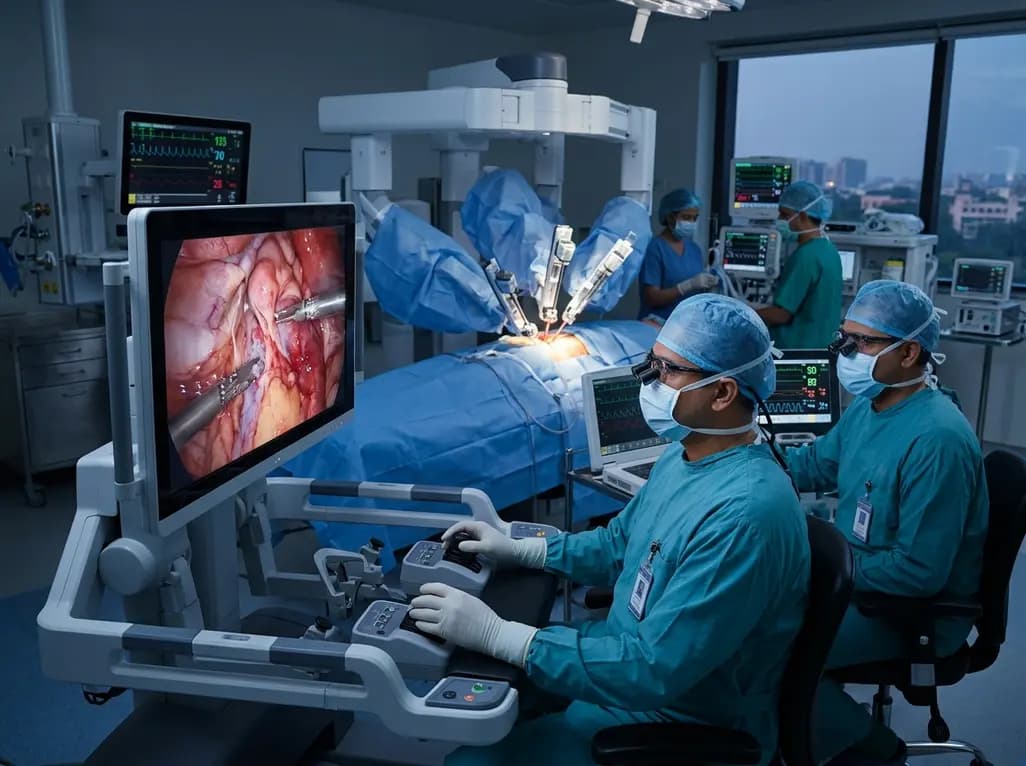
Cardiovascular surgery is transforming rapidly across India as tertiary hospitals embrace robotic assistance and AI-driven planning. Delhi-NCR now spearheads this shift, demonstrating higher procedural volumes, lower tissue trauma, and accelerated patient recovery compared to conventional sternotomy approaches.
Today

A paired cadaveric study compared triple and quintuple percutaneous Achilles tendon lengthening. While quintuple hemisection showed numerically greater elongation, differences were not statistically significant.
Yesterday
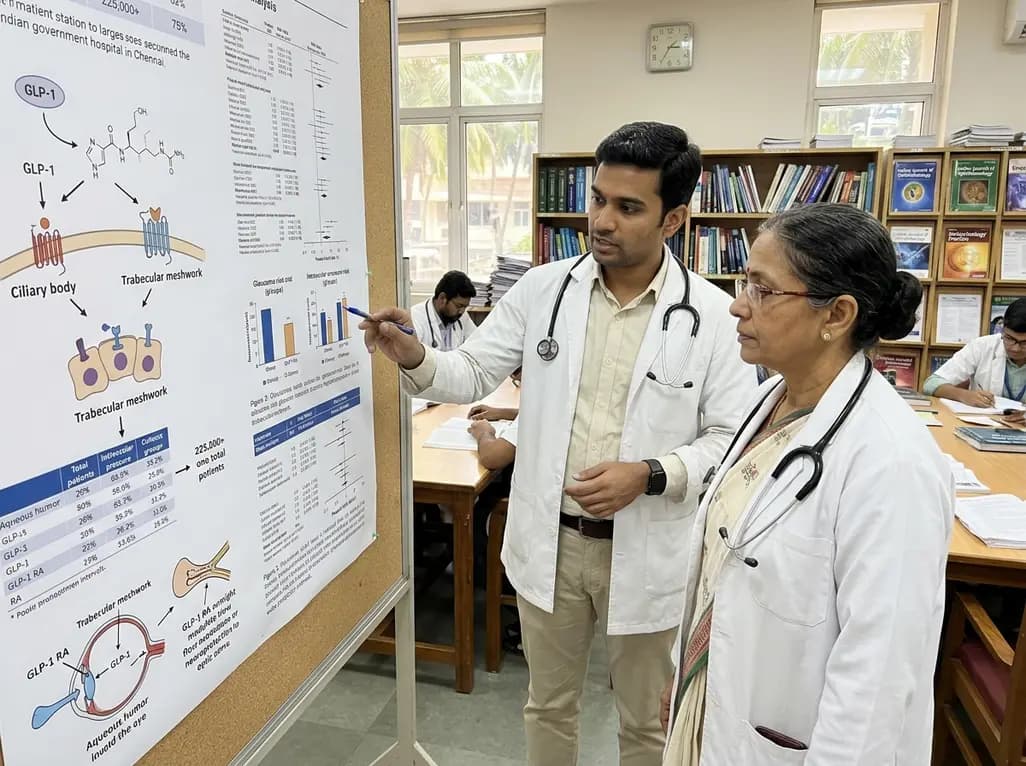
A systematic review and meta-analysis of over 225,000 patients explores whether GLP-1 receptor agonists reduce the risk of glaucoma and ocular hypertension. While pooled data show a 31% lower risk, low certainty and wide prediction intervals urge cautious optimism and further randomized trial evaluation.
Today
