.webp&w=384&q=75)

Loading, please wait...
Loading, please wait...

Cardiovascular surgeons and cardiologists are constantly searching for refined methods to assess perioperative risk and predict patient recovery. While traditional risk models provide a baseline, they often overlook the dynamic interplay between systemic inflammation, nutritional status, and immune competence. The CALLY index MIDCAB outcomes research addresses this gap by investigating a novel composite biomarker. This study evaluates 124 consecutive patients undergoing minimally invasive direct coronary artery bypass surgery to determine if the preoperative C-reactive protein-albumin-lymphocyte (CALLY) index serves as a reliable prognostic indicator. Consequently, clinical experts are finding that this easily calculated metric offers deep insights into postoperative trajectories and resource utilization within the intensive care unit.
The CALLY index integrates three critical physiological parameters: albumin, lymphocytes, and C-reactive protein (CRP). Each component reflects a different facet of the patient's biological resilience. Specifically, serum albumin serves as a primary indicator of nutritional status and a negative acute-phase reactant. Lower albumin levels often signal malnourishment or chronic disease states, which inherently complicate surgical recovery. Furthermore, the lymphocyte count provides a snapshot of the patient’s cellular immune system. Adequate immune function is essential for effective wound healing and the prevention of postoperative infections. Conversely, CRP is a well-established marker of systemic inflammation. Elevated CRP levels before surgery suggest a heightened inflammatory state that can exacerbate tissue damage and delay recovery. Therefore, combining these three markers into a single index provides a more comprehensive view of the patient than any single parameter could offer alone. By focusing on the CALLY index MIDCAB outcomes, clinicians can simultaneously evaluate nutrition, immunity, and inflammation through a simple blood draw. This integrative approach is particularly relevant in cardiac surgery, where the surgical stress response can severely test a patient's physiological reserves.
In the landmark study involving 124 patients, researchers stratified participants into quartiles based on their preoperative CALLY index values. Notably, the high-CALLY group—representing patients with higher albumin and lymphocytes but lower CRP—demonstrated significantly better surgical results. Specifically, these patients experienced shorter durations in both the intensive care unit (ICU) and the total hospital stay. In contrast, the low-CALLY group required more prolonged post-procedural monitoring and care. This discrepancy highlights the CALLY index MIDCAB outcomes as a pivotal factor in resource management and patient counseling. When surgeons identify a patient with a low CALLY score, they can anticipate a more sluggish recovery and potentially implement preemptive nutritional or anti-inflammatory interventions. Moreover, the statistical analysis revealed a clear p-value of less than 0.001 for both ICU and hospital stays when comparing the high and low index groups. This strong correlation suggests that the CALLY index is not merely a statistical anomaly but a robust reflection of surgical readiness. Consequently, the research underscores the utility of this index in the specific context of minimally invasive cardiac procedures, where rapid recovery is one of the primary goals.
Systemic inflammation plays a dominant role in determining how well a patient tolerates the physiological demands of MIDCAB surgery. High preoperative inflammation, indicated by an elevated CRP within the CALLY index calculation, often correlates with adverse events such as arrhythmias or pulmonary complications. Specifically, the CALLY index MIDCAB outcomes data indicates that lower inflammatory markers, when balanced against high nutritional and immune markers, create a protective environment for the heart during and after revascularization. Furthermore, the interplay between inflammation and nutrition is cyclic; inflammation can lower albumin levels, while poor nutrition can exacerbate the inflammatory response. By using the CALLY index, surgeons can break down these complex interactions into a quantifiable score. Additionally, this score allows for a more nuanced stratification than traditional markers like the Neutrophil-to-Lymphocyte Ratio (NLR). Since MIDCAB is a less invasive option compared to traditional sternotomy, patients often expect a faster return to daily activities. However, those with a poor CALLY score may not meet these expectations regardless of the surgical technique's success. Therefore, managing patient expectations based on their biological profile becomes much more accurate through this tool.
In the Indian clinical landscape, where malnutrition and late-stage presentation of coronary artery disease are common, the CALLY index offers a cost-effective risk assessment tool. Most Indian hospitals already perform routine blood tests that include CRP, albumin, and complete blood counts. Consequently, calculating the CALLY index does not require expensive specialized equipment or lengthy laboratory processing times. This accessibility is vital for busy cardiac centers in Mumbai, Delhi, and Bangalore that handle high patient volumes. Specifically, the CALLY index MIDCAB outcomes evidence supports its use as a standard part of the preoperative workup. Surgeons can use the index to identify high-risk individuals who might benefit from a period of prehabilitation or nutritional optimization before going under the knife. Furthermore, in a resource-constrained environment, predicting the length of ICU stay helps in better bed management and surgical scheduling. Moreover, the index provides a shared language for the multidisciplinary team, including the cardiologist, anesthetist, and nutritionist. By standardizing the interpretation of these baseline labs, the entire team can focus on stabilizing the specific physiological deficits identified by the index before the procedure begins.
While the CALLY index MIDCAB outcomes study shows great promise, it is essential to acknowledge certain limitations and areas for future research. Currently, the study size of 124 patients, while significant, suggests the need for larger, multicenter trials to validate these findings across diverse populations. Specifically, variations in laboratory reference ranges for albumin and CRP across different hospitals could affect the absolute CALLY score. Furthermore, researchers need to determine if the CALLY index can predict long-term outcomes, such as graft patency or five-year survival rates, rather than just immediate recovery markers. Notably, the index is a snapshot in time; how the score changes in response to preoperative therapy remains an area of intense interest. Additionally, combining the CALLY index with advanced imaging or genetic markers might further refine our prognostic capabilities. Despite these considerations, the current evidence strongly supports the index as a valuable adjunct to clinical judgment. Ultimately, the goal is to transition from a "one-size-fits-all" approach to a personalized surgical strategy. By integrating markers like the CALLY index, the medical community moves closer to achieving optimized, patient-centric outcomes in cardiac surgery.
The CALLY index is calculated using a specific mathematical formula that combines three routine laboratory values. Specifically, you multiply the serum albumin level (g/dL) by the total lymphocyte count (10^9/L) and then divide this product by the C-reactive protein (CRP) level (mg/dL) multiplied by 10,000. This calculation results in a score where higher values generally indicate a better balance of high nutrition and low inflammation, signaling a more favorable surgical prognosis.
Using the CALLY index is superior because it provides a multi-dimensional view of the patient’s physiological state. While CRP only measures inflammation and albumin only measures nutrition, the CALLY index accounts for the synergistic effect of inflammation, nutrition, and immune status. This integrated approach captures the complex biological interactions that determine surgical recovery, offering a significantly higher predictive value for hospital and ICU length of stay than any single biomarker could provide individually.
Yes, emerging research suggests that the CALLY index has broad prognostic utility across various cardiovascular procedures, including traditional CABG and transcatheter aortic valve implantation (TAVI). While the specific study focused on MIDCAB outcomes, the underlying principles of assessing inflammation and nutrition are universal in cardiac care. Consequently, clinicians are increasingly applying this index to different surgical and interventional contexts to improve risk stratification and manage postoperative recovery expectations across a wider range of patients.
Disclaimer: This content is for informational and educational purposes only. It does not constitute medical advice or establish a doctor-patient relationship. Always seek the advice of a qualified healthcare provider regarding any medical condition or treatment. Refer to the latest local and national guidelines for clinical practice.
References
Ciftci H et al. Potential role of the C-reactive protein-albumin-lymphocyte (CALLY) index in predicting MIDCAB outcomes. J Cardiothorac Surg. 2026 Jun 27. doi: 10.1186/s13019-026-04291-7. PMID: 42365370.
Cetin HK, Demir T. Importance of CALLY Scores in Predicting Coronary Artery Bypass Grafting Outcomes. Ann Thorac Cardiovasc Surg. 2025;31(1):25-00156. doi: 10.5761/atcs.oa.25-00156. PMID: 41354430.
Pan Y et al. Association between the C-Reactive Protein–Albumin–Lymphocyte (CALLY) Index and Adverse Clinical Outcomes in CAD Patients after PCI: Findings of a Real-World Study. J Clin Med. 2024;13(6):1545. doi: 10.3390/jcm13061545.

Read summarized clinical updates, watch expert medical content, and earn CME certifications right from your smartphone.
Open your smartphone camera to scan and install.





A recent study evaluates the CALLY index as a prognostic tool for MIDCAB surgery. Higher index values, indicating better nutritional and immune status with lower inflammation, correlate significantly with shorter hospital stays and improved patient recovery in minimally invasive cardiac procedures.
3 months ago
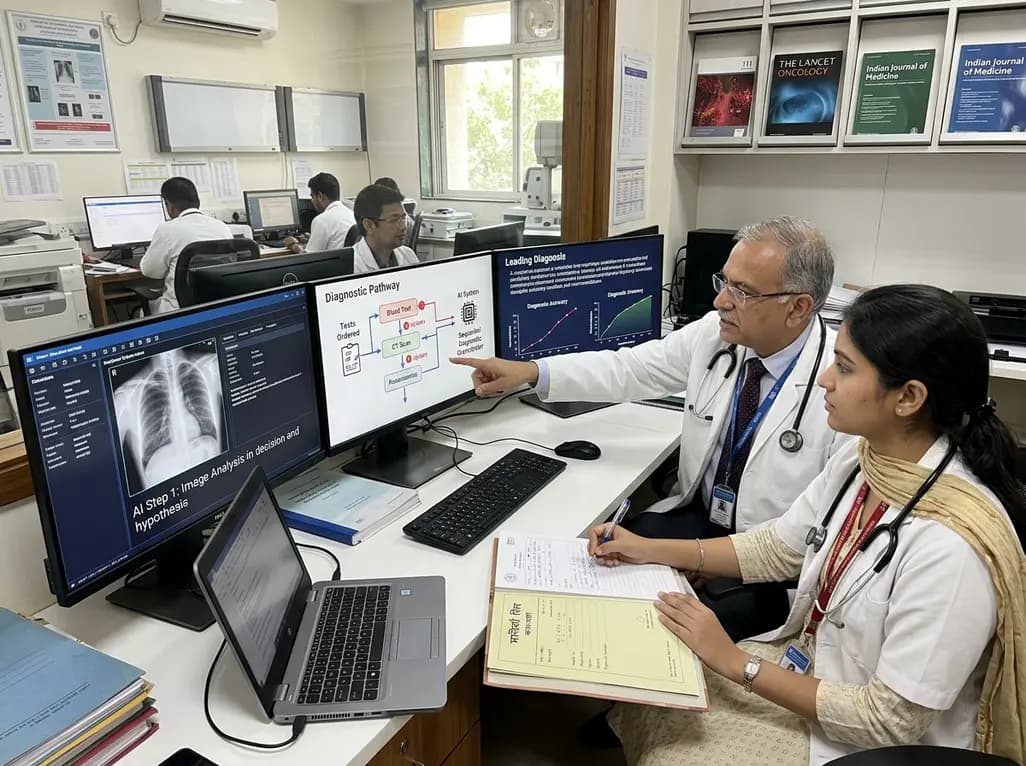
A breakthrough peer-reviewed study demonstrates that a sequential AI diagnosis system can mirror real-world clinical reasoning. By ordering stepwise tests and updating hypotheses dynamically, this multi-agent orchestrator achieved superior diagnostic accuracy while reducing investigative costs.
Today

A prenatal case highlights severe glutaric acidemia type II presenting as bilateral hyperechoic cystic kidneys at 18 weeks. Whole-exome sequencing revealed a novel homozygous ETFDH frameshift variant, demonstrating the power of rapid genetic testing in fetal renal anomalies.
Today

Review how tailored exercise programs benefit frail older patients with heart failure. Explore pathophysiological mechanisms, individualized training prescriptions, and strategies to overcome adherence barriers in clinical practice.
Yesterday

This comparative study evaluates posterior labral tears with and without glenohumeral instability, highlighting distinct demographic patterns, MRI underestimation in stable shoulders, and successful arthroscopic repair outcomes.
Yesterday

A clinical study demonstrates that early intervention with tocilizumab, either as monotherapy or bridged with corticosteroids, achieves significant proptosis reduction and resolves active inflammation in treatment-naive thyroid eye disease.
Yesterday
