.webp&w=384&q=75)

Loading, please wait...
Loading, please wait...

Burn injuries significantly impact public health globally, yet the burden remains disproportionately high in low- and middle-income countries (LMICs). Despite this reality, burn research authorship disparities often exclude local experts from leading the conversation in major journals. A massive analysis of 18,275 burn-related publications from 1982 to 2025 identifies critical gaps in leadership. While the number of publications involving LMIC authors is rising, true parity in high-level collaboration remains elusive. Consequently, global burn care strategies might not always reflect the unique challenges faced by researchers in resource-limited settings.
The study found that approximately 26.2% of publications included at least one author from an LMIC. Notably, researchers from these regions held first authorship in 25.7% and last authorship in 25.3% of the analyzed papers. However, these figures primarily represent studies conducted entirely within LMICs rather than equal partnerships in international projects. Furthermore, mixed collaborations between high-income countries (HICs) and LMICs accounted for only 3.5% of all papers. Therefore, most research remains siloed within either wealthy or developing nations, limiting the exchange of specialized knowledge.
Temporal data reveals a positive shift in representation over the last four decades. LMIC involvement increased from 13.5% before the year 2000 to 31.7% between 2020 and 2025. This significant rise demonstrates the growing research capacity within developing countries, including India. Additionally, more journals are recognizing the need for geographic diversity in scientific publishing. Many editors now encourage the inclusion of local investigators in research conducted within their home borders. Similarly, funding agencies are increasingly prioritizing global health equity as a core requirement for grants.
In conclusion, the scientific community must actively work to eliminate burn research authorship disparities by fostering genuine HIC-LMIC partnerships. Future progress depends on moving beyond token representation toward leadership-level involvement for LMIC scientists. Moreover, local researchers require better access to funding and mentorship to translate their clinical findings into high-impact publications. By diversifying the authorship pool, the global medical community can ensure that burn care guidelines are universally applicable and evidence-based.
Since 95% of fire-related burn deaths occur in LMICs, local researchers possess unique insights into effective prevention and treatment strategies for resource-constrained environments.
Collaborations remain very low, with only 3.5% of publications featuring mixed teams from both high-income and low-middle-income countries.
The representation of LMIC authors has more than doubled, growing from 13.5% in the pre-2000 era to over 31% in the last five years.
Disclaimer: This content is for informational and educational purposes only. It does not constitute professional medical advice, diagnosis, or treatment. Always seek the advice of your physician or other qualified healthcare provider with any questions regarding a medical condition. Refer to the latest local and national guidelines for clinical practice.
References

Read summarized clinical updates, watch expert medical content, and earn CME certifications right from your smartphone.
Open your smartphone camera to scan and install.





A bibliometric study of 18,275 papers reveals significant disparities in burn research authorship between high-income and low-middle-income countries....
5 months ago
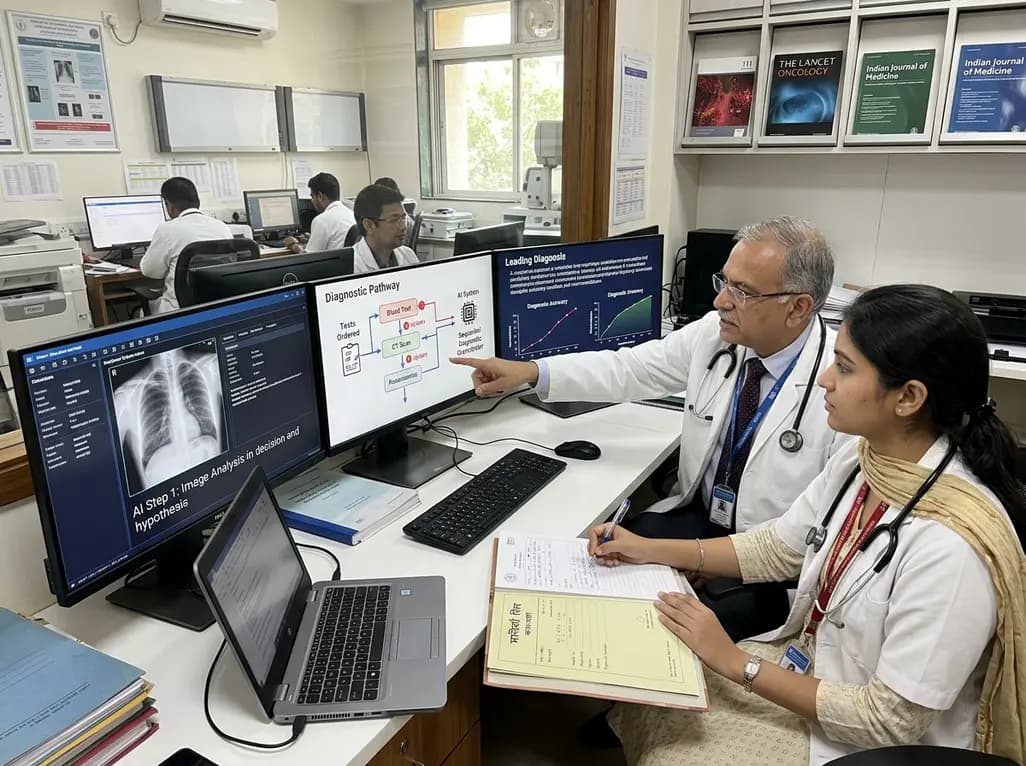
A breakthrough peer-reviewed study demonstrates that a sequential AI diagnosis system can mirror real-world clinical reasoning. By ordering stepwise tests and updating hypotheses dynamically, this multi-agent orchestrator achieved superior diagnostic accuracy while reducing investigative costs.
Today

A prenatal case highlights severe glutaric acidemia type II presenting as bilateral hyperechoic cystic kidneys at 18 weeks. Whole-exome sequencing revealed a novel homozygous ETFDH frameshift variant, demonstrating the power of rapid genetic testing in fetal renal anomalies.
Today

Review how tailored exercise programs benefit frail older patients with heart failure. Explore pathophysiological mechanisms, individualized training prescriptions, and strategies to overcome adherence barriers in clinical practice.
Yesterday

This comparative study evaluates posterior labral tears with and without glenohumeral instability, highlighting distinct demographic patterns, MRI underestimation in stable shoulders, and successful arthroscopic repair outcomes.
Yesterday

A clinical study demonstrates that early intervention with tocilizumab, either as monotherapy or bridged with corticosteroids, achieves significant proptosis reduction and resolves active inflammation in treatment-naive thyroid eye disease.
Yesterday
