

Loading, please wait...
Loading, please wait...
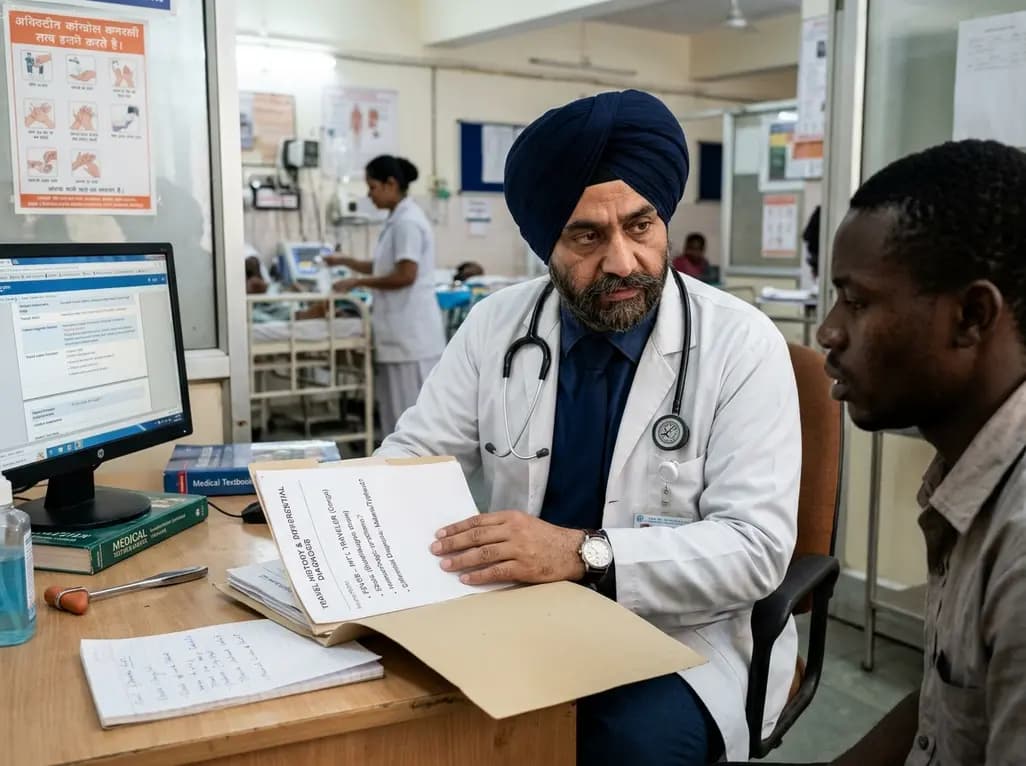
Public health leaders face a severe emergency as the Bundibugyo Ebola outbreak continues to expand rapidly across Central Africa. Six months after its declaration, health authorities confirm that transmission remains uncontrolled across affected communities. Therefore, international health agencies are sounding urgent alarms for medical professionals. The Africa Centres for Disease Control and Prevention warns of escalating devastation without immediate global intervention. Consequently, clinicians worldwide must understand the evolving transmission dynamics, diagnostic challenges, and triage protocols.
Recent epidemiological reports highlight alarming morbidity figures that surpass previous regional records. Specifically, surveillance data confirms over 11,200 infections and more than 5,500 fatalities since May 15. This current emergency represents the second-largest filovirus event ever documented, trailing only the historic 2014 West African epidemic. However, the operational epidemiology reveals even deeper structural vulnerabilities. Africa CDC officials indicate that over 80% of newly identified patients emerge completely outside known contact tracing lists. In addition, more than 65% of recorded deaths occur in community dwellings rather than designated health facilities. Because Ebola achieves its highest viral load during late stages, unmonitored home deaths drive intense secondary propagation. Relatives who wash deceased family members or handle contaminated bedsheets inadvertently contract lethal viral inoculums. Furthermore, unsupervised patient transport in shared transit spreads contagion into previously unexposed neighborhoods. Consequently, field epidemiologists struggle to establish accurate containment perimeters. Clinicians must recognize that community transmission masks the true burden of infection. Moreover, rapid population migration intensifies these transmission networks across provincial borders. Thus, containment efforts require aggressive early detection protocols.
Multiple operational barriers actively hinder public health interventions across the affected territories. First, deadly attacks on frontline medical teams have crippled outreach efforts in unstable conflict zones. Armed conflicts and widespread misinformation foster deep community mistrust toward foreign aid workers. As a result, fearful residents often hide symptomatic relatives instead of seeking emergency medical care. Second, severe resource shortages paralyze day-to-day triage logistics across remote districts. Humanitarian organizations report that isolation centers lack adequate diagnostic kits, protective gear, and transport ambulances. Many frontline ambulances sit idle simply because fuel supplies remain exhausted. Furthermore, severe financial bottlenecks exacerbate the operational collapse. Although international donors pledged $2.9 billion, around $1.6 billion remains undisbursed. Consequently, hundreds of frontline healthcare professionals have worked without compensation for months. Unpaid staff inevitably face fatigue, absenteeism, and demoralization under hazardous working conditions. Kinshasa authorities are attempting to digitize payment systems to accelerate salary distribution. Nevertheless, administrative friction continues to stall resource deployment to critical hotspots. Therefore, public health leaders describe this ongoing crisis as a profound collective failure requiring urgent international coordination.
Recognizing the clinical manifestation of Bundibugyo virus infection presents substantial diagnostic challenges for physicians. Initially, patients present with non-specific constitutional symptoms after an incubation period ranging from 2 to 21 days. Common early signs include sudden high fever, debilitating fatigue, diffuse myalgia, severe headache, and sore throat. Consequently, clinicians frequently misdiagnose early filovirus illness as endemic conditions like malaria, typhoid, or dengue. However, the illness advances rapidly around the fifth day into an aggressive gastrointestinal phase. Patients experience intractable vomiting, profuse watery diarrhea, severe abdominal cramping, and rapid electrolyte depletion. In severe presentations, patients demonstrate vascular collapse, maculopapular rash, and overt hemorrhagic manifestations. Laboratory investigations consistently reveal severe thrombocytopenia, profound leukopenia, elevated liver enzymes, and renal impairment. Therefore, medical teams must prioritize real-time polymerase chain reaction assays for definitive pathogen confirmation. Point-of-care rapid tests help rule out common tropical coinfections promptly. Furthermore, clinicians must obtain comprehensive travel histories from all patients presenting with acute febrile syndromes. Additionally, clinicians should monitor metabolic parameters closely during early stages. As a result, targeted supportive care can prevent rapid clinical deterioration. Thus, maintaining a high index of suspicion ensures timely containment before catastrophic nosocomial transmission occurs.
Optimal clinical management of Bundibugyo virus disease relies fundamentally on aggressive supportive care and rigorous infection control. Unlike standard Zaire ebolavirus, no licensed viral vaccines or approved monoclonal antibody treatments exist for the Bundibugyo species. Therefore, supportive therapy represents the cornerstone of patient survival. Clinicians must initiate aggressive fluid resuscitation to counteract massive gastrointestinal losses. Additionally, healthcare teams must correct life-threatening electrolyte imbalances and provide empirical broad-spectrum antimicrobials for secondary sepsis. Routine symptomatic relief involves antiemetics, antipyretics, and careful analgesic management avoiding non-steroidal anti-inflammatory agents. Simultaneously, healthcare facilities must enforce strict barrier nursing precautions to safeguard medical personnel. Frontline providers must utilize full personal protective equipment, including impermeable coveralls, double gloving, and respirators. Moreover, isolation units must establish dedicated decontamination zones and strict donning and doffing supervision protocols. Nosocomial spread historically drives filovirus mortality spikes among caregivers. Hence, standardizing disinfection procedures with sodium hypochlorite solutions remains vital. Furthermore, safe and dignified burial practices prevent dangerous post-mortem transmission among grieving family members. Consequently, adhering strictly to these intensive management standards dramatically lowers patient mortality.
Although India has not documented any indigenous filovirus infections, healthcare systems must maintain heightened vigilance. Due to expanding international trade between India and Central Africa, imported transmission remains a legitimate public health concern. Therefore, the Ministry of Health and Family Welfare has intensified screening protocols at all major international airports. Clinicians practicing in emergency rooms, outpatient clinics, and tertiary centers should routinely ask febrile patients about recent international travel. Specifically, any individual presenting with unexplained fever or bleeding within 21 days of visiting affected regions warrants immediate isolation. Additionally, hospital administrators must establish designated negative-pressure isolation beds and maintain adequate stockpiles of protective equipment. If clinicians identify a suspected case, they must notify local surveillance authorities immediately. In addition, diagnostic confirmation requires sample transportation to the National Institute of Virology in Pune under biosafety protocols. Indian clinicians must also educate traveling citizens regarding high-risk behaviors and personal hygiene measures during overseas visits. Moreover, ongoing clinical education ensures that frontline healthcare workers recognize atypical viral presentations without hesitation. Thus, proactive surveillance, institutional readiness, and swift reporting mechanisms protect communities from accidental pathogen introduction.
Q1: How does Bundibugyo Ebola differ from the Zaire strain?
The Bundibugyo virus belongs to the Orthoebolavirus genus but exhibits notable biological differences from the Zaire species. Historically, Bundibugyo infections demonstrate a case fatality rate between 30% and 50%, whereas Zaire reaches 90%. Furthermore, licensed vaccines and monoclonal antibodies specifically target Zaire glycoproteins. Consequently, these countermeasures do not neutralize Bundibugyo, making aggressive supportive therapy and electrolyte correction the primary clinical strategy.
Q2: What initial triage protocol should clinicians follow for suspected patients?
Clinicians must isolate any patient presenting with acute fever who visited an outbreak zone within 21 days. First, staff should place the patient in a dedicated single room. Second, healthcare workers must don complete personal protective gear before performing examinations. Additionally, clinicians should contact infection control teams and notify surveillance units immediately. Finally, medical staff must avoid unnecessary invasive procedures while arranging testing.
Q3: How is diagnostic confirmation of Ebola achieved in India?
Definitive diagnosis requires reverse transcription-polymerase chain reaction testing performed on blood samples in reference laboratories. In India, the National Institute of Virology in Pune functions as the primary testing facility for filovirus infections. Clinicians must collect blood using strict biosafety protocols and secure triple-layer packaging. Moreover, testing personnel process specimens under stringent biohazard containment. Meanwhile, serologic assays like ELISA assist during convalescent phases.
Disclaimer: This content is for informational and educational purposes only. It does not constitute medical advice or replace professional judgment. Refer to the latest local and national guidelines for clinical practice.
References

Read summarized clinical updates, watch expert medical content, and earn CME certifications right from your smartphone.
Open your smartphone camera to scan and install.





Six months after its declaration, the Bundibugyo Ebola outbreak in Congo continues to spread rapidly. With over 11,200 infections and weak containment networks, global healthcare providers, including Indian clinicians evaluating febrile international travelers, must strengthen differential diagnosis and vigilance.
Today
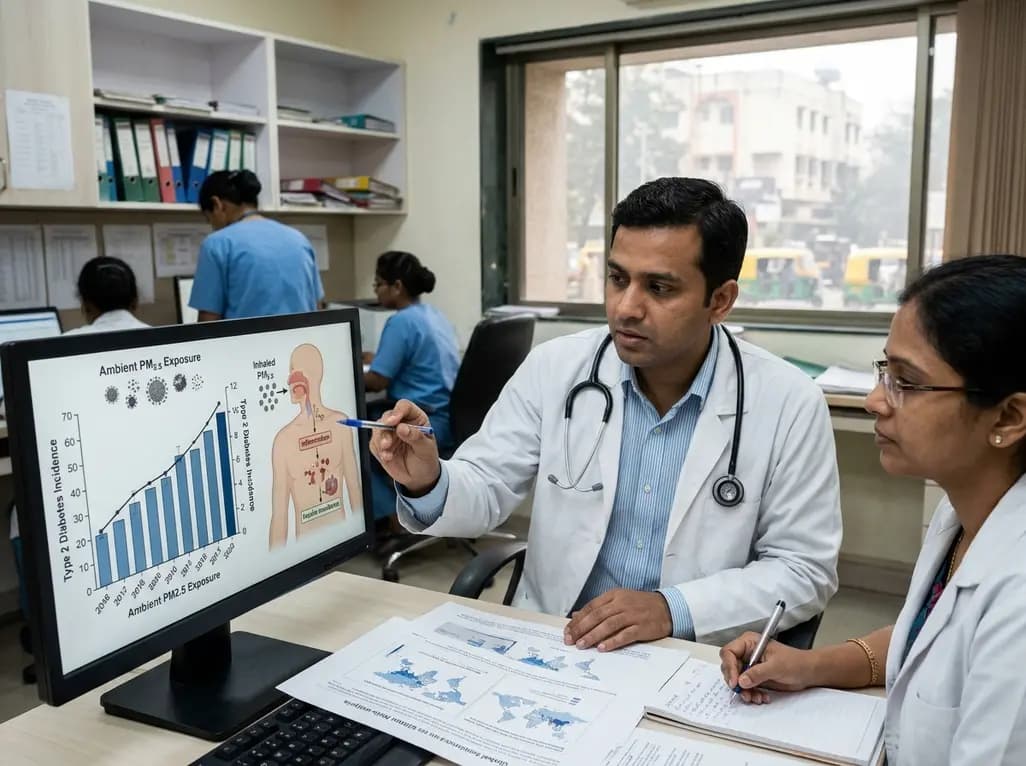
A landmark global umbrella review spanning 200 million participant observations reveals that long-term exposure to fine particulate matter significantly increases the risk of developing type 2 diabetes. Clinicians must now address environmental pollution within routine cardiometabolic prevention frameworks.
Today

Public health experts urge policymakers to review rigorous clinical evidence before scaling up double fortified salt. With only half of India's anaemia cases stemming from iron deficiency, specialists highlight structural trial limitations, dietary diversity needs, and pending data from the SAMPADA national survey.
Today
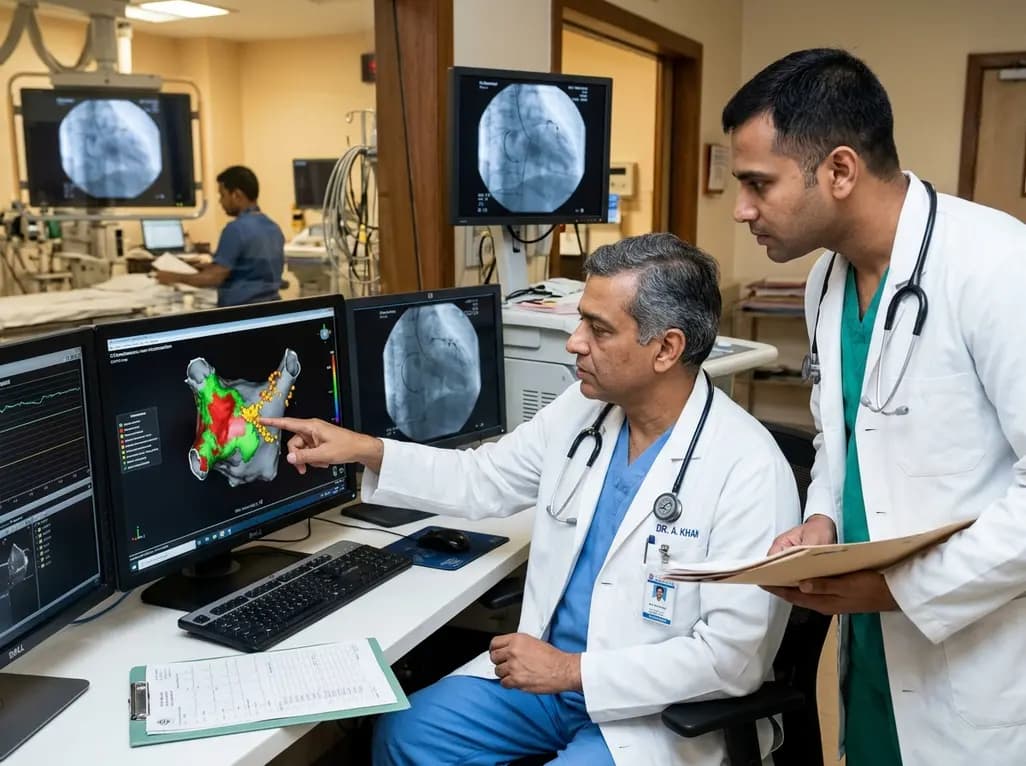
A multicenter registry of 854 patients shows that re-isolating multiple reconnected pulmonary veins during second catheter ablation significantly lowers atrial arrhythmia recurrence, particularly in patients without heart failure, whereas extra-PV ablation provided no clear additive benefit.
Today

A clinical overview of resveratrol supplementation in mitigating exercise-induced muscle damage. This narrative review explores physiological mechanisms, reductions in soreness markers like creatine kinase, dosage strategies, and bioavailability enhancements for sports medicine and nutrition practitioners.
Today
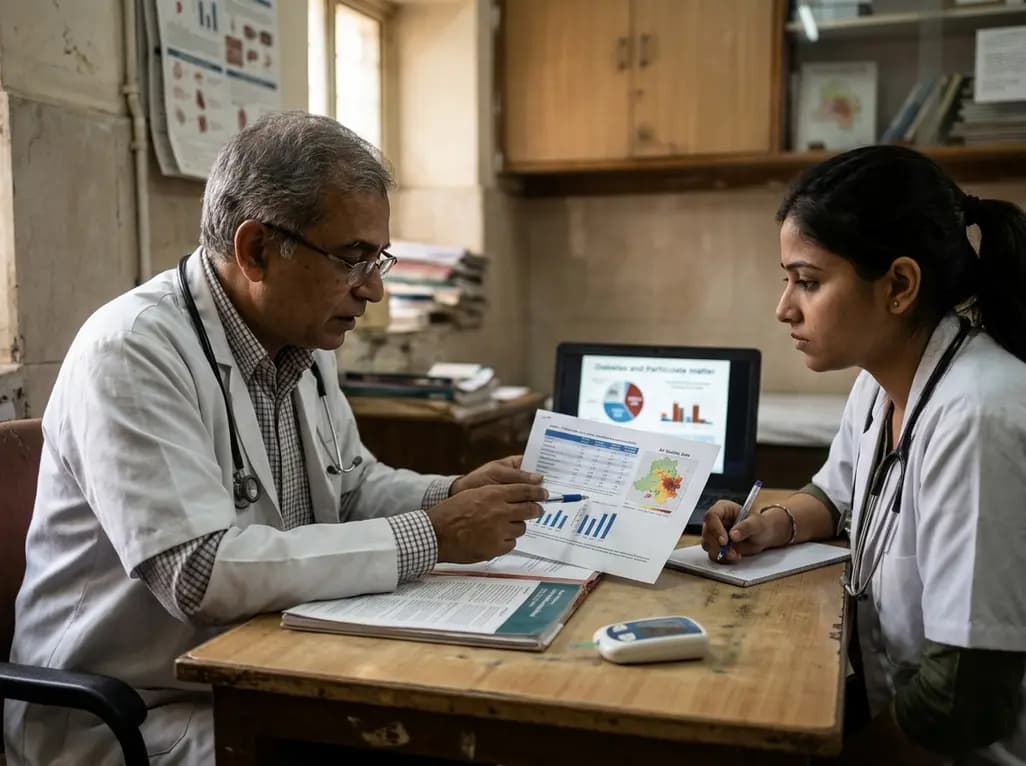
The global APEX-T2D umbrella review synthesises data from over 200 million individuals, establishing that long-term PM2.5 exposure raises type 2 diabetes risk by 10% to 16% per 10 ug/m3. Clinicians must recognize ambient air pollution as an independent systemic metabolic disruptor alongside traditional risk factors.
Today
