.webp&w=384&q=75)

Loading, please wait...
Loading, please wait...
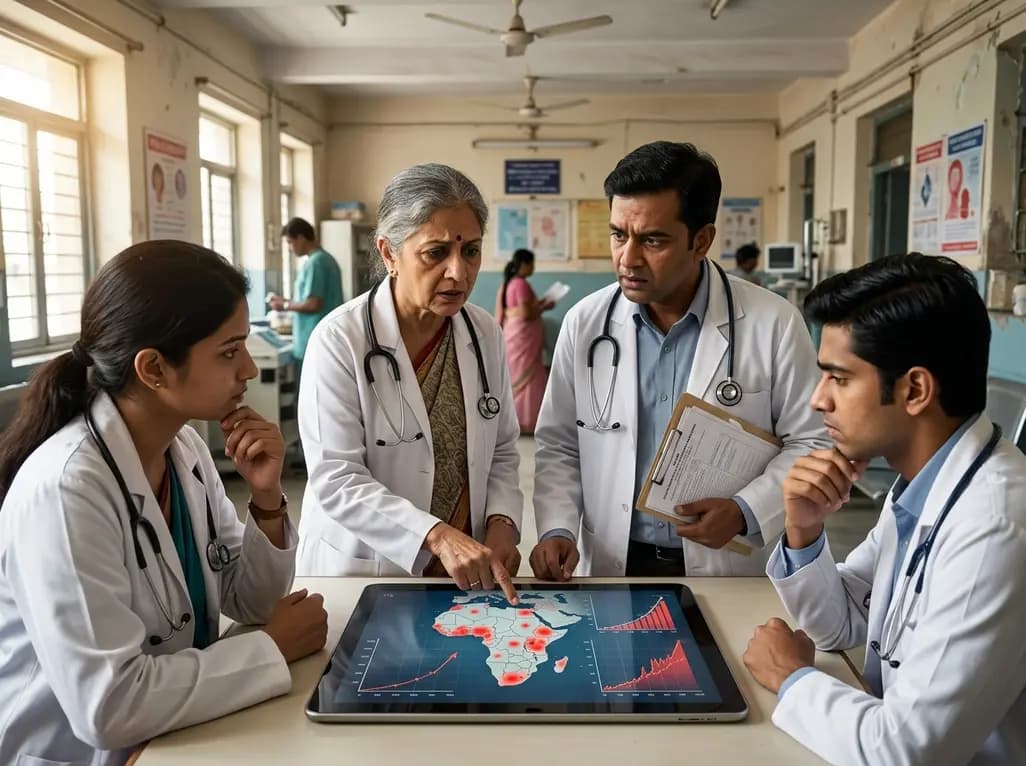
The global healthcare community is facing a critical emergency as a new Bundibugyo Ebola outbreak spreads rapidly in Central Africa. Consequently, the United States government has announced an additional $38 million in response funding. This financial boost brings the total direct U.S. commitment to over $200 million. Currently, public health authorities are sounding the alarm. They warn that the situation in the Democratic Republic of Congo could soon mirror the devastating 2014-2016 crisis.
Importantly, this specific epidemic involves the Bundibugyo virus disease. In the past, the medical world developed effective vaccines and monoclonal treatments for the Zaire strain. However, no approved vaccine or specific therapeutic exists for the Bundibugyo strain. Therefore, medical teams must rely solely on early supportive clinical care to save lives. Consequently, successful containment relies heavily on prompt isolation and rigorous contact tracing.
To address this crisis, the U.S. Centers for Disease Control and Prevention is working alongside international partners. Specifically, the CDC has deployed over 100 experts in Uganda. They also have about 30 personnel stationed in the DRC country office. Furthermore, CDC modeling scenarios suggest a grim outlook without aggressive public health interventions. If patient isolation remains limited, this epidemic could quickly become one of the largest ever documented. Meanwhile, the DRC health ministry reports rapid community transmission.
In response to the growing risk, several countries are implementing strict preventive measures. For instance, the CDC recently imposed temporary travel bans on individuals traveling from affected regions. These regions include the DRC, Uganda, and South Sudan. Additionally, international health agencies are conducting enhanced screenings at major travel hubs. Meanwhile, local protests have halted the construction of a planned quarantine facility in Kenya. Ultimately, these aggressive strategies demonstrate the high stakes of preventing international spread.
Q1: Why is the Bundibugyo Ebola outbreak more difficult to manage than previous outbreaks?
Unlike the Zaire Ebola strain, the Bundibugyo strain currently has no licensed vaccines or approved specific therapeutic treatments. As a result, healthcare workers must rely on early supportive care to manage patients, making containment and isolation efforts absolutely crucial.
Q2: What is the current funding status from the United States?
The United States has committed an additional $38 million to the containment efforts. Consequently, this brings the total direct U.S. funding for this specific outbreak response to more than $200 million.
Q3: What do the CDC modeling scenarios indicate about this outbreak?
According to CDC models, the outbreak could match or exceed the scale of the 2014-2016 West Africa epidemic if isolation measures remain limited and public health interventions are not aggressively maintained.
Disclaimer: This content is for informational and educational purposes only. It does not constitute medical advice or replace professional judgment. Refer to the latest local and national guidelines for clinical practice.
References

Read summarized clinical updates, watch expert medical content, and earn CME certifications right from your smartphone.
Open your smartphone camera to scan and install.





The US commits an extra $38M to battle a Bundibugyo Ebola outbreak in the DRC and Uganda, as the CDC warns of potential rapid, widespread transmission....
4 months ago

A recent study demonstrates that spinal oxygen sensors do not require mitochondrial electron transport to trigger sympathetic excitation during acute hypoxia, revealing new insights into how mitochondrial oxidative stress modulates autonomic tone in cardiovascular and neurological diseases.
Today
Demanding exhaustive hormonal profiling can inadvertently discourage clinical studies involving females. Methodological standards must align with the specific scientific question to expand, not restrict, equitable evidence for women.
Today

The Directorate General of Health Services directs Indian states to halt the hazardous reuse and reprocessing of single-use medical devices. Discover regulatory implications under the Drugs and Cosmetics Act, critical infection risks, legal liabilities, and operational changes required across clinical specialties.
Today

A novel calcium polyphosphate coacervate enables injectable bone implants with in situ hierarchical porosity via phase separation and gas foaming, significantly enhancing cell proliferation, energy metabolism, and osteogenic differentiation for minimally invasive bone defect repair.
Today

Following regulatory scrutiny from FSSAI regarding promotional representations and lean muscle preservation claims, Dr. Reddy's Laboratories and Nestlé Health Science are currently reviewing the branding and marketing strategy for their joint nutritional supplement Celevida GLP+.
Today
