.webp&w=384&q=75)

Loading, please wait...
Loading, please wait...

Femoroacetabular impingement (FAI) causes significant pain and functional decline in high-level athletes. While hip arthroscopy generally provides excellent results, clinicians often debate the efficacy of borderline hip dysplasia arthroscopy. Recent clinical evidence suggests that professional athletes with mild dysplasia can still achieve high return-to-sport (RTS) rates after surgical intervention.
A cohort study followed 40 elite professional and Olympic athletes with a lateral center edge angle (LCEA) between 18° and 25°. The results revealed that primary arthroscopy yielded a 79% RTS rate. In contrast, revision procedures showed a significantly lower RTS rate of only 25%. On average, successful athletes returned to their professional level within 7.5 months after the procedure.
Several factors influence the success of these complex hip procedures. Specifically, older age and a history of previous hip surgeries reduce the likelihood of returning to professional competition. Interestingly, researchers found no significant association between femoral version, joint space, or the presence of cartilage defects and RTS success. This indicates that the primary setting offers the best window for surgical success.
Furthermore, primary hip arthroscopy remains a viable and effective option for professional athletes. Most athletes regain their preoperative performance levels when they receive treatment early. Consequently, surgeons should consider patient age and surgical history carefully when planning these interventions. Proper patient selection ensures that elite performers maintain their professional careers despite underlying borderline dysplasia.
Professional athletes undergoing primary hip arthroscopy for FAI show a 79% return-to-sport rate. However, those undergoing revision surgery have a significantly lower RTS rate of 25%.
Athletes generally return to their professional sport at a median of 7.5 months after the procedure. The documented range for return varies from 3 months to over 24 months depending on individual progress.
Yes, older age at the time of surgery is associated with a lower likelihood of returning to professional sports. Success rates are generally higher in younger athletes undergoing their first hip procedure.
Disclaimer: This content is for informational and educational purposes only and does not constitute medical advice. It is not intended to be a substitute for professional medical advice, diagnosis, or treatment. Refer to the latest local and national guidelines for clinical practice.
References
Uppstrom T et al. Return to Sport in Professional Athletes With Borderline Hip Dysplasia After Hip Arthroscopy for Femoroacetabular Impingement. Am J Sports Med. 2026 May 04. doi: 10.1177/03635465261439048. PMID: 42077177.
Owens JS, Jimenez AE, Lee MS, Monahan PF, Maldonado DR, Domb BG. High-Level Athletes With Borderline Hip Dysplasia Achieve Favorable Outcomes and Return to Sport Rates Following Primary Hip Arthroscopy. Arthroscopy. 2023 Feb;39(2):271-282. doi: 10.1016/j.arthro.2022.08.023.
Nawabi DH, Degen RM, Fields KG, Kelly BT. Return to Sport in Athletes With Borderline Hip Dysplasia After Hip Arthroscopy for Femoroacetabular Impingement Syndrome. Am J Sports Med. 2022 Jan;50(1):30-39. doi: 10.1177/03635465211056082.
"
Read summarized clinical updates, watch expert medical content, and earn CME certifications right from your smartphone.
Open your smartphone camera to scan and install.





Primary hip arthroscopy for FAI in professional athletes with borderline dysplasia shows a 79% return-to-sport rate, though revision outcomes are lower....
5 months ago
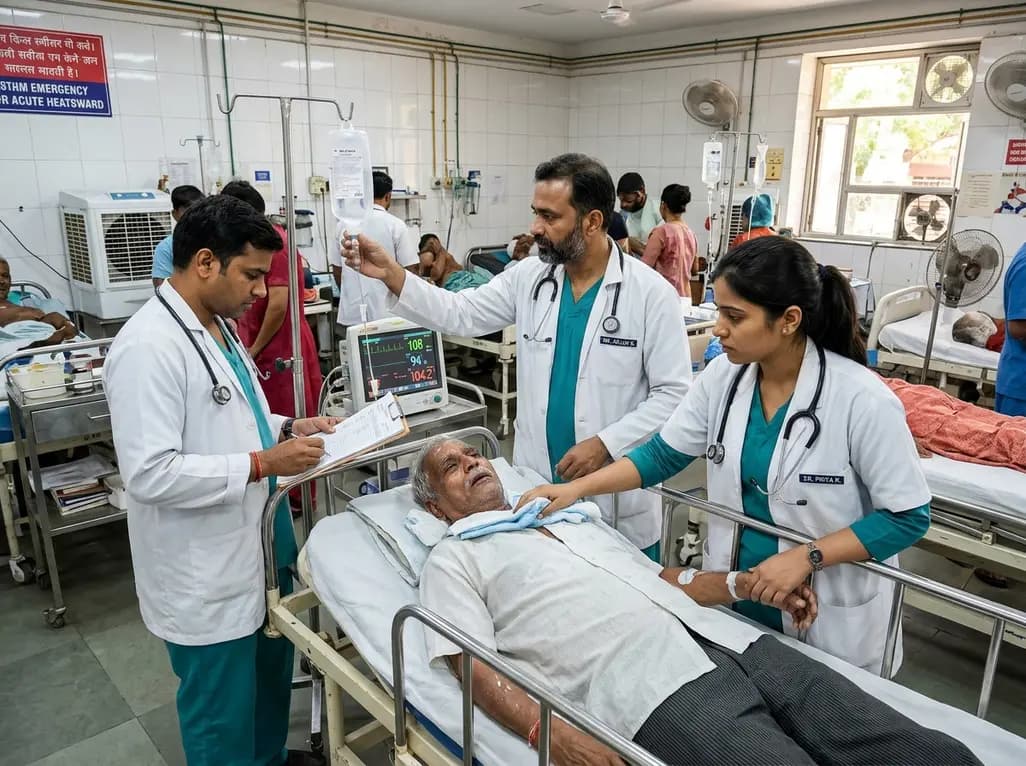
Recent epidemiological data reveals a dramatic surge in summer heat mortality driven by human-induced climate warming. This analysis explores the pathophysiological impacts on cardiac and renal systems, diagnostic dilemmas in death certification, and essential emergency cooling protocols for acute clinical care.
Today

Odisha has established India's first state-level clinical protocol specifically tailored for pregnant women with sickle cell disease. Developed with NHM and UNICEF, the framework provides structured antenatal screening, crisis mitigation, standardized referral pathways, and specialized interdisciplinary care.
Today

India is advancing preventive healthcare by integrating genomics, artificial intelligence, and quantum technologies. With the SANGAM programme sequencing one million Indian genomes, clinicians can unlock personalized therapies, detect cardiometabolic risks early, and curb the burden of diabetes and heart disease.
Today

A randomized controlled trial demonstrates that an eight-week dual-task training intervention significantly improves static and dynamic postural control over standard balance exercises in individuals with chronic ankle instability, addressing critical neurocognitive deficits during athletic and daily activities.
Today

A retrospective cohort study of 7,716 ICU patients from the MIMIC-IV database demonstrates that Gradient Boosting Decision Trees significantly outperform traditional SOFA scores in predicting in-hospital mortality among patients with sepsis and diabetes, with SHAP analysis providing clinical interpretability.
Today
