.webp&w=384&q=75)

Loading, please wait...
Loading, please wait...

Accurate dose estimation is a cornerstone of radiation protection in modern oncology. While Boron Neutron Capture Therapy (BNCT) aims to minimize damage to healthy tissues, the process of radioactivation remains a critical factor for safety. Researchers recently conducted simulation calculations to estimate the BNCT internal exposure dose and the specific radionuclides produced during treatment. This study focused on patients receiving treatment for head and neck regions, providing vital data for clinical practice.
The research identified several key radionuclides that contribute to internal radiation, specifically Sodium-24 (Na), Phosphorus-32 (P), and Iodine-128 (I). Each of these elements behaves differently within the human body. For instance, Sodium-24 distributes itself uniformly across all tissues. Consequently, its impact is widespread. On the other hand, Phosphorus-32 shows a high affinity for bone surfaces and red marrow. Therefore, clinicians must monitor these specific areas closely to prevent long-term hematological or skeletal complications.
The study found that the thyroid is particularly sensitive to Iodine-128. Although this effect depends heavily on the specific irradiated part of the neck, it highlights the necessity of organ-specific monitoring. Furthermore, the calculated effective dose from internal exposure appeared to be approximately one order of magnitude lower than external exposure. However, this does not mean it is insignificant. Because certain organs receive concentrated doses, medical physicists should incorporate these components into standardized treatment planning.
Ultimately, excluding internal exposure from safety calculations might lead to an underestimation of the total biological effect. Thus, clinicians should advocate for comprehensive simulations that account for all radioactivation products. This approach ensures that the BNCT internal exposure dose remains within safe limits, protecting critical organs while maximizing therapeutic efficacy for head and neck cancers.
The primary radionuclides involved include Sodium-24, Phosphorus-32, and Iodine-128. Sodium-24 affects the whole body uniformly, while Phosphorus-32 specifically targets bone and marrow.
The internal exposure dose is generally one order of magnitude lower than the external dose. Despite this, it remains clinically relevant for protecting sensitive organs like the thyroid and bone marrow.
Estimating the internal dose helps prevent unintended damage to critical organs. By considering radioactivation, doctors can create safer and more precise radiation therapy protocols.
Disclaimer: This content is for informational and educational purposes only. It does not constitute professional medical advice, diagnosis, or treatment. Always seek the advice of your physician or other qualified healthcare provider with any questions you may have regarding a medical condition. Refer to the latest local and national guidelines for clinical practice.
References
Narita R et al. Radionuclides and committed internal exposure dose for radioactivation in boron neutron capture therapy. Ann ICRP. 2026 May 13. doi: 10.1177/01466453251411682. PMID: 42125875.
International Commission on Radiological Protection. ICRP Publication 130: Occupational Intakes of Radionuclides: Part 1. Ann ICRP. 2015.
Moss RL. Critical review, with retrospective and prospective perspectives, on therapeutic photons and neutrons in BNCT. Applied Radiation and Isotopes. 2014.
"
Read summarized clinical updates, watch expert medical content, and earn CME certifications right from your smartphone.
Open your smartphone camera to scan and install.





A recent study evaluates internal exposure doses from radionuclides like Na-24 and P-32 during BNCT, emphasizing the need for better radiation protection....
5 months ago
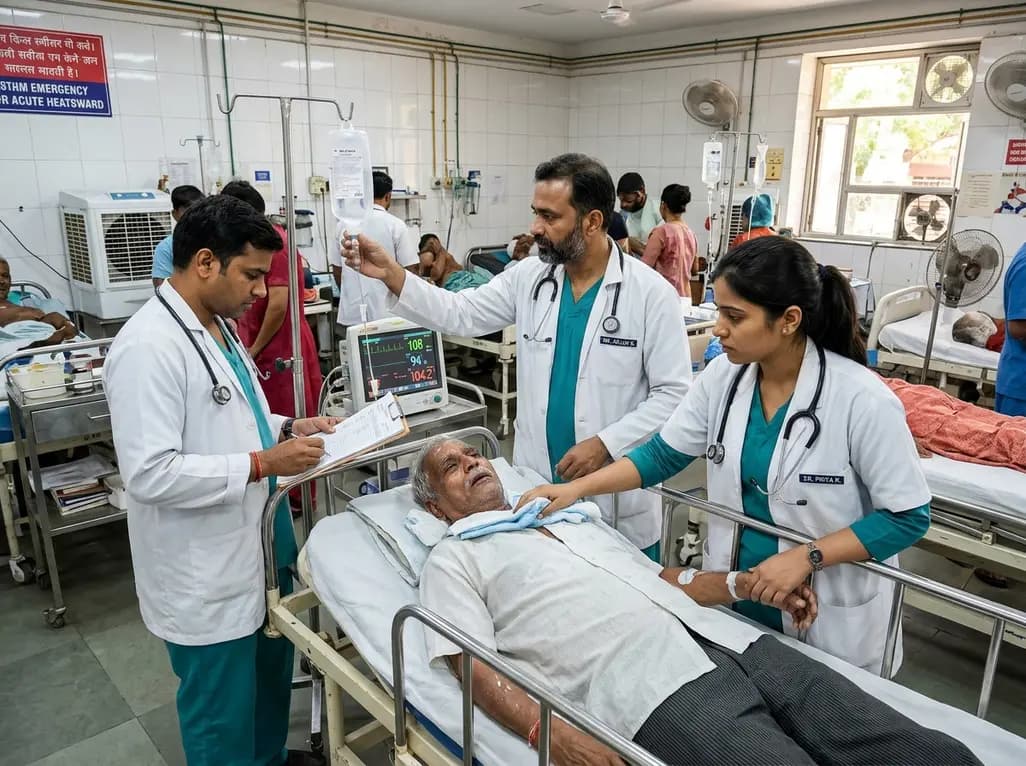
Recent epidemiological data reveals a dramatic surge in summer heat mortality driven by human-induced climate warming. This analysis explores the pathophysiological impacts on cardiac and renal systems, diagnostic dilemmas in death certification, and essential emergency cooling protocols for acute clinical care.
Today

Odisha has established India's first state-level clinical protocol specifically tailored for pregnant women with sickle cell disease. Developed with NHM and UNICEF, the framework provides structured antenatal screening, crisis mitigation, standardized referral pathways, and specialized interdisciplinary care.
Today

India is advancing preventive healthcare by integrating genomics, artificial intelligence, and quantum technologies. With the SANGAM programme sequencing one million Indian genomes, clinicians can unlock personalized therapies, detect cardiometabolic risks early, and curb the burden of diabetes and heart disease.
Today

A randomized controlled trial demonstrates that an eight-week dual-task training intervention significantly improves static and dynamic postural control over standard balance exercises in individuals with chronic ankle instability, addressing critical neurocognitive deficits during athletic and daily activities.
Today

A retrospective cohort study of 7,716 ICU patients from the MIMIC-IV database demonstrates that Gradient Boosting Decision Trees significantly outperform traditional SOFA scores in predicting in-hospital mortality among patients with sepsis and diabetes, with SHAP analysis providing clinical interpretability.
Today
