.webp&w=384&q=75)

Loading, please wait...
Loading, please wait...

Hematopoietic cell transplantation (HCT) offers a cure for many hematological conditions. However, chronic graft-versus-host disease (cGVHD) remains a significant barrier to long-term success. Recently, researchers introduced the BIOPREVENT machine-learning algorithm to address this. This innovative tool predicts future cGVHD and nonrelapse mortality (NRM) using biomarkers measured 90 to 100 days after transplantation. Specifically, by identifying high-risk patients early, clinicians can potentially intervene before debilitating symptoms manifest. Furthermore, early prediction allows for more intensive monitoring of those at the greatest risk.
Researchers developed the model using data from 1,310 HCT recipients. Moreover, they integrated seven plasma proteins with nine clinical variables to ensure robust data. The team evaluated several approaches, including Random Survival Forests and Bayesian Additive Regression Trees (BART). Notably, the BART model consistently demonstrated the highest predictive accuracy across various time points. Consequently, it became the foundation for the final BIOPREVENT model. In addition, variable importance analysis identified specific biomarkers as critical predictors. For instance, MMP3 and CXCL9 emerged as key indicators for cGVHD risk. In contrast, IL1RL1 and sCD163 played a vital role in predicting nonrelapse mortality. Therefore, the model achieved high accuracy values, significantly outperforming models based solely on clinical data.
BIOPREVENT offers a major shift toward personalized transplant care. Additionally, it provides a reliable estimate of risk at a critical three-month window post-transplant. Because of this, the researchers have made a publicly available R Shiny web application to support clinical use. Consequently, this accessibility ensures that hematologists can integrate these predictive insights into their daily practice. While further studies must explore preemptive therapy guidance, this tool represents a significant leap in post-transplant monitoring.
The algorithm incorporates seven plasma proteins measured at Day 90 or 100 post-HCT. Key proteins include CXCL9 and MMP3 for chronic GVHD, and IL1RL1 and sCD163 for nonrelapse mortality prediction.
The BIOPREVENT machine-learning algorithm significantly outperformed models using only clinical variables. For nonrelapse mortality, it achieved predictive accuracy (AUCt) ranging from 0.75 to 0.91.
Disclaimer: This content is for informational and educational purposes only and does not constitute medical advice or a professional relationship between the reader and the author. Always consult a qualified healthcare provider for personal medical concerns. Refer to the latest local and national guidelines for clinical practice.
References
1. Martens MJ et al. The BIOPREVENT machine-learning algorithm predicts chronic graft-versus-host disease and mortality risk using posttransplant biomarkers. J Clin Invest. 2026 Feb 16. doi: undefined. PMID: 41697751.
2. Logan BR et al. Validated graft-specific biomarkers identify patients at risk for chronic graft-versus-host disease and death. J Clin Invest. 2023;133(15):e168575.
3. Paczesny S. Biomarkers for GVHD and Graft-Versus-Tumor Effects. Methods Mol Biol. 2022;2455:271-285.
"
Read summarized clinical updates, watch expert medical content, and earn CME certifications right from your smartphone.
Open your smartphone camera to scan and install.





BIOPREVENT uses machine learning and 7 plasma proteins to predict chronic GVHD and nonrelapse mortality at 3 months post-HCT with high accuracy....
8 months ago
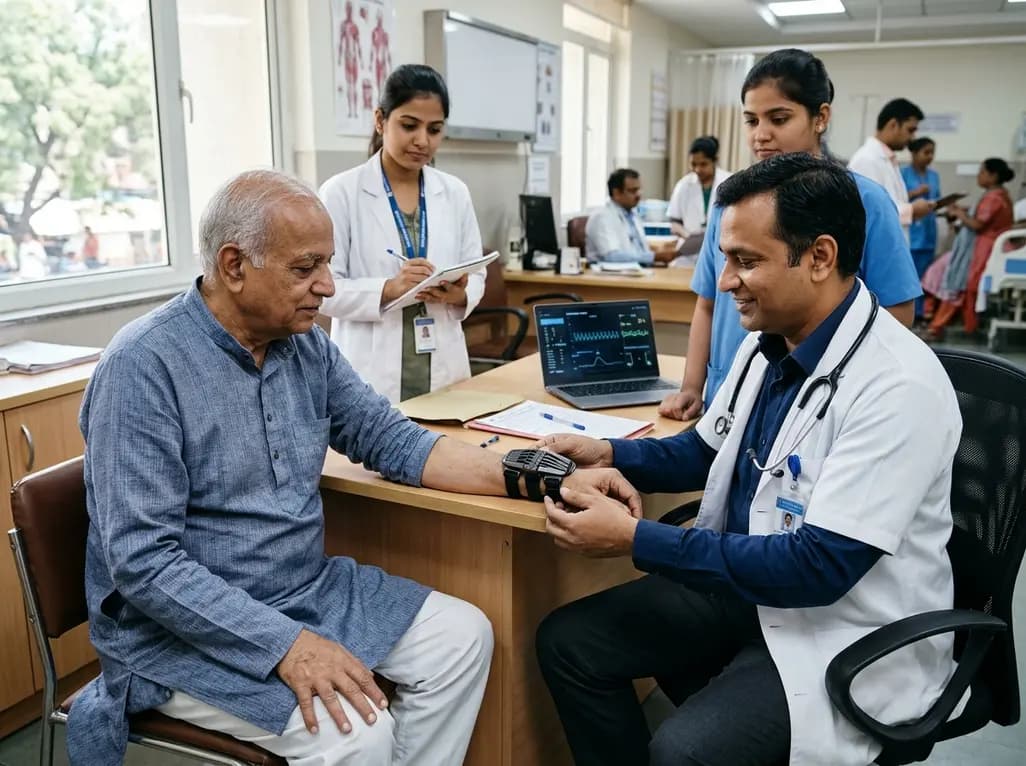
The TREM-AB open-label pilot study evaluated a wearable passive nonlinear vibration absorber for essential tremor. The Nonlinear Energy Sink bracelet reduced clinical Fahn-Tolosa-Marin tremor scores by 32.1% and electrophysiological tremor power by 49.2% with no adverse effects reported.
Today

A study in JAMIA Open shows lightweight open-source reasoning LLMs achieve up to 95% sensitivity and accelerate evidence synthesis screening by nearly twentyfold, presenting a cost-effective, scalable AI solution for biomedical research and systematic reviews.
Today
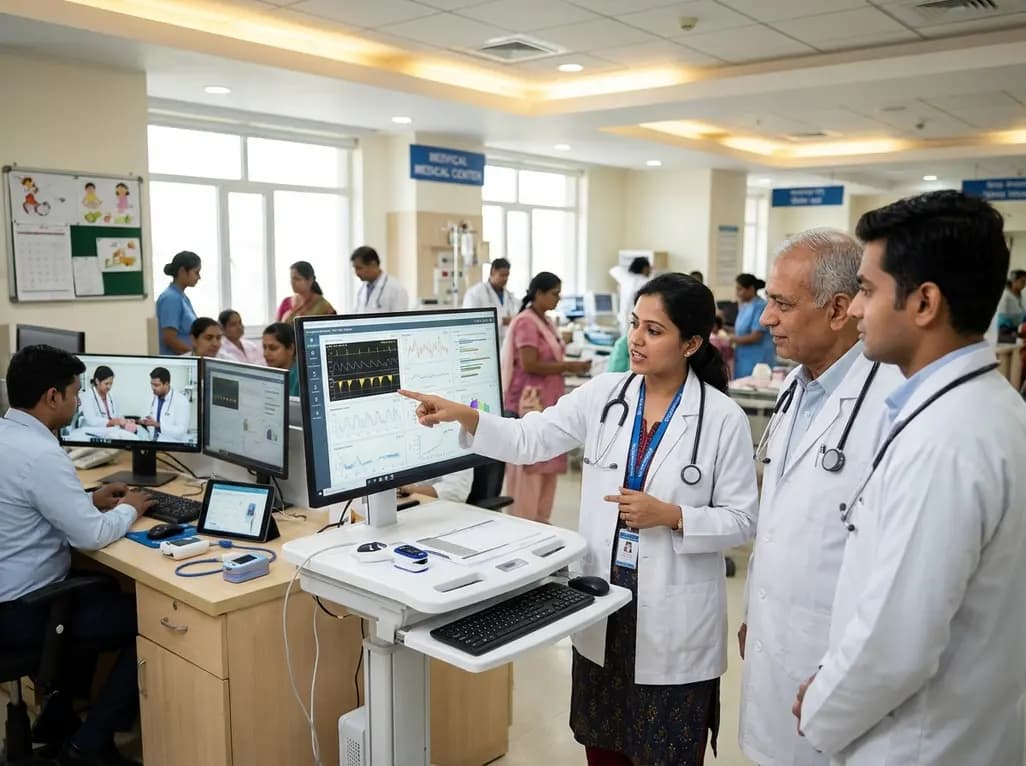
A landmark study details how an enterprise pediatric remote patient management model expanded from a single cardiology pilot to 16 diverse specialty programs by combining centralized digital operations with specialty clinical leadership.
Today
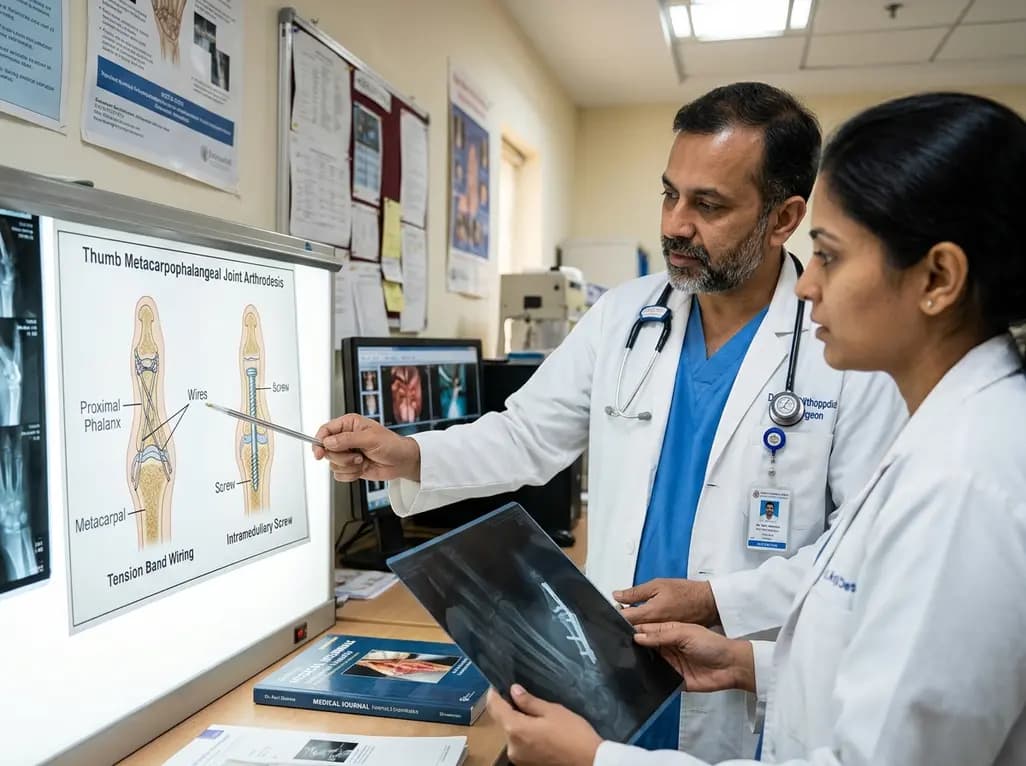
A comparative review of tension band wiring and intramedullary screw fixation in thumb metacarpophalangeal arthrodesis, evaluating union rates, hardware complications, and clinical outcomes.
Today
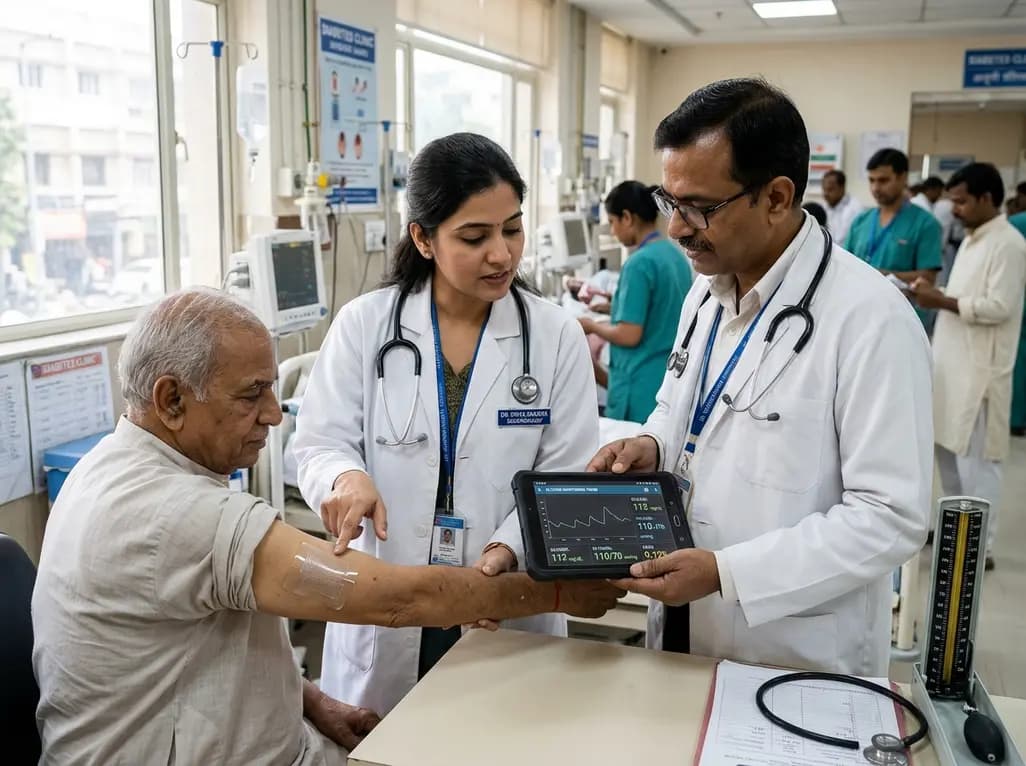
A breakthrough ultrathin multimodal sensor decouples physical hemodynamic monitoring from disposable electrochemical calibration, achieving long-term wearable glucose prediction with 81.36% accuracy and a 9.12% MARD. This offers a robust, drift-free solution for outpatient metabolic surveillance.
Today
