.webp&w=384&q=75)

Loading, please wait...
Loading, please wait...

Integrating flexible electronics with robotics remains a critical challenge for achieving intelligent sensing in dexterous robotic hands. Tactile feedback is essential for precise grasping and delicate tissue manipulation. Recently, researchers proposed a bioinspired pressure sensor that mimics the multilayered architecture of human skin. Consequently, this innovation addresses the long-standing trade-off between high sensitivity and a wide operational pressure range. By combining advanced materials, this sensor provides a level of tactile perception previously difficult to achieve in flexible electronics.
The architecture of the sensor relies on a two-layer design inspired by the epidermis and dermis. Furthermore, it incorporates a synergistic carbon black (CB) and carbon nanotube (CNT) island-chain structure alongside a PVDF/PDMS fibrous network. This dual-network approach allows the sensor to maintain elasticity while ensuring high conductivity. Notably, the rhombic grid electrode design enables a spatial resolution of 80 cm⁻² at the fingertip. Therefore, the device can detect subtle changes in pressure across a wide range of up to 500 kPa with a sensitivity of 2.391 kPa⁻¹.
The bioinspired pressure sensor holds significant promise for medical applications, particularly in robotic-assisted surgery and advanced prosthetics. In surgical settings, the lack of haptic feedback often increases the risk of accidental tissue trauma. However, this sensor enables real-time pressure mapping and contour recognition, allowing surgeons to differentiate object properties with high precision. Additionally, the sensor exhibits low detection limits and remains stable over 10,000 cycles. Thus, it offers a durable and reliable solution for industrial automation and intelligent robotics. Surgeons and engineers can now look forward to more responsive and safer robotic interfaces.
The sensor utilizes a two-layer architecture that replicates the structural complexity of human skin. It uses a fibrous network for elasticity and a conductive island-chain structure to provide sensory feedback similar to mechanoreceptors.
This technology is primarily aimed at robotic-assisted minimally invasive surgery and prosthetic limbs. It provides the tactile feedback necessary for delicate tasks such as suturing, tissue palpation, and object manipulation.
Yes, testing demonstrates that the sensor maintains stable performance for over 10,000 cycles. Furthermore, it can detect extremely low forces, making it suitable for high-precision clinical environments.
Disclaimer: This content is for informational and educational purposes only... Refer to the latest local and national guidelines for clinical practice.
References
Cheng P et al. Bioinspired High-Resolution, Wide-Range Pressure Sensor Enabled by Synergistic CB/CNT Island-Chain and PVDF/PDMS Fiber Network for Dexterous Robotic Hands. Small. 2026 May 24. doi: 10.1002/smll.73918. PMID: 42177829.
Juo et al. Tactile Feedback in Robot-Assisted Minimally Invasive Surgery: A Systematic Review. PMC. 2024. Available at: https://www.ncbi.nlm.nih.gov/pmc/articles/PMC11624683/
Haptic and Palpation Sensing for Robotic Surgery: Engineering Perspectives on Design and Integration. MDPI. 2026. Available at: https://www.mdpi.com/2072-666X/17/2/234
"
Read summarized clinical updates, watch expert medical content, and earn CME certifications right from your smartphone.
Open your smartphone camera to scan and install.





Researchers have developed a skin-inspired sensor using CB/CNT and PVDF/PDMS fibers, enabling robotic hands to achieve high-precision tactile sensing....
4 months ago
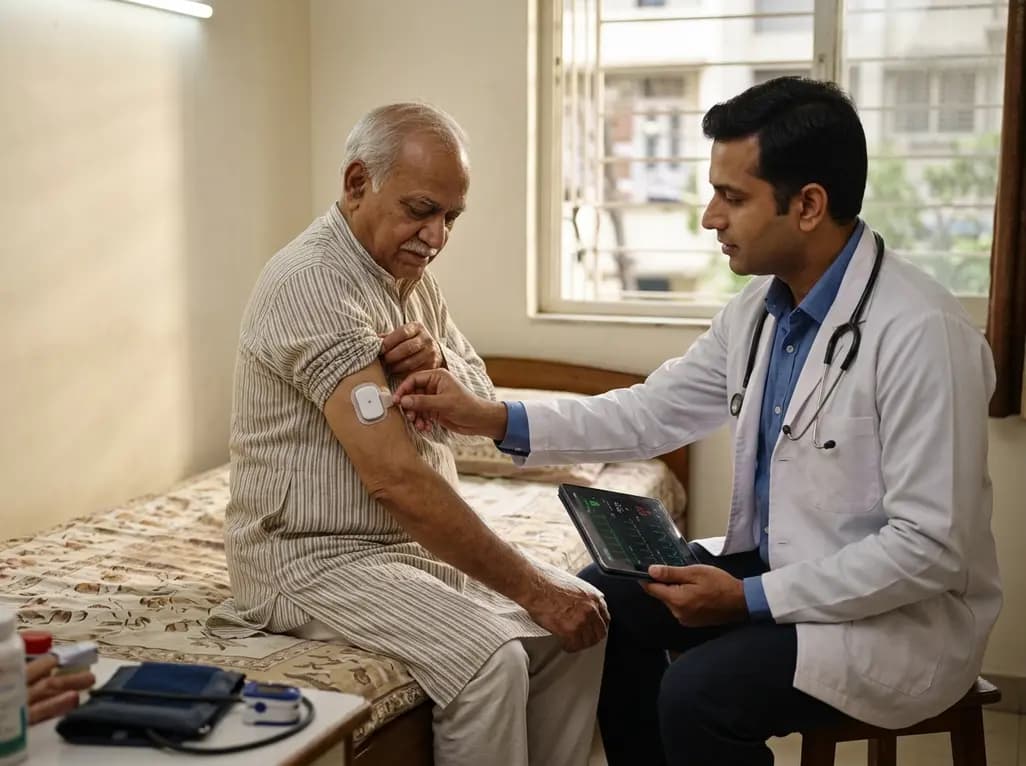
A feasibility study evaluates remote vital sign monitoring in acute hospital at home patients. Continuous wearable patches captured heart rate and respiratory rate with high adherence (89% and 75%), significantly exceeding manual spot checks for blood pressure, oxygen saturation, and temperature.
Today

A scoping review evaluates 116 studies on AI in women's reproductive health, finding that 83.6% carry high risk of bias. While ensemble models show promise, disparities and lack of validation hinder LMIC deployment.
Today
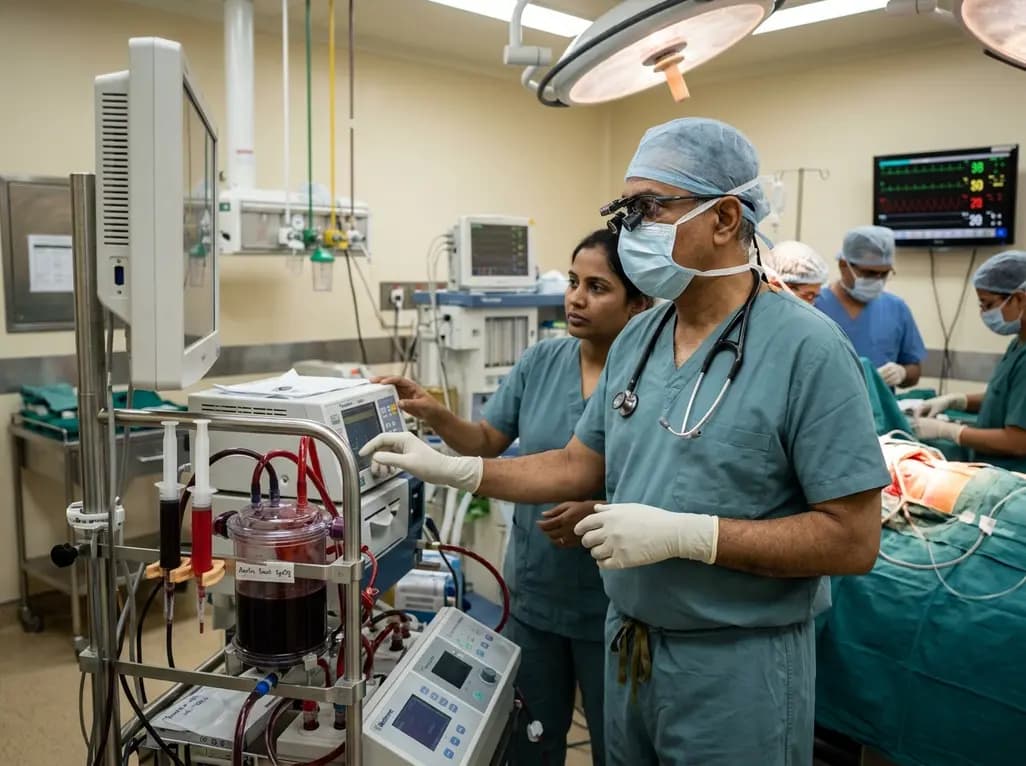
Differential oxygenation during peripheral TA-NRP can cause undetected coronary hypoxemia due to arch vessel clamping. A novel circuit with continuous aortic root monitoring detects desaturation early, facilitating left ventricular unloading and preventing allograft dysfunction and unnecessary heart discard.
Today
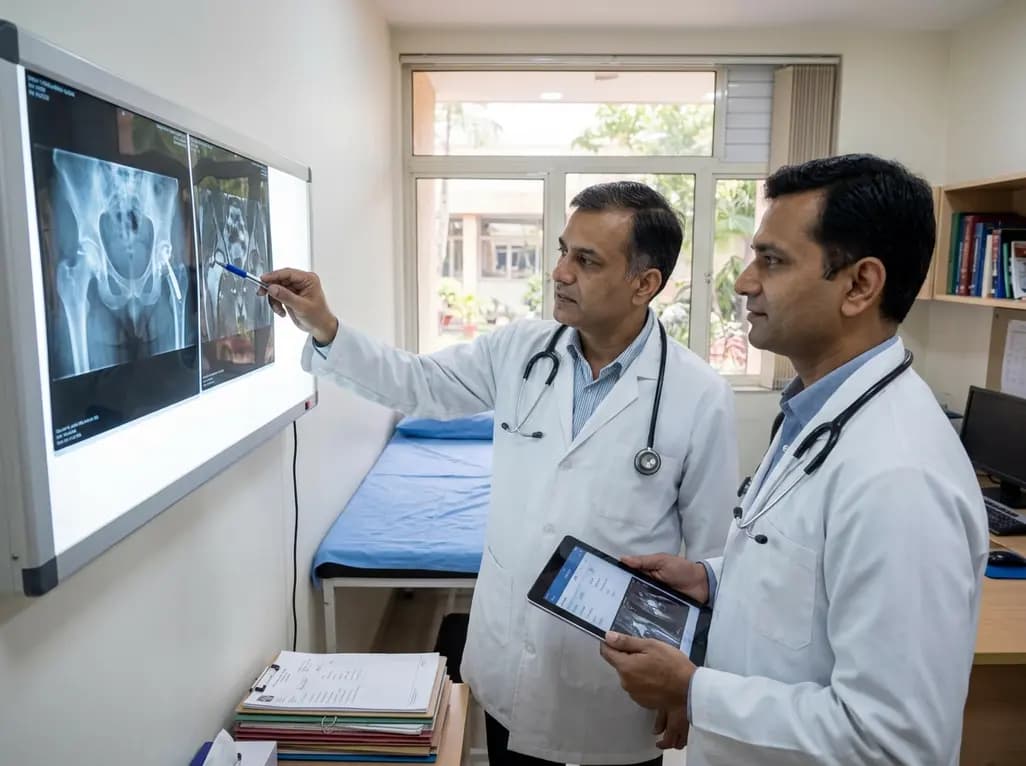
A longitudinal study reveals that patients undergoing staged bilateral hip arthroscopy experience progressive contralateral labral deterioration during surgical intervals. However, structural degradation does not compromise 2-year postoperative clinical outcomes or patient-reported satisfaction scores.
Today

A post hoc analysis of the PARM-T2D study shows pemafibrate exerts baseline-dependent effects on LDL-C and particle size in type 2 diabetes and hypertriglyceridemia. It lowers triglycerides and remnants while favorably remodeling atherogenic LDL particles based on initial lipid control status.
Today
