.webp&w=384&q=75)

Loading, please wait...
Loading, please wait...

Bacterial biofilms represent a significant clinical challenge due to their inherent resistance to conventional antibiotics. These complex communities protect bacteria within a self-produced extracellular matrix. Consequently, treating chronic infections associated with medical implants and dental surfaces remains difficult. Researchers have recently developed bioinspired antibacterial microrobots derived from mammalian cells to combat this growing threat. These innovative tools offer a dual-action approach by combining mechanical disruption with enhanced chemical killing.
The development process involves polymer-assisted cell metallization. This technique allows the antibacterial microrobots to precisely preserve their original mammalian cell morphology. Furthermore, the incorporation of Fe3O4 nanoparticles grants these robots magnetic responsiveness and catalytic properties. When experts apply external magnetic fields, these cell-derived magnetic microrobots (MMCs) navigate toward the infection site. They mechanically penetrate the dense biofilm structure through direct structural interactions. Moreover, the Fe3O4 nanoparticles dramatically promote the bactericidal performance of hydrogen peroxide (H2O2). Therefore, the system achieves superior bacterial clearance compared to traditional therapy.
This bioinspired technology could revolutionize how clinicians manage persistent infections. Since the robots utilize mammalian cell structures, they likely possess high biocompatibility for future in vivo applications. Additionally, the ability to guide these tools with microscale precision ensures targeted treatment while minimizing systemic side effects. Surgeons and infectious disease specialists may eventually use these microrobots to clear biofilms from prosthetic joints or catheters. In addition, dental professionals could apply similar technology to treat deep-seated oral infections. Although further clinical trials are necessary, this research marks a pivotal step toward autonomous, high-precision anti-infective therapy.
These microrobots are decorated with magnetic nanoparticles. This allows medical professionals to guide them using external magnetic fields toward specific areas of infection, such as an internal medical device or a wound site.
Fe3O4 nanoparticles serve a dual purpose. They provide the magnetic properties needed for movement and act as a catalyst that enhances the bactericidal action of hydrogen peroxide, leading to more effective bacterial killing.
Mammalian cells provide a bioinspired framework that preserves natural morphology. This strategy potentially enhances biocompatibility and allows the robots to interact more naturally with biological environments compared to purely synthetic materials.
Disclaimer: This content is for informational and educational purposes only and does not constitute medical advice or a professional relationship. While we strive for accuracy, the rapidly evolving nature of medical research means new data may emerge. Refer to the latest local and national guidelines for clinical practice.
References
Chen Y et al. Bioinspired antibacterial microrobots derived from mammalian cells for biofilm disruption. Chem Commun (Camb). 2026 Mar 20. doi: 10.1039/d6cc00121a. PMID: 41859892.
Gao et al. Magnetic Field/Ultrasound-Responsive Fe3O4 Microbubbles for Targeted Mechanical/Catalytic Removal of Bacterial Biofilms. PMC. 2024.
Villa-Gomez et al. Microrobotics for Precision Biofilm Diagnostics and Treatment. PMC. 2024.

Read summarized clinical updates, watch expert medical content, and earn CME certifications right from your smartphone.
Open your smartphone camera to scan and install.





A study highlights bioinspired antibacterial microrobots derived from mammalian cells that mechanically disrupt biofilms and enhance bactericidal performanc...
7 months ago

A breakthrough ultrathin multimodal sensor decouples physical hemodynamic monitoring from disposable electrochemical calibration, achieving long-term wearable glucose prediction with 81.36% accuracy and a 9.12% MARD. This offers a robust, drift-free solution for outpatient metabolic surveillance.
Today

A clinical review of menopause and neurology highlights the neurobiological impacts of midlife hormonal shifts on cognition, epilepsy, migraine, multiple sclerosis, and stroke, emphasizing safe hormone therapy prescribing.
Today

Co-administering antiseizure medications and DOACs frequently causes pharmacokinetic interactions, subtherapeutic drug levels, and thromboembolic failures. This review highlights enzyme induction risks, unpredictable outcomes with levetiracetam, and the vital role of therapeutic drug monitoring.
Today
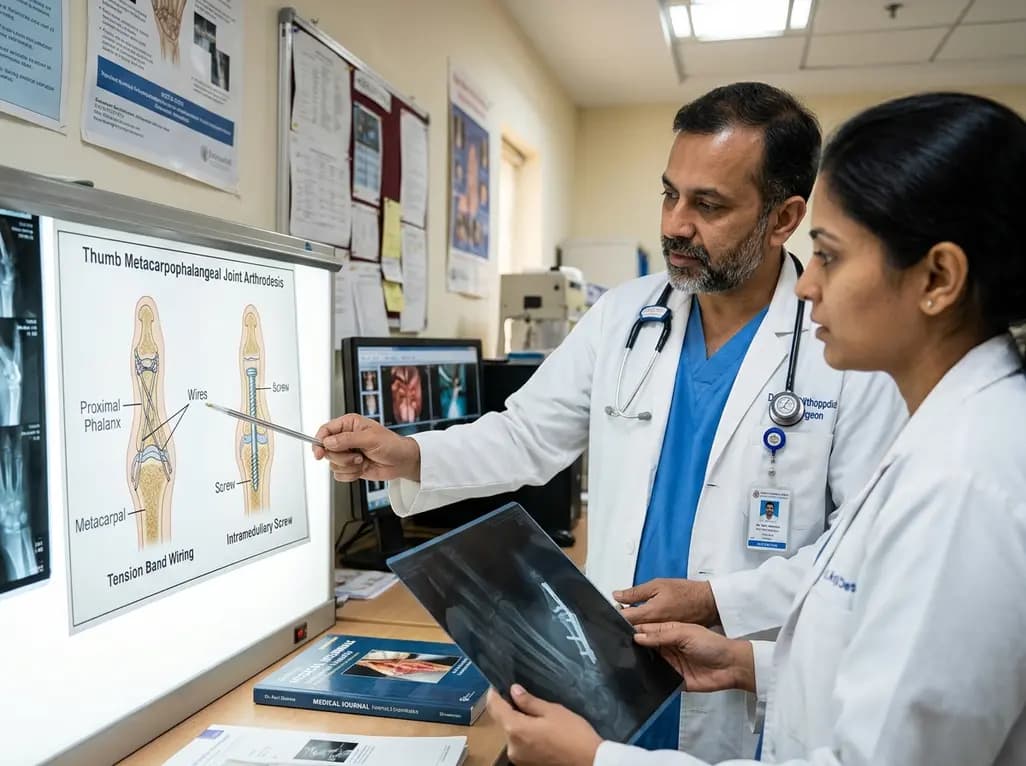
A comparative review of tension band wiring and intramedullary screw fixation in thumb metacarpophalangeal arthrodesis, evaluating union rates, hardware complications, and clinical outcomes.
Today

Following regulatory scrutiny from FSSAI regarding promotional representations and lean muscle preservation claims, Dr. Reddy's Laboratories and Nestlé Health Science are currently reviewing the branding and marketing strategy for their joint nutritional supplement Celevida GLP+.
Today
