.webp&w=384&q=75)

Loading, please wait...
Loading, please wait...

Biliopancreatic diversion represents one of the most potent malabsorptive procedures in metabolic and bariatric surgery. The anatomical reconstruction diverts digestive secretions through an excluded limb, effectively altering nutrient transit and hormonal signaling. However, this surgical exclusion creates a long segment of bowel that remains inaccessible to standard endoscopic surveillance. Recently, clinicians documented a rare case of a biliopancreatic limb adenoma presenting twenty-five years after the index operation. The patient, a woman in her late forties, presented with chronic, recurrent protein-energy malnutrition alongside progressive subocclusive abdominal symptoms. Because the excluded limb does not carry food boluses, structural lesions in this segment rarely manifest with early symptoms. Consequently, metabolic physicians initially attributed her clinical decline entirely to severe nutritional deficiencies. This diagnostic pitfall underscores the intricate complexity of managing post-bariatric patients decades after surgery. Surgeons must maintain heightened vigilance when dealing with atypical abdominal complaints in patients with altered gastrointestinal anatomy. Furthermore, chronic malnutrition can sometimes disguise insidious mechanical bowel pathology. Therefore, clinicians must carefully integrate clinical history with timely investigative modalities to avert severe metabolic decompensation.
Adult intussusception represents an uncommon cause of mechanical intestinal obstruction, accounting for fewer than five percent of all adult obstructive events. In the general population, approximately ninety percent of adult cases involve an identifiable pathologic lead point. Conversely, post-bariatric intussusceptions frequently demonstrate functional etiologies related to motility disturbances or ectopic pacemakers. In this specific patient, cross-sectional computed tomography revealed a jejunal intussusception within the mid-abdomen. However, confirming the precise anatomical origin proved technically challenging before surgical exploration. The patient had endured recurrent episodes of nausea, intermittent postprandial cramping, and progressive cachexia over several months. Because these symptoms mimic routine dumping syndrome or severe malabsorption, establishing an early clinical diagnosis remained elusive. Cross-sectional imaging eventually confirmed characteristic findings, including bowel wall thickening and the pathognomonic target sign. Clinicians often encounter substantial difficulty when tracing altered gastrointestinal limbs on emergency scans. Therefore, multidetector computed tomography with thin reformations plays a pivotal role in pinpointing obstructive bowel pathology. When imaging reveals telescoping bowel distant from existing anastomoses, surgical teams must prepare for unexpected mechanical findings.
The incidental discovery of a biliopancreatic limb adenoma introduces compelling questions regarding small bowel tumorigenesis within excluded intestinal segments. Small intestine neoplasms are inherently rare, accounting for less than three percent of all gastrointestinal cancers. Historically, researchers suggested that rapid intestinal transit and lower bacterial loads protect the small bowel against mucosal transformation. Nevertheless, the excluded limb experiences continuous, concentrated exposure to unbuffered bile acids and pancreatic enzymes. Consequently, this altered biochemical microenvironment may induce chronic low-grade epithelial stress over several decades. Pathologists identified a 2.6-centimeter tubulovillous adenoma harboring focal high-grade dysplasia at the lead point of the intussusception. Therefore, this finding demonstrates that the classical adenoma-carcinoma sequence can realistically proceed inside a bypassed jejunal limb. Although a solitary clinical case cannot establish clear epidemiological causality, it confirms that premalignant dysplastic changes can develop. Moreover, conventional dysplastic adenomas within the excluded limb can achieve substantial size without intraluminal food propulsion. Medical teams should recognize that long-term mucosal exposure to concentrated bilious secretions might play a distinct biological role in rare neoplastic transformations.
Prompt operative management became imperative following the radiological confirmation of progressive mechanical intestinal compromise. During laparotomy, the surgical team located the intussusception strictly inside the proximal biliopancreatic limb. Specifically, the pathology resided ten to twenty centimeters distal to the ligament of Treitz, completely remote from the entero-enterostomy. The operating surgeons successfully reduced the telescoping jejunum and performed a complete segmental resection with primary re-anastomosis. Gross examination revealed an intraluminal, polypoid mucosal tumor that directly served as the lead point for the invagination. Subsequent histopathological analysis verified that the tumor was a tubulovillous adenoma with clear surgical margins. Notably, focal areas of high-grade dysplasia were present within the villous fronds, indicating imminent neoplastic progression. Complete surgical excision achieved curative margins while preserving adequate functional intestinal length for the patient. Consequently, the patient experienced uneventful recovery with marked resolution of her chronic obstructive symptoms. Postoperative nutritional support facilitated steady restoration of her serum protein levels and overall performance status. Thus, definitive surgical resection remains the essential cornerstone of therapy for complex adult intussusception caused by discrete structural lesions.
This landmark case provides valuable clinical insights for gastroenterologists, oncologists, and bariatric surgeons caring for post-surgical patients. However, the identification of a single high-grade dysplastic lesion does not justify routine endoscopic or radiological screening. In fact, deep enteroscopy carries measurable procedural risks, and small bowel adenomas remain exceedingly uncommon overall. Instead, clinicians must practice selective vigilance when evaluating patients with late-onset gastrointestinal complaints. For instance, any post-bariatric patient presenting with recurrent subocclusive symptoms warrants prompt cross-sectional evaluation. In addition, an intussusception located remote from surgical anastomoses should immediately raise suspicion for a discrete intraluminal mass. Standard bariatric intussusceptions usually cluster around the jejunojejunal anastomosis and rarely harbor macroscopic neoplasms. Therefore, unusual anatomical locations require an aggressive diagnostic and surgical mindset rather than simple observational management. Multidisciplinary collaboration between surgeons, radiologists, and nutritional physicians optimizes clinical outcomes in such vulnerable patients. Ultimately, long-term post-bariatric follow-up must combine rigorous nutritional replacement with vigilant diagnostic assessment of unexplained mechanical symptoms.
The biliopancreatic limb after biliopancreatic diversion remains anatomically disconnected from the primary alimentary route. Consequently, standard upper gastrointestinal endoscopy cannot reach this remote segment due to altered postoperative intestinal continuity. Clinicians must rely on advanced enteroscopy techniques, such as balloon-assisted or spiral enteroscopy, to traverse the reconstructed bowel loops. Because routine surveillance is technically demanding and invasive, structural pathologies within the bypassed limb often remain hidden until severe obstructive symptoms develop.
Adult intussusception in non-surgical populations typically arises from a defined pathological lead point, such as a carcinoma, polyp, or lipoma. Conversely, intussusception after Roux-en-Y reconstruction or gastric bypass frequently occurs without any distinct macroscopic mass. Instead, motility disturbances, altered pacemaking activity, or mesenteric traction drive the telescoping of viable bowel near the jejunojejunostomy. However, clinicians must suspect a discrete structural lesion when the intussusception develops far from the surgical anastomotic line.
Current international guidelines do not recommend routine endoscopic or radiological screening of bypassed intestinal segments. Furthermore, small bowel neoplasms remain exceptionally rare after bariatric operations, which makes broad population screening clinically and economically impractical. However, clinicians should maintain a low threshold for targeted imaging when post-bariatric patients present with recurrent subocclusion, chronic abdominal pain, or unexplained malnutrition. Cross-sectional computed tomography serves as the gold standard modality to investigate such delayed mechanical complications promptly.
Disclaimer: This content is for informational and educational purposes only... Refer to the latest local and national guidelines for clinical practice.
References

Read summarized clinical updates, watch expert medical content, and earn CME certifications right from your smartphone.
Open your smartphone camera to scan and install.





A rare case of jejunal adenoma with high-grade dysplasia arising in an excluded biliopancreatic limb 25 years after BPD reveals critical diagnostic and surgical lessons for evaluating late post-bariatric mechanical complications.
Today

A new ICMR-NINE profile projects 65,000 new adult cancer cases in Andhra Pradesh for 2026, with women carrying the highest burden. The findings underscore an urgent need for oncological infrastructure, early detection initiatives, and public awareness campaigns addressing widespread tobacco and metabolic risk factors.
Today

The FEBE study investigates the prevalence of post-traumatic stress disorder symptoms in women receiving high-dose-rate brachytherapy for cervical cancer, highlighting the critical role of procedural sedation and trauma-informed clinical care.
Today
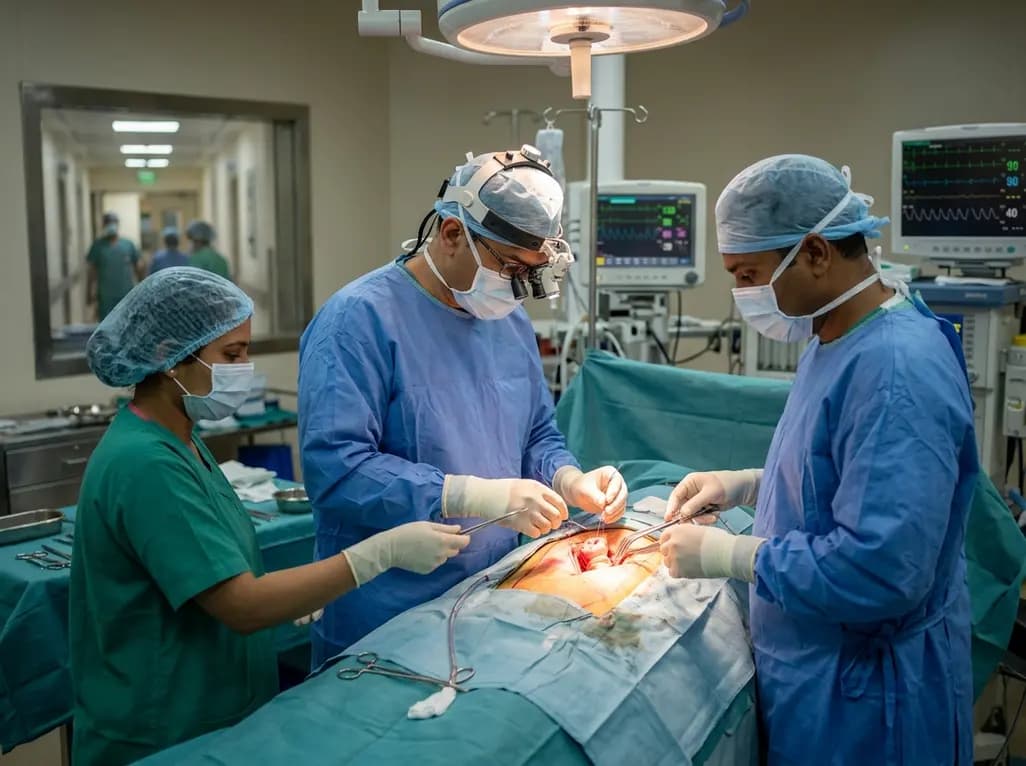
Aortic root aneurysms often develop silently, yet timely intervention provides a critical window to salvage the native aortic valve. Preserving the patient's own anatomy avoids lifelong anticoagulation, provided clinicians identify root dilatation before secondary leaflet distortion and ventricular failure occur.
Today

A Level I trauma center study shows a brief bedside mental health intervention boosts 30-day follow-up screening adherence by 84% in nonviolent injury patients. However, outcomes for violence survivors reveal critical care gaps, underscoring the urgent need for specialized community violence intervention programs.
Today
A preclinical study demonstrates that the SGLT2 inhibitor remogliflozin attenuates cyclophosphamide-associated peripheral neurotoxicity in rats. Remogliflozin restores antioxidant balance via Nrf2, suppresses NF-κB-driven neuroinflammation, activates PI3K/Akt survival signaling, and preserves structural myelin integrity.
Today
