.webp&w=384&q=75)

Loading, please wait...
Loading, please wait...

Determining the most effective nutrient supply models ICU is crucial for improving patient recovery and reducing mortality. Critically ill patients often face significant metabolic stress, which makes tailored nutritional support a priority in the intensive care unit. A recent network meta-analysis compared various strategies to identify which model provides the best clinical and nutritional results.
The systematic review evaluated four distinct approaches: parenteral nutrition (PN), enteral nutrition (EN), enteral immunonutrition (EIN), and the combination of parenteral and enteral nutrition (PN+EN). According to the SUCRA rankings, the PN+EN model demonstrated the highest probability of effectiveness for several critical markers. Specifically, it outperformed other methods in raising serum albumin levels and lowering both infection and mortality rates. This suggests that a hybrid approach may address the caloric and protein deficits often seen with enteral nutrition alone.
However, the study also noted that different models offer specific advantages depending on the clinical goal. For instance, parenteral nutrition (PN) was the most effective for shortening the overall length of hospitalization. On the other hand, enteral immunonutrition (EIN) proved superior in reducing feeding-related complications. These findings highlight the need for a personalized approach when selecting nutrient supply models ICU based on the patient's immediate clinical needs.
While enteral nutrition remains the standard first-line therapy in many protocols, this evidence supports the strategic use of supplemental parenteral nutrition. By combining both routes, clinicians can ensure that patients meet their nutritional targets more reliably. Furthermore, this combined strategy appears to mitigate some risks associated with single-route feeding. Therefore, practitioners should consider early integration of PN+EN for patients at high risk of malnutrition or those unable to tolerate full enteral loads. Additionally, careful monitoring remains essential to manage complications related to immunonutrition or prolonged parenteral stay. Consequently, a multi-modal nutrition strategy should be tailored to the specific metabolic phase of the patient.
The network meta-analysis identified that combining parenteral and enteral nutrition (PN+EN) has the highest probability (82.7%) of being the most effective intervention for reducing mortality rates in ICU patients.
Yes, the study found that EIN has the highest probability (81.0%) of reducing feeding-related complication rates compared to standard enteral or parenteral models.
According to the results, PN was the most effective model for reducing the length of hospitalization, achieving a SUCRA ranking of 77.9%.
Disclaimer: This content is for informational and educational purposes only. It does not constitute medical advice or a professional recommendation. Refer to the latest local and national guidelines for clinical practice.
References

Read summarized clinical updates, watch expert medical content, and earn CME certifications right from your smartphone.
Open your smartphone camera to scan and install.





A network meta-analysis reveals that combined PN+EN is the most effective nutrition model for improving clinical outcomes in critically ill ICU patients....
8 months ago
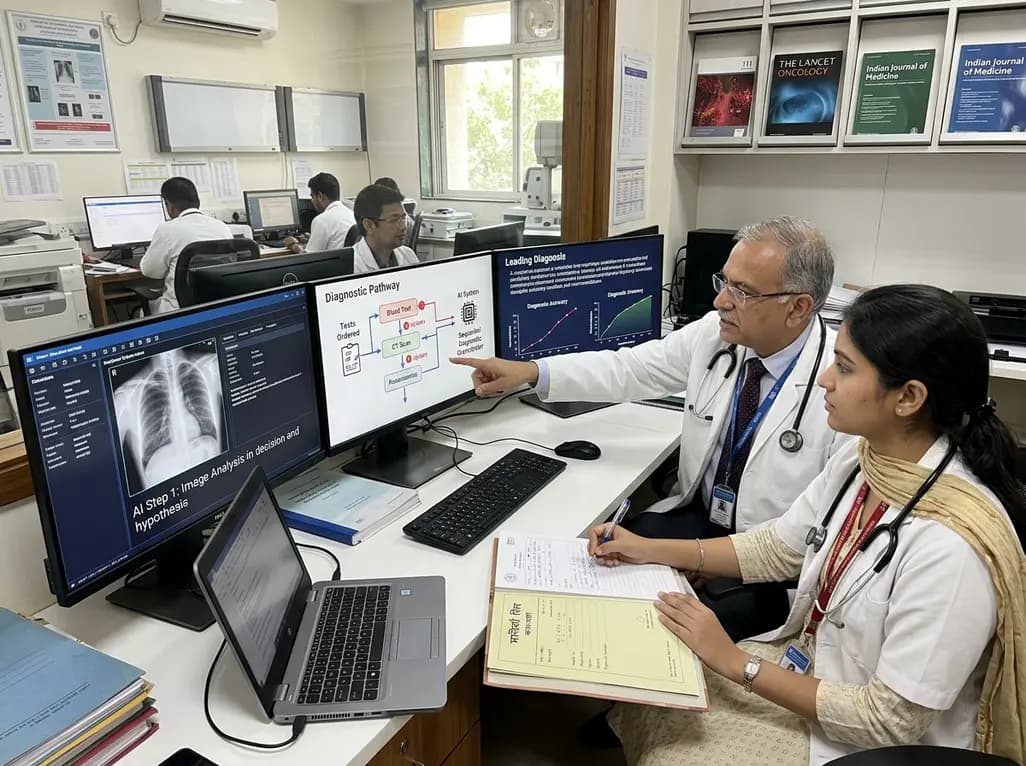
A breakthrough peer-reviewed study demonstrates that a sequential AI diagnosis system can mirror real-world clinical reasoning. By ordering stepwise tests and updating hypotheses dynamically, this multi-agent orchestrator achieved superior diagnostic accuracy while reducing investigative costs.
Today

A prenatal case highlights severe glutaric acidemia type II presenting as bilateral hyperechoic cystic kidneys at 18 weeks. Whole-exome sequencing revealed a novel homozygous ETFDH frameshift variant, demonstrating the power of rapid genetic testing in fetal renal anomalies.
Today

Review how tailored exercise programs benefit frail older patients with heart failure. Explore pathophysiological mechanisms, individualized training prescriptions, and strategies to overcome adherence barriers in clinical practice.
Yesterday

This comparative study evaluates posterior labral tears with and without glenohumeral instability, highlighting distinct demographic patterns, MRI underestimation in stable shoulders, and successful arthroscopic repair outcomes.
Yesterday

A clinical study demonstrates that early intervention with tocilizumab, either as monotherapy or bridged with corticosteroids, achieves significant proptosis reduction and resolves active inflammation in treatment-naive thyroid eye disease.
Yesterday
