.webp&w=384&q=75)

Loading, please wait...
Loading, please wait...

Bangladesh is currently grappling with a severe public health challenge. Prime Minister Tarique Rahman recently ordered an urgent nationwide review to address the Bangladesh measles outbreak. This directive follows official reports confirming over 600 cases across the South Asian nation. Consequently, two senior ministers will now travel throughout the country to assess the crisis. They aim to coordinate rapid response efforts and evaluate the scale of infection in various districts.
According to Md Halimur Rashid of the disease control unit, the country has recorded 674 cases this year. This surge is particularly concerning because measles is among the most contagious diseases globally. It spreads easily through respiratory droplets from coughs or sneezes. Furthermore, complications can be devastating for vulnerable populations. Common issues include brain swelling and severe breathing difficulties. Although the virus can affect anyone, it remains most dangerous for young children. Therefore, immediate intervention is essential to prevent further mortality.
The current Bangladesh measles outbreak stems partly from recent vaccination gaps. While the nation typically maintains strong immunization programs, political unrest caused significant disruptions. Specifically, a major drive scheduled for June 2024 was postponed due to a mass uprising. Routine vaccinations continued, yet the lack of a special campaign left many children under-protected. Health officials now plan to launch a new nationwide campaign in June 2026. Meanwhile, the World Health Organization estimates that measles causes nearly 95,000 deaths annually worldwide. Most of these fatalities occur among children under the age of five who lack proper vaccination.
Clinicians should remain vigilant for classic symptoms like high fever and a distinctive maculopapular rash. Because no specific antiviral treatment exists, management focuses on supportive care. Additionally, ensuring children receive two doses of the vaccine remains the most effective defense. The government is now prioritizing the restoration of supply chains to avoid further outbreaks. Public health experts emphasize that reaching a 95% vaccination rate is crucial for herd immunity. Without this level of coverage, the risk of localized transmission remains extremely high.
Q1: What is the primary cause of the current Bangladesh measles outbreak?
The outbreak is largely attributed to a delay in a special vaccination campaign originally scheduled for 2024. This gap, caused by nationwide political unrest, left several cohorts of children vulnerable to infection.
Q2: How is the government responding to the measles crisis?
Prime Minister Tarique Rahman has ordered a nationwide review and directed senior ministers to coordinate relief efforts. Additionally, a new special vaccination drive is scheduled to commence in June 2026 to close the immunity gap.
Q3: What are the most common complications of measles?
Measles can lead to severe complications such as pneumonia, brain swelling (encephalitis), and severe respiratory distress. These complications are most prevalent among unvaccinated children under the age of five.
Disclaimer: This content is for informational and educational purposes only. It does not constitute medical advice or replace professional judgment. Refer to the latest local and national guidelines for clinical practice.
References

Read summarized clinical updates, watch expert medical content, and earn CME certifications right from your smartphone.
Open your smartphone camera to scan and install.





Bangladesh orders an urgent probe into a measles outbreak with over 600 cases. Vaccination delays and political unrest have fueled the current health crisis...
6 months ago
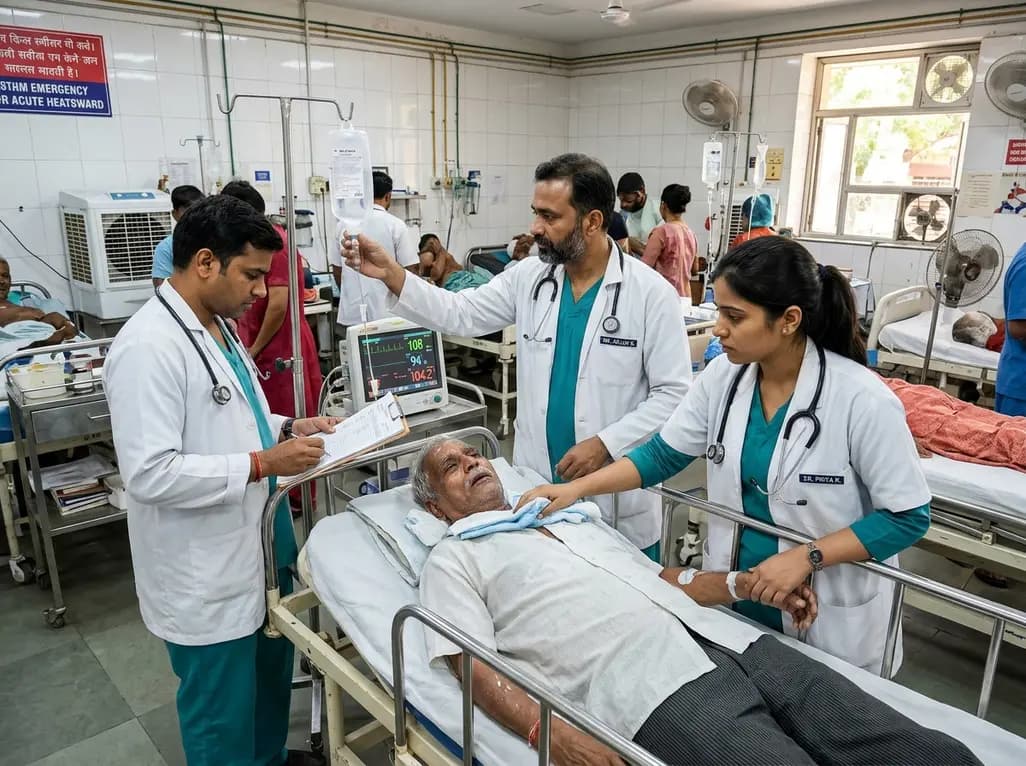
Recent epidemiological data reveals a dramatic surge in summer heat mortality driven by human-induced climate warming. This analysis explores the pathophysiological impacts on cardiac and renal systems, diagnostic dilemmas in death certification, and essential emergency cooling protocols for acute clinical care.
Today

Odisha has established India's first state-level clinical protocol specifically tailored for pregnant women with sickle cell disease. Developed with NHM and UNICEF, the framework provides structured antenatal screening, crisis mitigation, standardized referral pathways, and specialized interdisciplinary care.
Today

India is advancing preventive healthcare by integrating genomics, artificial intelligence, and quantum technologies. With the SANGAM programme sequencing one million Indian genomes, clinicians can unlock personalized therapies, detect cardiometabolic risks early, and curb the burden of diabetes and heart disease.
Today

A randomized controlled trial demonstrates that an eight-week dual-task training intervention significantly improves static and dynamic postural control over standard balance exercises in individuals with chronic ankle instability, addressing critical neurocognitive deficits during athletic and daily activities.
Today

A retrospective cohort study of 7,716 ICU patients from the MIMIC-IV database demonstrates that Gradient Boosting Decision Trees significantly outperform traditional SOFA scores in predicting in-hospital mortality among patients with sepsis and diabetes, with SHAP analysis providing clinical interpretability.
Today
