.webp&w=384&q=75)

Loading, please wait...
Loading, please wait...
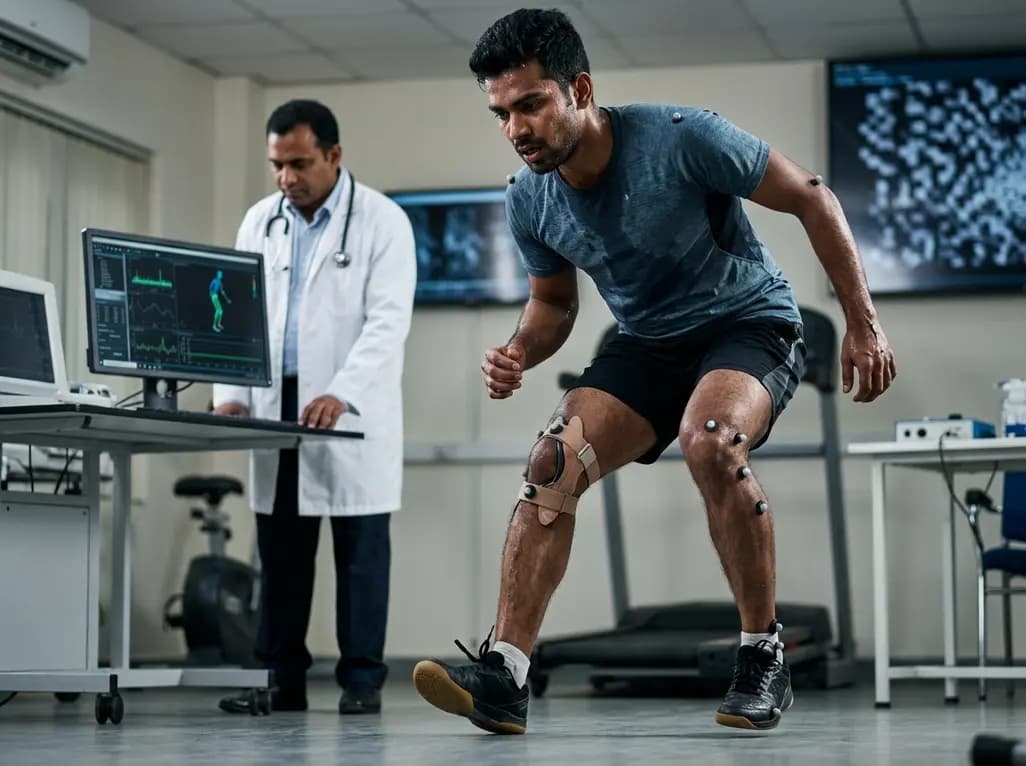
The Badminton smash landing represents one of the most high-risk maneuvers in competitive court sports. Elite athletes frequently execute these explosive movements under intense physiological and psychological pressure. Recent research highlights that both fatigue and task unpredictability significantly compromise lower-limb control. Therefore, understanding these biomechanical shifts is vital for reducing injury rates in professional players.
Researchers analyzed fourteen elite male players to assess how fatigue and task predictability shape landing kinetics. They discovered that fatigue independently increases the peak coronal-plane knee moment. Furthermore, unanticipated tasks further exacerbate these biomechanical stress factors. Consequently, players often exhibit reduced neuromuscular stability during unexpected shots. These combined stressors likely lead to an elevated risk of ligamentous injuries, particularly involving the anterior cruciate ligament.
Additionally, significant effects occurred in ankle moments within the transverse plane. Statistical parametric mapping further clarified how sagittal moments at the knee and ankle fluctuate throughout the landing phase. Moreover, machine learning models identified peak ankle plantar-flexion moment as the foremost discriminator of a fatigued state. This evidence suggests that fatigue-related movement alterations are predictable and detectable through advanced biomechanical modeling.
Clinicians and sports therapists should monitor specific indicators of fatigue-related strain. Vertical ground-reaction forces and increased knee moments serve as reliable markers for potential injury. Therefore, training strategies must evolve beyond simple physical conditioning. Integrating decision-making demands into fatigue-based drills can better prepare athletes for match-like conditions. This holistic approach ensures that motor control remains robust during high-demand task sequences.
Fatigue impairs the neuromuscular system's ability to stabilize the knee joint. This leading to higher coronal-plane moments which are directly linked to increased ligamentous strain and acute injury risk.
Yes. Machine learning models can identify subtle biomechanical markers, such as changes in ankle moments, to accurately predict fatigue levels and identify injury vulnerability before a trauma occurs.
Coaches should combine high-intensity physical training with unanticipated reaction tasks. This approach helps improve the athlete's motor control and decision-making speed even under significant physiological stress.
Disclaimer: This content is for informational and educational purposes only. It does not constitute medical advice or a professional relationship. Refer to the latest local and national guidelines for clinical practice.
References
Wang Y et al. Smash landing in elite male badminton players: Effects of fatigue and task predictability via explainable machine-learning analysis. Proc Inst Mech Eng H. 2026 Jun 06. doi: 10.1177/09544119261456916. PMID: 42251489.
Le Mansec Y, Perez J, Rouault Q, Doron J, Jubeau M. Impaired Performance of the Smash Stroke in Badminton Induced by Muscle Fatigue. Int J Sports Physiol Perform. 2020;15(1):52–59.
Valldecabres R, Casal-Sanjurjo I, Casamichana D. Synergistic effects of physical-mental mixed fatigue on badminton forehand smash performance. PLOS One. 2024;19(2):e0297645.

Read summarized clinical updates, watch expert medical content, and earn CME certifications right from your smartphone.
Open your smartphone camera to scan and install.





A study explores how fatigue and unanticipated tasks alter knee and ankle biomechanics during smash landings in elite male badminton players using ML analys...
4 months ago

Novel diimide and hydrazone scaffolds, particularly compound #C4, synergistically reactivate latent HIV-1 when combined with JQ1 or PKC activators. Demonstrating donor-matched proviral transcription ex vivo and non-canonical signaling, these findings advance shock and kill strategies toward reservoir eradication.
Today

A comparative cohort study evaluates vNOTES vs TLH hysterectomy for benign conditions, demonstrating shorter operative duration, faster return to daily activities, and equivalent female sexual function scores without increased dyspareunia.
Today

Review how tailored exercise programs benefit frail older patients with heart failure. Explore pathophysiological mechanisms, individualized training prescriptions, and strategies to overcome adherence barriers in clinical practice.
Yesterday

This comparative study evaluates posterior labral tears with and without glenohumeral instability, highlighting distinct demographic patterns, MRI underestimation in stable shoulders, and successful arthroscopic repair outcomes.
Yesterday

A clinical study demonstrates that early intervention with tocilizumab, either as monotherapy or bridged with corticosteroids, achieves significant proptosis reduction and resolves active inflammation in treatment-naive thyroid eye disease.
Today
