.webp&w=384&q=75)

Loading, please wait...
Loading, please wait...

The Maharashtra government recently announced plans to host a strategic meeting with major hospitals in the Mumbai Metropolitan Region (MMR). Consequently, this initiative aims to address the low Ayushman Bharat Mumbai Coverage currently seen in the urban landscape. Many healthcare providers express concerns regarding inadequate reimbursement rates. Furthermore, critics argue that current financial structures do not account for the high operational costs in metro cities. This situation often discourages reputed multi-speciality hospitals from joining the government panels. Therefore, the upcoming meeting will focus on persuading these institutions to participate more actively in central and state health schemes.
Since July 2024, the state has integrated the Ayushman Bharat-Pradhan Mantri Jan Arogya Yojana with the Mahatma Phule Jan Arogya Yojana. This integrated model provides an insurance cover of up to Rs 10 lakh per family. Moreover, the number of covered diseases has expanded significantly from 1,369 to 2,399 conditions. Additionally, the government has already increased the number of empanelled hospitals to over 4,000 across the state. Despite these improvements, Mumbai residents still face difficulties accessing these benefits. Legislators are now pushing for a separate rate structure tailored specifically for metropolitan healthcare environments to ensure sustainability.
Government officials clarified that they cannot legally compel private hospitals to join these schemes. However, they are actively pursuing discussions to bring more charitable and multi-speciality hospitals on board. Interestingly, the state reported that Rs 3,419 crore has been disbursed this year for treating nearly 6.95 lakh patients. To maintain quality standards, the government also de-empanelled 75 hospitals for failing to provide required benefits. Additionally, the state is considering the inclusion of specific procedures like knee replacements. Ultimately, the goal is to bridge the gap between high-end medical technology and affordable access for the 12.5 crore beneficiaries in the state.
Q1: Why is Ayushman Bharat Mumbai Coverage lower than expected?
High operational costs in Mumbai and low government reimbursement rates currently discourage many private multi-speciality hospitals from enrolling in the scheme.
Q2: What is the maximum insurance cover provided under the integrated scheme?
The integrated Ayushman Bharat and Mahatma Phule Jan Arogya Yojana now offers insurance coverage of up to Rs 10 lakh per family.
Q3: How many diseases are covered under the expanded health scheme?
The number of medical conditions and diseases covered has been increased from 1,369 to a total of 2,399.
Disclaimer: This content is for informational and educational purposes only. It does not constitute medical advice or replace professional judgment. Refer to the latest local and national guidelines for clinical practice.
References

Read summarized clinical updates, watch expert medical content, and earn CME certifications right from your smartphone.
Open your smartphone camera to scan and install.





Maharashtra govt plans a meeting with Mumbai hospitals to resolve reimbursement and empanelment issues under Ayushman Bharat and state health schemes....
7 months ago

A retrospective cohort study of 7,716 ICU patients from the MIMIC-IV database demonstrates that Gradient Boosting Decision Trees significantly outperform traditional SOFA scores in predicting in-hospital mortality among patients with sepsis and diabetes, with SHAP analysis providing clinical interpretability.
Today
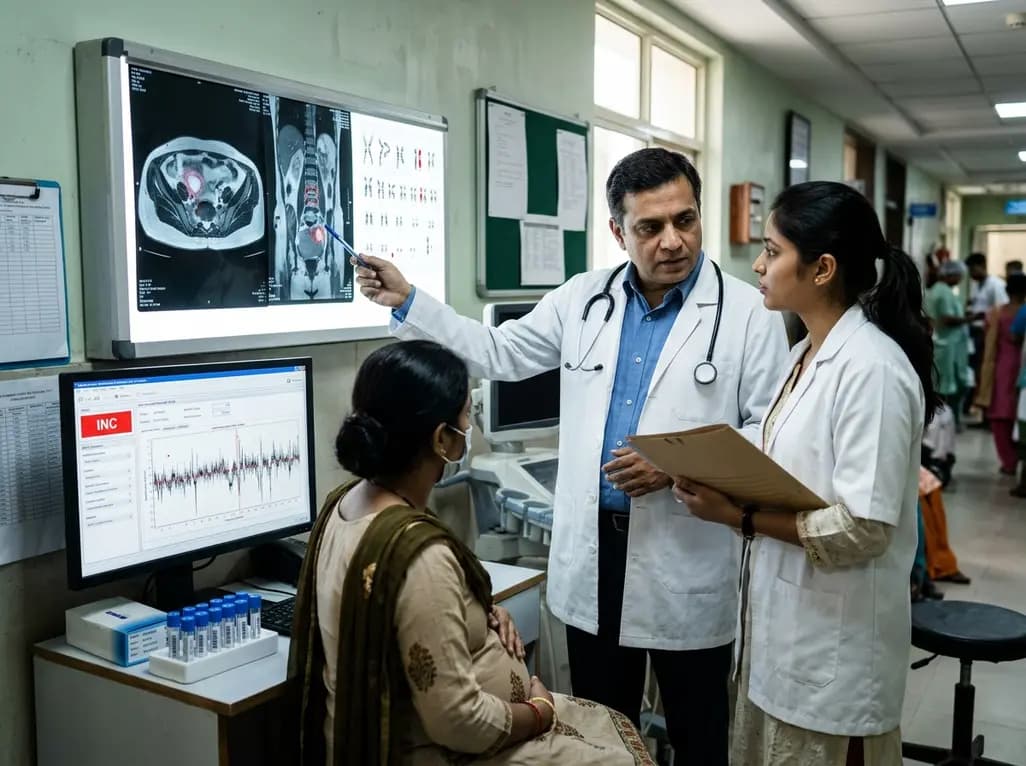
Occult maternal malignancy accounts for 3.82% of persistent unreportable NIPT results with genomic noise. Multiple chromosomal aberrations, notably on chromosome 18, warrant thorough oncological evaluation and whole-body MRI to ensure timely maternal diagnosis while preserving fetal care.
Today
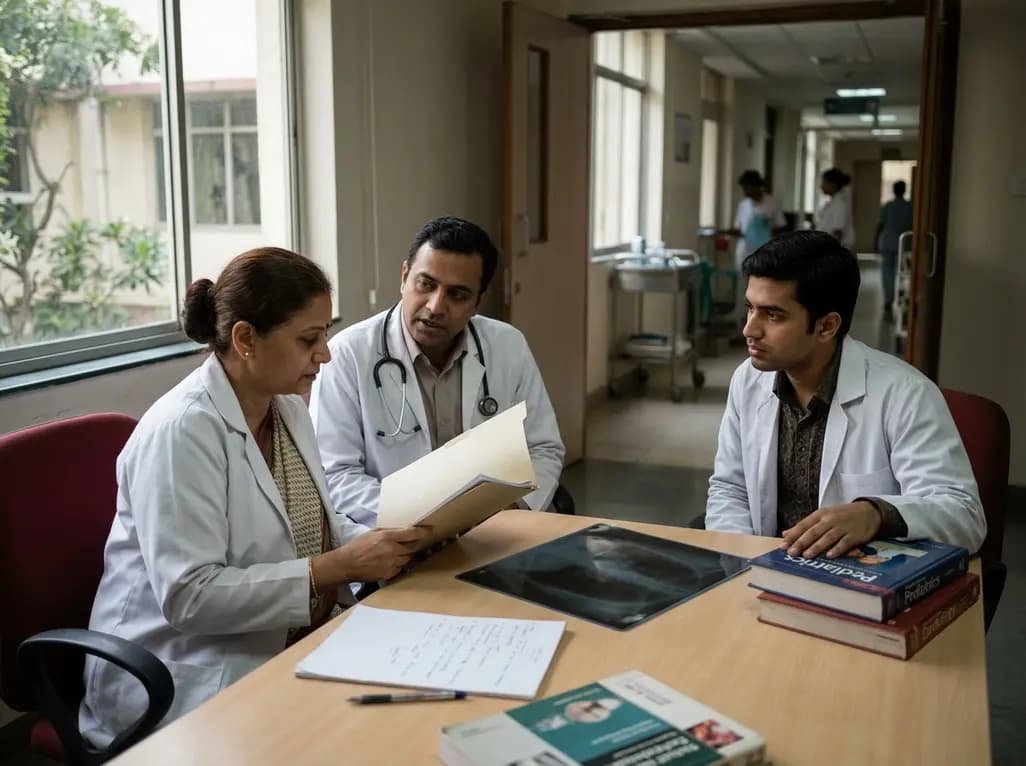
This article reviews the forensic and clinical complexities of acute myocarditis arising on left ventricular hypertrophy in children, highlighting early diagnostic red flags and multidisciplinary postmortem autopsy protocols.
Today

This comparative study evaluates posterior labral tears with and without glenohumeral instability, highlighting distinct demographic patterns, MRI underestimation in stable shoulders, and successful arthroscopic repair outcomes.
Yesterday

A clinical study demonstrates that early intervention with tocilizumab, either as monotherapy or bridged with corticosteroids, achieves significant proptosis reduction and resolves active inflammation in treatment-naive thyroid eye disease.
Yesterday
