.webp&w=384&q=75)

Loading, please wait...
Loading, please wait...
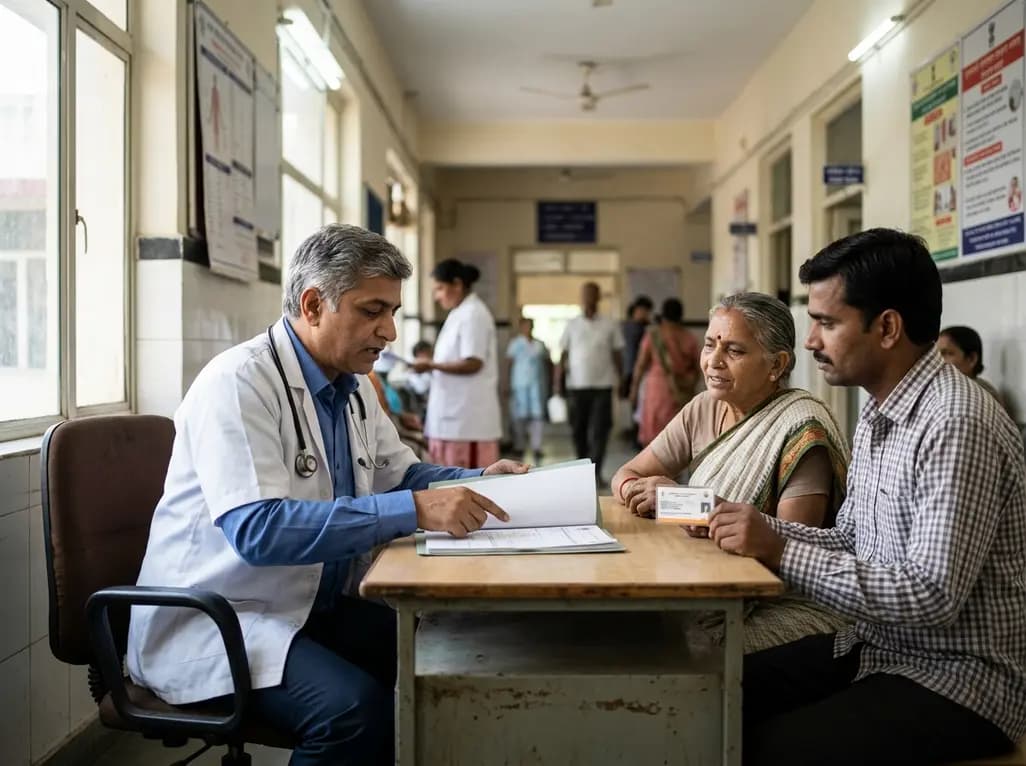
The proposal to enhance the Ayushman Bharat insurance cover is a major development in public healthcare. This recommendation addresses the rising costs of high-end surgeries. By expanding this safety net, the government aims to protect millions from catastrophic medical bills.
The Parliamentary Standing Committee on Health recently highlighted a critical gap in the nation's premier health assurance scheme. Consequently, the panel recommended doubling the current coverage limit from five lakh to ten lakh rupees per family annually. This adjustment is essential because healthcare inflation has surged significantly over the last few years. Many low-income families currently face severe financial distress when dealing with severe illnesses. Therefore, a higher financial ceiling is crucial to make the scheme effective. While the current model supports basic hospitalizations, it fails to cover complex procedures. For instance, treatment for conditions requiring tertiary care often exceeds the existing five lakh limit. As a result, patients are forced to borrow money or sell assets to cover their medical bills. This recommendation aims to eliminate such out-of-pocket expenses completely. Furthermore, the committee noted that medical science has advanced rapidly. These modern therapies are highly effective but remain incredibly expensive for the common man. Thus, expanding the financial cap is the logical next step for India's public health policy. Without this change, the poorest populations will continue to struggle for quality care.
Certain advanced treatments require substantial financial resources that the current limit cannot support. Specifically, procedures like liver transplants and complex cardiac surgeries demand immediate and extensive funding. Additionally, modern cancer therapies like immunotherapy have become standard care protocols. However, these life-saving interventions are highly priced and remain out of reach for PM-JAY beneficiaries. The parliamentary panel observed that the current cap leaves many patients highly vulnerable. Despite having an active health card, patients face substantial out-of-pocket expenses during emergencies. Therefore, the committee suggested creating specific high-cost packages to address these gaps. These packages would be supported through pooled financing and negotiated pricing with major hospital networks. Moreover, the government could collaborate with pharmaceutical manufacturers to reduce drug costs. Co-funding mechanisms with various state governments could also help sustain these expensive therapies. Ultimately, these collaborative efforts will protect beneficiaries from financial exclusion. If implemented, patients will no longer have to compromise on critical treatments due to monetary constraints. This policy shift will bridge the gap between advanced medical science and affordable healthcare. Consequently, it will ensure that even the most vulnerable citizens receive world-class medical attention.
To make the insurance scheme more efficient, the committee recommended several structural changes. Particularly, they emphasized the need for stricter enforcement of the prescribed six-hour turnaround time. Currently, approvals for cashless treatments can face undue administrative delays. These delays often cause immense anxiety to patients and their families during crises. Therefore, the panel proposed implementing strict penalty provisions for hospitals and administrative agencies. Periodic audits of pre-authorization workflows will also help identify operational bottlenecks. Furthermore, the committee advised expanding auto-approval protocols to include more low-risk medical procedures. This modification would reduce the administrative burden on health officials significantly. Additionally, deploying artificial intelligence for case tracking could accelerate the verification process. By automating routine checks, hospitals can provide immediate relief to incoming patients. Consequently, this digital transformation will streamline hospital admissions across the country. Reliable and fast approvals are essential to maintain public trust in this flagship program. Ultimately, administrative speed is just as critical as financial support in saving lives. If these guidelines are enforced, the overall efficiency of PM-JAY will improve remarkably.
It is important to understand the massive scale of this flagship initiative. To date, PM-JAY operates as the largest government-funded health assurance program globally. Currently, the scheme has been successfully implemented in thirty-five states and Union Territories. According to recent data, the program has authorized over eleven crore hospital admissions. These treatments have accumulated an impressive total value of over one lakh crore rupees. Moreover, authorities have issued more than forty-three crore individual Ayushman cards so far. This vast outreach shows the incredible trust that citizens place in the system. However, the sheer volume of users also demands continuous updates to the infrastructure. As the program expands, the operational guidelines must evolve to meet new challenges. For instance, the recent inclusion of senior citizens above seventy has increased demand. Therefore, the financial and administrative frameworks must be robust enough to handle the extra load. By addressing these needs, the government can ensure the long-term sustainability of the program. Consequently, these achievements lay a strong foundation for future healthcare reforms in India.
Doubling the coverage limit inevitably raises questions about the financial health of the scheme. To address this, the committee recommended several innovative funding strategies. For example, they suggested using co-funding mechanisms with individual state governments. Additionally, pooled financing models could help distribute the financial risk more evenly. Negotiating standardized prices with private hospitals will also keep treatment costs under control. Furthermore, bulk procurement of medical devices and medicines can reduce expenses significantly. By implementing these measures, the government can maintain fiscal sustainability easily. Many experts believe that preventive healthcare integrations can also lower hospitalization rates over time. Therefore, combining insurance with robust primary healthcare centers is highly advisable. This dual approach will reduce the burden on tertiary care hospitals. Moreover, the targeted enhancement ensures that high-cost procedures do not drain the general budget. Ultimately, public health is an investment rather than an expense. Protecting families from medical bankruptcy will boost the overall economy in the long run. Thus, the proposed budget increase represents a highly progressive step for the nation.
Q1: Why is the committee recommending an increase in the Ayushman Bharat insurance cover?
The parliamentary committee recommended this increase because the current five lakh limit is inadequate for high-end procedures. Advanced treatments like organ transplants, complex heart surgeries, and modern immunotherapies cost significantly more. Consequently, many beneficiaries still face high out-of-pocket expenses during medical emergencies. Increasing the coverage to ten lakh rupees will ensure complete financial protection for these life-saving procedures.
Q2: What operational changes are proposed to speed up hospital admissions under PM-JAY?
To reduce delays, the committee suggested strict enforcement of the six-hour turnaround time for cashless approvals. They recommended penalizing hospitals or agencies responsible for undue delays. Additionally, they proposed using artificial intelligence for automated case tracking and expanding auto-approvals for low-risk procedures. These steps will make the pre-authorization process faster and highly efficient for patients.
Q3: How will the government finance the proposed coverage expansion without hurting the budget?
The committee proposed maintaining fiscal sustainability through pooled financing and strategic co-funding agreements with state governments. Furthermore, negotiating lower package rates with empanelled hospitals and medical manufacturers will keep costs manageable. By implementing these collaborative financing models, the government can safely double the coverage limit while keeping the healthcare insurance scheme financially viable for the long term.
Disclaimer: This content is for informational and educational purposes only. It does not constitute medical advice or replace professional judgment. Refer to the latest local and national guidelines for clinical practice.
References

Read summarized clinical updates, watch expert medical content, and earn CME certifications right from your smartphone.
Open your smartphone camera to scan and install.





The parliamentary standing committee on health has proposed increasing the Ayushman Bharat PM-JAY insurance cover from ₹5 lakh to ₹10 lakh per family. This recommendation aims to support high-cost treatments like organ transplants and immunotherapies, protecting patients from severe out-of-pocket expenses.
3 months ago

Discover the crucial role of glymphatic dysfunction in stroke, where perivascular clearance failure and neuroinflammation exacerbate cerebral edema and post-stroke brain injury.
Today

A prenatal case highlights severe glutaric acidemia type II presenting as bilateral hyperechoic cystic kidneys at 18 weeks. Whole-exome sequencing revealed a novel homozygous ETFDH frameshift variant, demonstrating the power of rapid genetic testing in fetal renal anomalies.
Today

Review how tailored exercise programs benefit frail older patients with heart failure. Explore pathophysiological mechanisms, individualized training prescriptions, and strategies to overcome adherence barriers in clinical practice.
Yesterday

This comparative study evaluates posterior labral tears with and without glenohumeral instability, highlighting distinct demographic patterns, MRI underestimation in stable shoulders, and successful arthroscopic repair outcomes.
Yesterday

A clinical study demonstrates that early intervention with tocilizumab, either as monotherapy or bridged with corticosteroids, achieves significant proptosis reduction and resolves active inflammation in treatment-naive thyroid eye disease.
Yesterday
