.webp&w=384&q=75)

Loading, please wait...
Loading, please wait...

India’s flagship health insurance programme has significantly improved access to oncology treatments. Ayushman Bharat cancer care serves as a critical lifeline for rural and low-income populations facing high medical costs. However, while the scheme has covered millions of treatments, significant financial gaps persist. Experts emphasize that the current allocation often falls short of the comprehensive care required for long-term survival.
The FinCan study highlights that the program requires an annual budget of ₹33,000 crore to provide full standard-of-care services. Currently, the allocation stands at roughly ₹7,700 crore per year. Consequently, this disparity limits the ability of many families to access advanced therapies. Therefore, researchers recommend shifting from a ₹5 lakh annual cap to a ₹25 lakh revolving ceiling over five years. This change would allow patients to utilize more funds during high-cost treatment phases.
Early detection remains the most effective way to reduce the economic and clinical burden of oncology. Furthermore, integrating diagnostic coverage into the scheme could save approximately ₹1,500 crore annually. By aligning screening protocols with global benchmarks, India could potentially save over 30,000 additional lives each year. Moreover, the 2025-26 Union Budget has already earmarked funds for 200 new day-care cancer centers to expand rural access. These steps indicate a positive move toward universal health coverage.
Q1: How does the FinCan study suggest improving cancer funding?
The study recommends a ₹25 lakh revolving ceiling for families and a ₹10 lakh top-up for high-stage cancer patients.
Q2: Why is early diagnosis emphasized in the new study?
Early diagnosis and treatment initiation can save ₹1,500 crore annually and prevent late-stage suffering while improving survival rates.
Disclaimer: This content is for informational and educational purposes only. It does not constitute medical advice or replace professional judgment. Refer to the latest local and national guidelines for clinical practice.
References

Read summarized clinical updates, watch expert medical content, and earn CME certifications right from your smartphone.
Open your smartphone camera to scan and install.





The FinCan study advocates for restructured AB-PMJAY funding and early diagnosis to enhance cancer survival rates and reduce financial burdens in India....
7 months ago
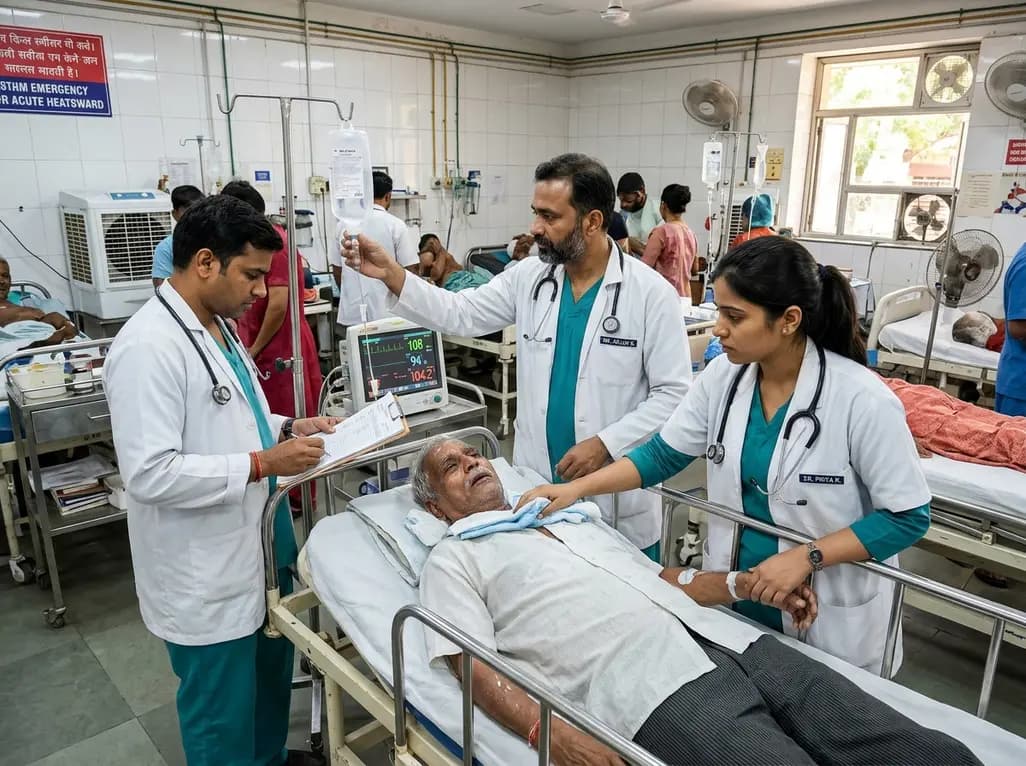
Recent epidemiological data reveals a dramatic surge in summer heat mortality driven by human-induced climate warming. This analysis explores the pathophysiological impacts on cardiac and renal systems, diagnostic dilemmas in death certification, and essential emergency cooling protocols for acute clinical care.
Today

Odisha has established India's first state-level clinical protocol specifically tailored for pregnant women with sickle cell disease. Developed with NHM and UNICEF, the framework provides structured antenatal screening, crisis mitigation, standardized referral pathways, and specialized interdisciplinary care.
Today

India is advancing preventive healthcare by integrating genomics, artificial intelligence, and quantum technologies. With the SANGAM programme sequencing one million Indian genomes, clinicians can unlock personalized therapies, detect cardiometabolic risks early, and curb the burden of diabetes and heart disease.
Today

A randomized controlled trial demonstrates that an eight-week dual-task training intervention significantly improves static and dynamic postural control over standard balance exercises in individuals with chronic ankle instability, addressing critical neurocognitive deficits during athletic and daily activities.
Today

A retrospective cohort study of 7,716 ICU patients from the MIMIC-IV database demonstrates that Gradient Boosting Decision Trees significantly outperform traditional SOFA scores in predicting in-hospital mortality among patients with sepsis and diabetes, with SHAP analysis providing clinical interpretability.
Today
