.webp&w=384&q=75)

Loading, please wait...
Loading, please wait...

The Delhi government is significantly expanding its AYUSH-based wellness services by introducing Homeopathy and Unani OPD clinics at the Chaudhary Brahm Prakash Ayurved Charak Sansthan (CBPACS). This initiative aims to provide a holistic healthcare model under one roof. Consequently, patients can access diverse traditional systems alongside existing Ayurvedic treatments. This strategic move aligns with the capital's vision for integrated healthcare. Furthermore, it addresses the rising demand for non-conventional stress management facilities.
Integrating different medical streams helps manage chronic conditions more effectively. The Directorate of AYUSH will manage the operational expenses and staff deployment for these new units. This ensures that affordable healthcare remains accessible to all citizens in the national capital. Similarly, the integration promotes a multi-dimensional approach to patient recovery and overall wellness. These services provide evidence-based interventions for varied health issues. Therefore, the expansion marks a pivotal step in strengthening the public health infrastructure.
Premier research bodies like the Central Council for Research in Ayurvedic Sciences (CCRAS) are partnering in this project. Their involvement ensures that treatments remain evidence-based and scientifically validated. Additionally, the initiative focuses on preventive healthcare strategies. The government expects a significant reduction in long-term health complications through these interventions. Moreover, the leadership aims to create a unified platform for all AYUSH systems. Patients will now benefit from a streamlined experience at CBPACS.
Q1: What new services are available at CBPACS?
A1: CBPACS now offers dedicated Outpatient Department (OPD) services for Homeopathy and Unani medicine, complementing its existing Ayurveda and Yoga facilities.
Q2: Who is responsible for the staff and funding of these clinics?
A2: The Directorate of AYUSH, Government of NCT of Delhi, manages the deployment of doctors and supporting staff while bearing the operational expenditure.
Q3: What is the primary objective of this integration?
A3: The goal is to provide holistic, affordable, and evidence-based wellness and stress management services through multiple AYUSH systems under one platform.
Disclaimer: This content is for informational and educational purposes only. It does not constitute medical advice or replace professional judgment. Refer to the latest local and national guidelines for clinical practice.
References

Read summarized clinical updates, watch expert medical content, and earn CME certifications right from your smartphone.
Open your smartphone camera to scan and install.





Delhi government expands AYUSH-based wellness services by launching new Homeopathy and Unani OPD clinics at CBPACS for integrated healthcare delivery....
5 months ago
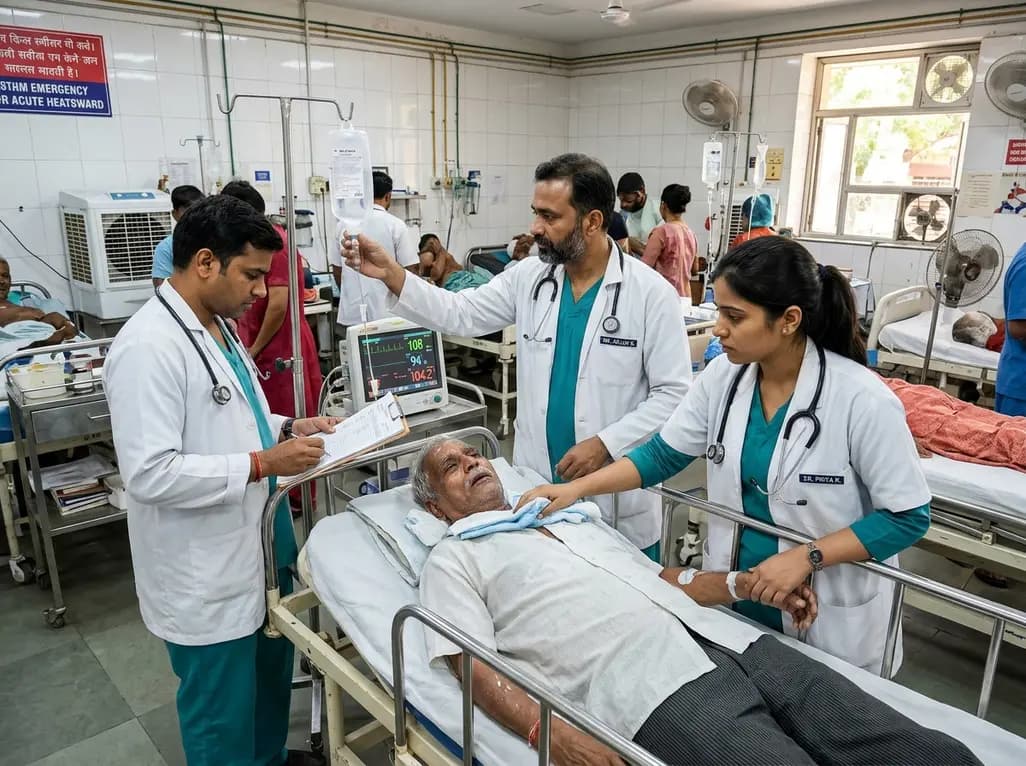
Recent epidemiological data reveals a dramatic surge in summer heat mortality driven by human-induced climate warming. This analysis explores the pathophysiological impacts on cardiac and renal systems, diagnostic dilemmas in death certification, and essential emergency cooling protocols for acute clinical care.
Today

Odisha has established India's first state-level clinical protocol specifically tailored for pregnant women with sickle cell disease. Developed with NHM and UNICEF, the framework provides structured antenatal screening, crisis mitigation, standardized referral pathways, and specialized interdisciplinary care.
Today

India is advancing preventive healthcare by integrating genomics, artificial intelligence, and quantum technologies. With the SANGAM programme sequencing one million Indian genomes, clinicians can unlock personalized therapies, detect cardiometabolic risks early, and curb the burden of diabetes and heart disease.
Today

A randomized controlled trial demonstrates that an eight-week dual-task training intervention significantly improves static and dynamic postural control over standard balance exercises in individuals with chronic ankle instability, addressing critical neurocognitive deficits during athletic and daily activities.
Today

A retrospective cohort study of 7,716 ICU patients from the MIMIC-IV database demonstrates that Gradient Boosting Decision Trees significantly outperform traditional SOFA scores in predicting in-hospital mortality among patients with sepsis and diabetes, with SHAP analysis providing clinical interpretability.
Today
