

Loading, please wait...
Loading, please wait...

Evaluating higher-order clinical reasoning remains a cornerstone of modern healthcare training, yet faculty members constantly face severe grading constraints. Short-answer questions provide an ideal format to test diagnostic synthesis, clinical problem-solving, and therapeutic decision-making. However, manual grading demands substantial faculty hours and frequently introduces subjective variability among academic evaluators. Consequently, medical universities are actively investigating automated SAQ grading powered by artificial intelligence to streamline institutional assessment. Recent breakthroughs in large language models offer unprecedented opportunities to support these complex evaluation workflows. By processing student responses against standardized rubrics, advanced language architectures can emulate human evaluative patterns with remarkable precision. Therefore, academic departments can reduce grading delays and deliver timely, actionable formative feedback to trainees. Furthermore, standardized artificial intelligence scoring minimizes fatigue-related grading inconsistencies across large student cohorts. While multiple-choice examinations offer automated scoring convenience, they cannot capture nuanced clinical explanations. In contrast, descriptive automated evaluation bridges this critical gap by preserving diagnostic depth while eliminating manual scoring friction. As medical education transitions toward competency-based frameworks, scalable assessment tools have become essential.
To evaluate whether artificial intelligence can match clinical specialists, investigators at Sorbonne University executed a comprehensive validation trial. The researchers retrospectively analyzed 902 student examination responses from 12 short-answer questions administered during hepatology and gastroenterology assessments. To construct a reliable reference standard, three experienced medical evaluators independently scored all student responses twice. Specifically, this specialist panel included two hepatogastroenterologists and one academic radiologist. The majority consensus score among these three physicians served as the definitive benchmark for comparison. Subsequently, the research team evaluated six leading large language models, including Claude Sonnet 4, Mistral Pro, and four distinct ChatGPT versions. The investigators tested each model twice using standardized prompt structures containing exact questions, model answers, grading guidelines, and scoring rubrics. Furthermore, the team measured grading accuracy and consistency using quadratic weighted kappa, Cohen kappa, intraclass correlation coefficients, and mean absolute error. By assessing both interrater agreement and repeat scoring reliability, the protocol established an exhaustive framework to measure machine capabilities against human clinical faculty. Consequently, this methodological rigor provided clear evidence regarding artificial intelligence accuracy in specialized medicine.
The empirical results revealed dramatic performance variations across the different artificial intelligence architectures. Human evaluators demonstrated near-perfect consistency among themselves, achieving quadratic weighted kappa and intraclass correlation values between 0.90 and 0.92, with minimal error. Remarkably, Claude Sonnet 4 achieved near-human-level concordance with the expert consensus score, attaining quadratic weighted kappa values of 0.88 to 0.90 and low mean absolute error. Similarly, GPT-4o3 delivered exceptional evaluative precision, producing quadratic weighted kappa values between 0.82 and 0.89. In contrast, GPT-5 demonstrated substantial but noticeably lower agreement, recording kappa scores between 0.77 and 0.79. Meanwhile, older ChatGPT versions and Mistral Pro struggled significantly during evaluation, failing to achieve acceptable scoring standards. Specifically, Mistral Pro generated kappa values below 0.63, while older models exhibited substantial score deviations and excessive error margins. These marked performance gaps indicate that model reasoning sophistication directly governs grading fidelity in clinical assessments. Advanced models successfully interpret complex clinical concepts and granular scoring rubrics, whereas simpler architectures frequently misjudge partial-credit responses. Therefore, medical educators cannot assume equal utility across different artificial intelligence platforms.
Beyond benchmark accuracy, consistent grading over repeated attempts represents a vital prerequisite for any assessment technology. Claude Sonnet 4 demonstrated remarkable internal reproducibility, attaining an intramodel quadratic weighted kappa of 0.93 and a mean absolute error of 0.04. This high repeatability surpassed two of the three human clinicians and approached the most consistent expert grader. In contrast, less capable models exhibited noticeable score variations when evaluating identical student responses across separate runs. Interestingly, the researchers investigated whether specific prompt engineering modifications improved scoring precision. They discovered that agreement did not correlate with prompt design adjustments, such as including few-shot exemplars or establishing minimum word requirements. For example, adding worked examples failed to produce measurable gains in grading accuracy across top-tier models. Similarly, setting response length constraints did not meaningfully impact model alignment. These findings indicate that underlying architectural reasoning determines grading success far more than prompt customization. Consequently, academic faculty can achieve optimal scoring reliability using concise rubrics and straightforward prompts without complex prompt engineering. Nevertheless, educators must continuously monitor model stability across diverse clinical topics.
These empirical findings offer valuable guidance for medical schools modernizing their assessment frameworks, particularly in India. Under the Competency-Based Medical Education curriculum established by the National Medical Commission, institutions must conduct continuous formative evaluations. However, large student cohorts routinely overwhelm teaching faculties, resulting in delayed feedback and superficial marking. By integrating advanced language models as assistive co-pilots, departments can substantially accelerate preliminary grading workflows. Specifically, clinical educators can use top-tier models to perform initial scoring and generate descriptive comments on routine short-answer assignments. Faculty members can then focus their expertise on reviewing borderline submissions, resolving scoring discrepancies, and providing personalized mentorship. This hybrid model preserves human pedagogical judgment while eliminating repetitive administrative burdens for busy clinicians. Furthermore, standardized machine grading reduces interrater variability, ensuring that students receive objective assessments regardless of class size. Nevertheless, institutions must maintain strict human oversight and avoid full automation in high-stakes examinations until multicenter validation confirms generalizability. Ultimately, artificial intelligence should empower medical teachers, enhancing educational quality while supporting clinician wellbeing.
Current evidence indicates that large language models should assist rather than replace medical faculty. While top-tier architectures like Claude Sonnet 4 achieve near-human scoring alignment, subtle clinical misinterpretations and model hallucinations can still occur. Therefore, institutions must maintain human oversight, especially for high-stakes summative assessments. Medical educators should use automated tools as preliminary grading co-pilots, allowing experienced clinicians to review disputed marks, resolve ambiguous phrasing, and ensure overall pedagogical fairness.
In clinical validation studies, Claude Sonnet 4 and GPT-4o3 outperformed other models, achieving quadratic weighted kappa scores up to 0.90 against expert human panels. These advanced systems also demonstrated remarkable intramodel reproducibility, matching or exceeding human intrarater consistency. Conversely, earlier iterations such as GPT-4o and open models like Mistral Pro showed substantial scoring discordance. Consequently, institutions selecting AI grading solutions must carefully vet specific model versions rather than assuming uniform evaluative competence.
Competency-based medical education prioritizes continuous formative assessment, but large batch sizes across Indian medical colleges create severe grading backlogs. Automated grading provides immediate, detailed scoring on routine clinical problem-solving exercises. This rapid turnaround allows undergraduate and postgraduate students to rectify diagnostic errors promptly. Furthermore, automated assistance frees clinical faculty from repetitive manual marking, enabling professors to dedicate more time to bedside clinical training, procedural demonstration, and small-group professional mentorship.
Disclaimer: This content is for informational and educational purposes only... Refer to the latest local and national guidelines for clinical practice.
References

Read summarized clinical updates, watch expert medical content, and earn CME certifications right from your smartphone.
Open your smartphone camera to scan and install.





A study evaluated leading large language models for automated short-answer question grading in gastroenterology and hepatology. Claude Sonnet 4 and GPT-4o3 achieved near-human accuracy, offering major benefits for medical educators balancing assessment quality and grading workload.
Today
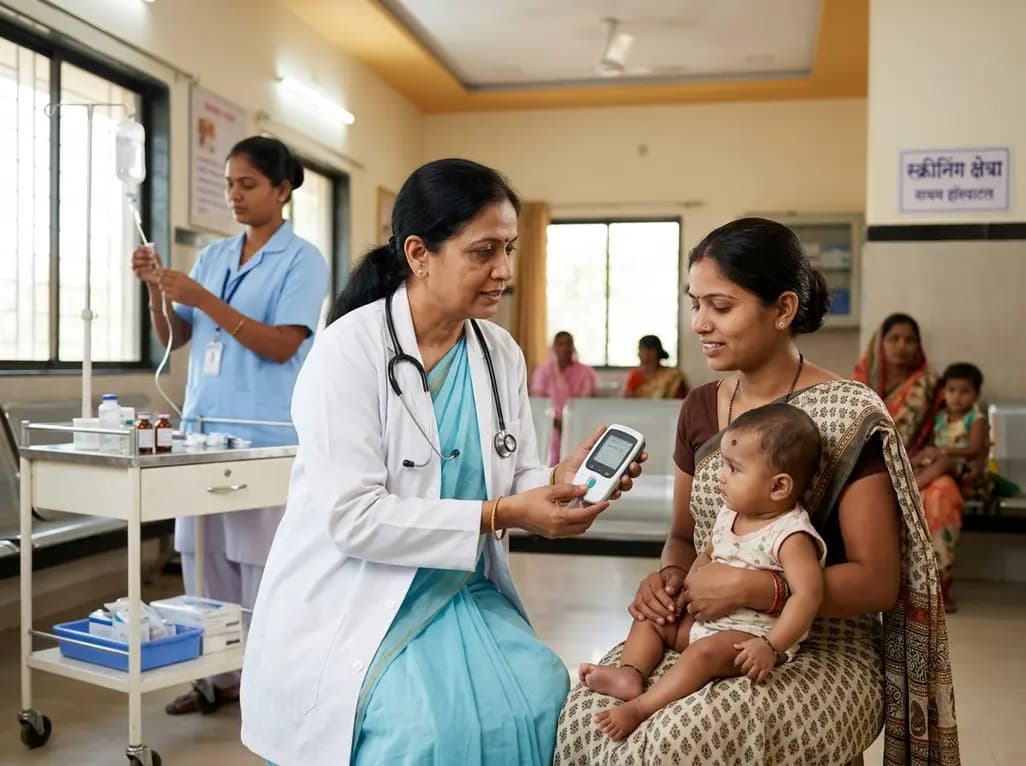
Maharashtra has launched a comprehensive initiative to halve anaemia prevalence across high-risk groups by 2030. The public health strategy integrates aggressive screening, point-of-care diagnostics, parenteral iron therapies, and targeted interventions for nutritional deficits and underlying hemoglobinopathies.
Today

A secondary analysis of the MOMS clinical trial reveals that infant sex does not influence neonatal opioid withdrawal syndrome severity in buprenorphine-exposed newborns. Maternal co-exposures and clinical factors drive outcomes, highlighting the need for objective assessment and supportive breastfeeding.
Today

India is poised to transform chronic disease management through wearable health technology. Discover how continuous remote monitoring and predictive algorithms empower clinicians to detect early cardiovascular signals, personalize metabolic interventions, and deliver equitable preventive care across populations.
Today

A systematic review and meta-analysis highlights the substantial impact of plyometric jump training on jump performance, reactive strength, and landing kinematics in female team-sport athletes, providing evidence-based programming guidelines for sports medicine and orthopedics.
Today

A comprehensive review of the role of growth hormone in diabetic kidney disease and podocytopathy. Learn how elevated GH activates ZEB2, Notch, and TGF-beta1, driving podocyte loss and glomerulosclerosis, and explore novel targeted therapeutic approaches.
Today
