.webp&w=384&q=75)

Loading, please wait...
Loading, please wait...

Managing type 1 diabetes (T1D) in very young children presents unique physiological and behavioral challenges for clinicians and caregivers. Recent evidence suggests that automated insulin delivery systems significantly enhance glycemic control in this vulnerable group. A comprehensive meta-analysis of randomized controlled trials (RCTs) recently evaluated the efficacy and safety of these advanced systems in children under seven years of age. By automating basal insulin adjustments, these technologies address the high glycemic variability often seen in the pediatric population.
The systematic review analyzed data from four major RCTs involving nearly 300 participants. The results demonstrated that automated insulin delivery systems improved the percentage of time-in-range (70-180 mg/dL) by a mean difference of 9.29% compared to standard care. This improvement translates to more than two additional hours per day spent within the target glucose range. Furthermore, the use of these systems led to a significant reduction in glycated hemoglobin (HbA1c) levels. Notably, the benefits were most pronounced during the overnight period, providing much-needed relief for families concerned about nocturnal hypoglycemia.
Safety remains a primary concern for physicians prescribing new technologies to young patients. Fortunately, this meta-analysis confirmed that these systems maintain an excellent safety profile. Specifically, the study found no significant difference in the risk of severe hypoglycemia or diabetic ketoacidosis (DKA) when compared to conventional therapy. Additionally, the time spent in the hypoglycemic range (below 70 mg/dL) did not increase. Consequently, clinicians can feel more confident recommending these devices to stabilize glucose levels without escalating safety risks.
Beyond clinical metrics, the adoption of advanced technology profoundly impacts the quality of life for families. Very young children often have unpredictable eating habits and physical activity levels, making manual insulin dosing difficult. Automated insulin delivery systems simplify this process by making real-time adjustments based on continuous glucose monitoring data. Therefore, this technology not only improves the child's health but also reduces the constant vigilance required from parents and caregivers.
This meta-analysis highlights that automated insulin delivery is both effective and safe for very young children. As technology evolves, these systems are likely to become the standard of care. Pediatricians and endocrinologists should consider these findings when discussing management options with families of children under seven years old.
These systems use sophisticated algorithms to adjust insulin delivery every few minutes based on real-time sensor data, which effectively counteracts the high glycemic variability common in toddlers.
No, clinical trials and meta-analyses show that the risk of diabetic ketoacidosis is not significantly different from standard insulin pump therapy or injections when monitored correctly.
Yes, recent studies specifically included children as young as one to two years old, demonstrating both safety and efficacy across the entire preschool age range.
Disclaimer: This content is for informational and educational purposes only. It does not constitute professional medical advice, diagnosis, or treatment. Always seek the advice of your physician or other qualified healthcare provider with any questions you may have regarding a medical condition. Refer to the latest local and national guidelines for clinical practice.
References

Read summarized clinical updates, watch expert medical content, and earn CME certifications right from your smartphone.
Open your smartphone camera to scan and install.





A meta-analysis confirms automated insulin delivery systems significantly improve time-in-range and safety in children under 7 with Type 1 Diabetes....
5 months ago

Novel glucose-responsive mPEG-PSA nanocarriers deliver insulin aspart on demand, achieving dual postprandial and basal glycemic control without hypoglycemia in diabetic models. This biomaterial breakthrough offers promising clinical implications for physiologic diabetes management.
Today

A novel folate-conjugated tecto-dendrimer nanoplatform successfully delivers siRNA to achieve targeted HK2 silencing, disrupting ovarian cancer glycolysis and suppressing lactate output.
Today
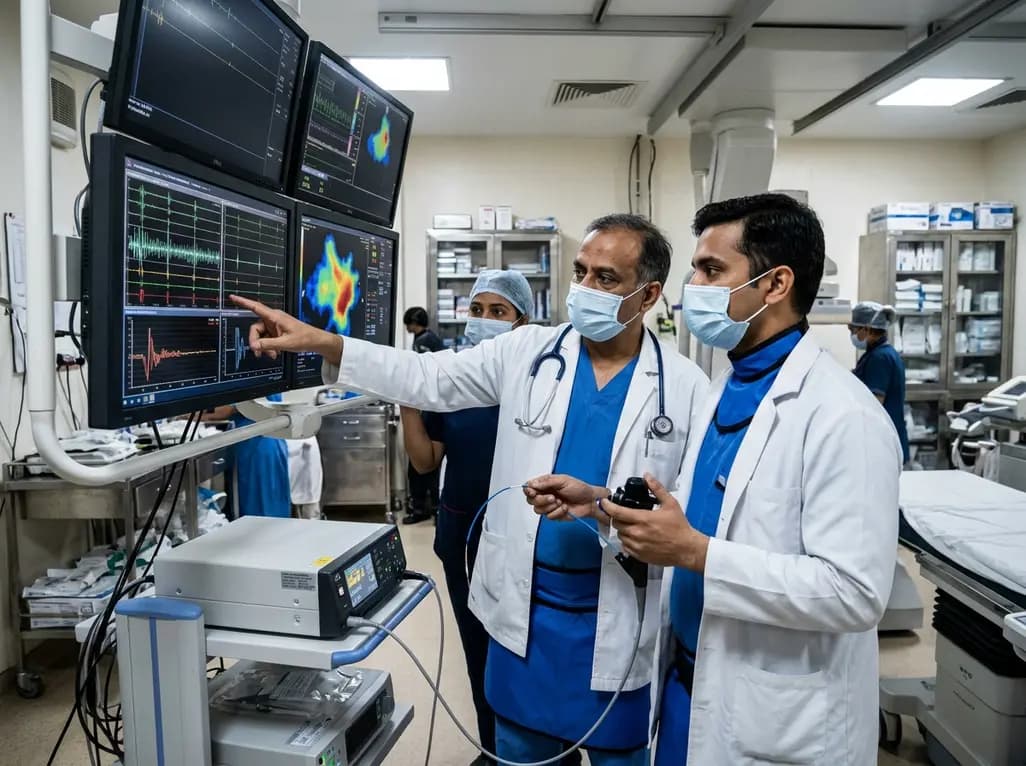
A comparative non-contact study reveals that high-power radiofrequency delivery with the QDOT MICRO catheter induces an artifactual contact force rise. Electrophysiologists must understand this power-dependent thermal and electrical phenomenon to avoid inadvertent catheter withdrawal and ineffective ablation.
Today

A novel proof-of-concept study presents a six-degree-of-freedom articulated manikin neck equipped with linear potentiometers. The system provides real-time kinematic motion feedback during cervical immobilisation, delivering sub-degree tracking accuracy to improve pre-hospital trauma training and patient safety.
Today

A retrospective comparative cohort study evaluated genitourinary safety in HFpEF between dapagliflozin and empagliflozin over six months. Rates of symptomatic UTI and asymptomatic bacteriuria showed no statistically significant differences, supporting comparable safety profiles across both SGLT2 inhibitors.
Today
