.webp&w=384&q=75)

Loading, please wait...
Loading, please wait...
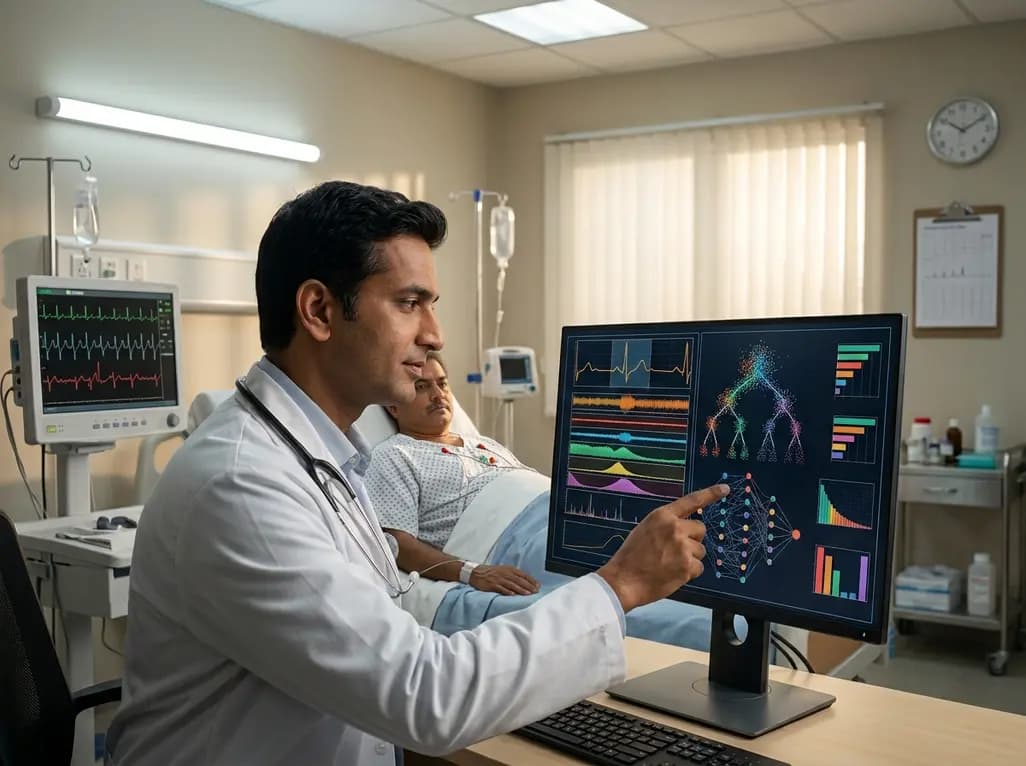
Cardiovascular diseases continue to represent the leading cause of mortality across the globe, particularly in rapidly developing nations like India. Because early diagnosis is paramount for improving patient outcomes, medical professionals increasingly rely on electrocardiogram (ECG) signals to identify cardiac irregularities. However, manual interpretation of these signals is often time-consuming and subject to human error, especially in high-volume clinical settings. Consequently, the development of robust automated ECG arrhythmia detection systems has become a critical priority for the medical technology community. By leveraging advanced machine learning, clinicians can now process vast amounts of cardiac data with unprecedented precision. These automated systems serve as an essential decision-support tool, allowing for the rapid screening of patients who may be at risk for sudden cardiac events. Recent research highlights a significant shift toward lightweight frameworks that do not require massive computational resources, such as high-end GPUs. This transition is particularly beneficial for resource-limited healthcare facilities where access to advanced hardware is restricted. Therefore, integrating these intelligent algorithms into routine practice could fundamentally transform how we manage cardiovascular health on a large scale.
The journey toward accurate classification begins with rigorous signal pre-processing, which is necessary to remove the noise inherent in physiological recordings. In this proposed framework, researchers implemented a sophisticated seven-stage algorithm to clean the raw data. Initially, they utilized Butterworth high-pass filtering and notch filtering to eliminate baseline wander and power-line interference. Following this, the Pan-Tompkins algorithm was employed for precise R-peak detection, which is vital for accurate beat segmentation. Once the signals are cleaned and segmented, the model shifts its focus to morphological descriptors. These descriptors capture the specific geometry of the ECG waveform, including the duration and amplitude of the P-wave, QRS complex, and T-wave. By normalizing these segments, the system ensures that the features remain consistent regardless of individual patient variations. Specifically, the study extracted 32 morphological features that provide a detailed anatomical snapshot of each cardiac cycle. This comprehensive approach to data preparation creates a stable foundation for the subsequent feature extraction stages. Furthermore, the combination of temporal and spatial data ensures that subtle irregularities in the heartbeat are not overlooked during the analysis phase.
A pivotal component of this framework is the application of the Discrete Wavelet Transform (DWT), specifically using a three-level Haar transform. Unlike traditional Fourier analysis, which only provides frequency information, the DWT allows for simultaneous time and frequency localization. This characteristic is exceptionally useful for non-stationary signals like the ECG, where the timing of a frequency component is as important as the component itself. From the DWT decomposition, the researchers extracted 32 statistical features, which were then combined with the 32 morphological features. As a result, each ECG beat is represented by a 64-dimensional feature vector. This high-dimensional representation allows the model to capture the complex, non-linear patterns associated with various arrhythmias. Moreover, an ablation study revealed that the inclusion of DWT features contributed a +3.7% improvement in overall classification accuracy. This underscores the importance of multiresolution analysis in physiological signal processing. By breaking down the signal into different scales, the DWT reveals hidden details that standard time-domain analysis might miss. Consequently, the synergy between statistical wavelet data and physical morphological data provides a highly discriminative feature set for the machine learning classifier.
To classify the extracted features, the researchers utilized the eXtreme Gradient Boosting Machine (XGBM), which is renowned for its speed and performance. However, the effectiveness of XGBM depends heavily on its hyperparameters. To address this, the framework integrates the Artificial Bee Colony (ABC) algorithm, a metaheuristic optimization technique inspired by the foraging behavior of honeybees. In this setup, a small colony of 8 bees underwent 8 iterations to find the optimal settings for six critical XGBM parameters. This optimization process targeted a balanced fitness function, combining both accuracy and the macro F1-score. Notably, the ABC optimization alone contributed an additional +1.14% to the model's accuracy. The final model converged at an optimal fitness value, demonstrating the power of swarm intelligence in tuning complex machine learning architectures. Additionally, the XGBM classifier is inherently efficient, making it suitable for deployment in real-time monitoring systems. By automating the tuning process, the framework removes the need for exhaustive manual grid searches, which are often computationally expensive. This intelligent optimization ensures that the model remains at peak performance across different datasets and clinical scenarios.
The efficacy of the proposed ABC-XGBM model was rigorously tested using the MIT-BIH Arrhythmia Database, a benchmark in the field containing over 100,000 ECG beat instances. Despite a severe class imbalance, where nearly 90% of the data consisted of normal heartbeats, the model achieved a remarkable classification accuracy of 95.14%. Furthermore, it demonstrated a macro F1-score of 0.948 and a macro AUC of 0.983, indicating high reliability across all five AAMI classes. When compared to more complex deep learning models, the results were even more impressive. For instance, the framework outperformed CardioAttentionNet, which had an accuracy of 91.20%, and a transformer-based classifier that reached 90.50%. This comparison proves that a well-optimized, lightweight machine learning model can exceed the performance of heavy deep learning architectures. Specifically, the proposed system operates at a time complexity of just 1.0 ms per sample. This speed is essential for bedside monitors and wearable devices that require immediate feedback. Therefore, the stability shown in the five-fold cross-validation suggests that this framework is ready for integration into practical clinical environments, offering a high-speed alternative to traditional diagnostic methods.
The implications of this research for the future of digital cardiology are profound, particularly regarding the democratization of cardiac diagnostics. Because the framework does not require GPU support, it can be easily implemented on standard hospital computers or portable diagnostic kits. This portability is vital for rural health centers in India, where specialized cardiologists may not always be available. By providing automated ECG arrhythmia detection, the system can act as a primary screening tool, flagging abnormal beats for further review by a human expert. Furthermore, the high Matthews Correlation Coefficient of 0.925 confirms that the model handles class imbalances effectively, ensuring that rare but dangerous arrhythmias are detected accurately. As telemedicine continues to grow, such computationally efficient models will be essential for managing remote patient monitoring data. Consequently, the integration of these AI-driven tools can lead to faster intervention times and a reduction in hospital readmissions. Ultimately, the goal is to bridge the gap between advanced technology and clinical application, ensuring that every patient receives the benefits of precision medicine, regardless of their location or the available infrastructure.
The Artificial Bee Colony (ABC) algorithm acts as a sophisticated optimizer for the machine learning model's hyperparameters. By simulating the efficient foraging behavior of bees, it explores the parameter space to find the most effective configuration for the XGBM classifier. This specific study showed that the ABC optimization added a 1.14% improvement in accuracy, ensuring the model performs optimally without the need for manual, time-consuming tuning or exhaustive computational searches.
The Discrete Wavelet Transform (DWT) is superior for ECG analysis because it provides a multiresolution view of the signal in both time and frequency domains. Unlike the Fourier Transform, which loses temporal information, the DWT identifies exactly when specific frequency changes occur. This allows the model to detect subtle morphological variations in the ECG waveform, leading to a 3.7% increase in detection accuracy as evidenced by the ablation study results.
Lightweight frameworks are clinically significant because they offer high accuracy (95.14%) without requiring expensive hardware like GPUs. This model processes samples in just 1.0 ms, making it ideal for real-time monitoring and deployment in low-resource settings. By outperforming complex models like Transformers and CardioAttentionNet, it proves that efficiency does not come at the cost of diagnostic precision, which is vital for immediate patient triage and remote cardiac care.
Disclaimer: This content is for informational and educational purposes only. It is not a substitute for professional medical advice, diagnosis, or treatment. Always seek the advice of your physician or other qualified health provider with any questions you may have regarding a medical condition. Refer to the latest local and national guidelines for clinical practice.
References
Umarani S et al. ECG arrhythmia classification via wavelet-driven feature extraction and swarm-optimised gradient boosting. Comput Biol Med. 2026 Jul 05. doi: undefined. PMID: 42402238.
Moody GB, Mark RG. The impact of the MIT-BIH Arrhythmia Database. IEEE Eng Med Biol Mag. 2001;20(3):45-50.
Chen C, Hua Z, Tan R, et al. CardioAttentionNet: advancing ECG beat characterization with a high-accuracy and portable deep learning model. Frontiers in Physiology. 2024;15:123456.
"
Read summarized clinical updates, watch expert medical content, and earn CME certifications right from your smartphone.
Open your smartphone camera to scan and install.





A new lightweight AI framework integrates Wavelet Transforms and swarm-optimized XGBoost for precise automated ECG arrhythmia detection. Outperforming deep learning models with 95.14% accuracy, this system provides a computationally efficient solution for real-time cardiac monitoring and clinical diagnosis.
3 months ago

Novel diimide and hydrazone scaffolds, particularly compound #C4, synergistically reactivate latent HIV-1 when combined with JQ1 or PKC activators. Demonstrating donor-matched proviral transcription ex vivo and non-canonical signaling, these findings advance shock and kill strategies toward reservoir eradication.
Today

A comparative cohort study evaluates vNOTES vs TLH hysterectomy for benign conditions, demonstrating shorter operative duration, faster return to daily activities, and equivalent female sexual function scores without increased dyspareunia.
Today

Review how tailored exercise programs benefit frail older patients with heart failure. Explore pathophysiological mechanisms, individualized training prescriptions, and strategies to overcome adherence barriers in clinical practice.
Yesterday

This comparative study evaluates posterior labral tears with and without glenohumeral instability, highlighting distinct demographic patterns, MRI underestimation in stable shoulders, and successful arthroscopic repair outcomes.
Yesterday

A clinical study demonstrates that early intervention with tocilizumab, either as monotherapy or bridged with corticosteroids, achieves significant proptosis reduction and resolves active inflammation in treatment-naive thyroid eye disease.
Today
