.webp&w=384&q=75)

Loading, please wait...
Loading, please wait...
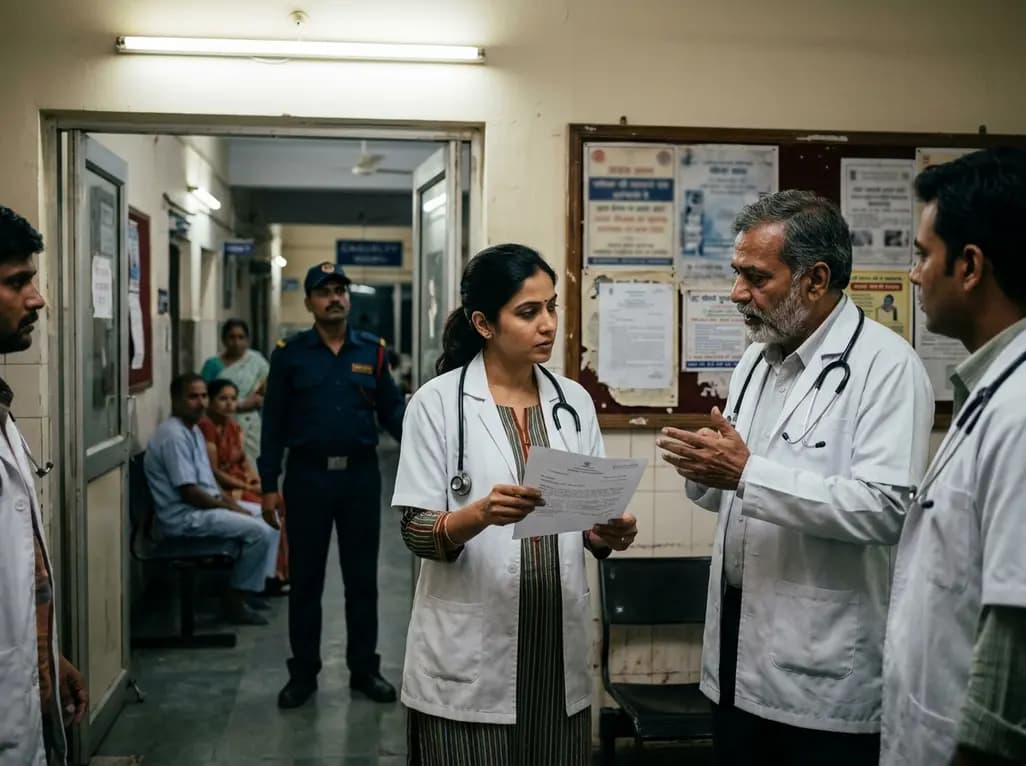
Recent judicial remarks highlight an escalating crisis surrounding attacks on doctors in public hospitals. The Supreme Court of India voiced deep concern regarding mob intimidation directed at medical personnel. Furthermore, the bench observed that brutal assaults disrupt normal healthcare operations across the state. Consequently, judges emphasized that safeguarding frontline clinical professionals remains vital for public health. Institutional leaders must now confront persistent safety lapses that jeopardize medical duty.
The Supreme Court bench issued stern remarks regarding persistent attacks on doctors within government hospitals. Justices Vikram Nath and Sandeep Mehta observed that perpetrators do not deserve to roam freely on public streets. Furthermore, the court emphasized that violent disruptions inside consultation rooms undermine medical morale across the country. In fact, clinical staff cannot deliver compassionate care while facing imminent physical threats from unruly mobs. Therefore, the judiciary classified these violent episodes as grave violations of both law and public order.
Additionally, the bench scrutinized how easily political workers breach hospital premises during clinical disputes. Judges questioned how anyone could ever justify storming consultation chambers to beat dedicated caregivers brutally. Moreover, the court asserted that society must send an uncompromising deterrent message to repeat offenders. Consequently, magistrates must treat workplace intimidation as a direct assault on community welfare. Medical professionals tirelessly serve vulnerable patients under extreme pressure and limited resources. Therefore, judicial authorities insisted on prompt detention rather than routine pre-trial release for aggressive perpetrators. Furthermore, clinicians across Maharashtra have repeatedly demanded structural protections against coordinated harassment. When political figures enter clinical spaces with violent intent, patient care halts immediately. Thus, prompt judicial intervention protects both healthcare providers and hospitalized patients awaiting urgent treatment.
The current proceedings originated from a severe altercation at Shastri Nagar Hospital in Dombivli. Specifically, a local corporator and his political associates assaulted medical personnel following a dispute over obstetric care. A patient required urgent clinical attention, yet relatives and political operatives chose physical confrontation over professional communication. Consequently, the assault injured treating physicians and caused severe distress among on-duty nursing staff.
The magistrate initially granted bail to the primary accused, which provoked widespread condemnation from medical bodies. Subsequently, the Bombay High Court took suo motu cognisance of the assault and stayed that controversial bail order. High Court judges termed the initial relief perverse and ordered the accused politician to surrender to custody. Later, the High Court granted conditional bail while mandating an expedited investigation and time-bound trial.
However, the accused challenged these stringent conditions before the Supreme Court, alleging judicial prejudice. In response, the Supreme Court questioned the petitioner's resistance to a speedy trial. The bench openly expressed an inclination to cancel bail altogether, prompting the corporator to withdraw his appeal. Meanwhile, the state government formally challenged the bail order, seeking full custodial detention. Therefore, legal scrutiny now centers on eliminating impunity for hospital attackers.
During the hearing, the Supreme Court highlighted a disturbing recurrence of violence across Maharashtra. Specifically, another violent episode erupted at a hospital in Palghar just one day prior to the hearing. That incident involved aggressive cadre threatening staff following a dispute over discharging patients injured during local festivities. Although defense counsel argued that different individuals participated in Palghar, the bench clarified that the underlying ideology remained identical.
Consequently, the court condemned the prevailing mindset that treats public hospitals as venues for political grandstanding. When local leaders resort to brute force, public trust in healthcare institutions collapses rapidly. Furthermore, emergency departments face severe operational paralysis whenever aggressive crowds gather at entry gates. Such incidents do not represent isolated interpersonal disagreements between patients and practitioners. Instead, they demonstrate a systemic failure of public order that threatens institutional governance.
Therefore, the judiciary emphasized that repeat offenses demand stringent containment strategies. State administrations cannot dismiss clinical assaults as routine misdemeanor cases under ordinary criminal statutes. Moreover, law enforcement agencies must anticipate mob mobilization during contentious clinical situations. Swift preventive action prevents minor grievances from escalating into full-blown physical assaults on vulnerable staff. Ultimately, upholding public order inside medical wards protects every citizen seeking emergency treatment.
Public hospitals across India frequently operate under immense clinical strain and resource shortages. As a result, overburdened emergency wards become prime flashpoints for volatile emotional reactions from anxious relatives. However, grief and frustration never excuse physical violence against dedicated medical personnel. Hospital administrations must establish clear security perimeters to restrict unauthorized mob access to critical treatment zones.
Specifically, facilities require round-the-clock trained security personnel stationed at all emergency triage entry points. Furthermore, administrative teams must install functional closed-circuit surveillance cameras across every clinical corridor. Rapid response alarm systems enable staff to alert local law enforcement within seconds of rising hostility. Additionally, hospital leadership must conduct regular de-escalation training for resident physicians and nursing officers. Effective communication protocols often diffuse tension before misunderstandings spiral into violent encounters.
Nevertheless, institutional safeguards cannot succeed without robust external police support. Police departments must establish rapid liaison desks near major tertiary care facilities to ensure immediate backup. Furthermore, hospital directors must file prompt institutional complaints whenever assault incidents occur. Physicians should never bear the personal burden of filing first information reports against influential local politicians. Therefore, institutional responsibility remains paramount in shielding healthcare providers from physical harm.
A meaningful reduction in hospital violence requires unwavering judicial deterrence and strict statutory enforcement. Currently, multiple Indian states enforce dedicated healthcare service personnel protection acts. However, weak enforcement mechanisms and lenient bail provisions often dilute the deterrent impact of these statutes. When assailants secure immediate release from custody, healthcare workers lose faith in institutional justice.
Therefore, the Supreme Court's firm posture against premature bail provides welcome reassurance to medical practitioners. The bench rightly observed that perpetrators must face custodial detention to send an unmistakable warning to society. Furthermore, prosecuting authorities must invoke stringent non-bailable sections under the Bharatiya Nyaya Sanhita alongside state Medicare acts. Fast-tracking criminal trials prevents political interference and prevents witnesses from facing external intimidation.
Additionally, professional associations continue to advocate for a comprehensive central protection law. A uniform federal statute would standardize punitive measures across all state jurisdictions. Moreover, political organizations must enforce internal disciplinary action against party members who threaten medical professionals. Accountability must operate at both legal and institutional levels to alter prevailing social norms. Consequently, firm deterrence will restore safe working environments where clinicians practice medicine without constant fear.
Q1: Why did the Supreme Court issue strong observations regarding the Dombivli hospital assault?
The Supreme Court intervened because attacks on healthcare professionals severely threaten public order. Justices Vikram Nath and Sandeep Mehta criticized the culture of political intimidation inside civic hospitals. Furthermore, the bench emphasized that individuals assaulting doctors do not deserve to roam freely on public streets. Consequently, the court considered canceling the politician's bail to establish an unmistakable judicial deterrent.
Q2: What legal protections currently exist for doctors facing violence in Maharashtra?
Healthcare professionals in Maharashtra receive legal protection under the Maharashtra Medical Services Act of 2010. Specifically, this state enactment classifies attacks on medical personnel and damage to hospital property as cognizable, non-bailable offenses. In addition, police officers can file charges under relevant provisions of the Bharatiya Nyaya Sanhita for assault. However, medical associations consistently demand swift investigation and rigorous trial enforcement to ensure meaningful protection.
Q3: How can hospitals proactively minimize mob violence during clinical emergencies?
Hospitals must implement strict perimeter security and restrict visitor access in critical zones. For instance, security teams should limit entry to one verified relative per patient during active emergency interventions. Furthermore, administrators should deploy trained security personnel, functional surveillance cameras, and rapid panic alarms. Institutional leaders must also support physicians by filing official police complaints directly. Consequently, these systematic measures effectively protect clinical teams while preserving continuous medical operations during acute crises.
Disclaimer: This content is for informational and educational purposes only. It does not constitute medical advice or replace professional judgment. Refer to the latest local and national guidelines for clinical practice.
References

Read summarized clinical updates, watch expert medical content, and earn CME certifications right from your smartphone.
Open your smartphone camera to scan and install.





The Supreme Court has taken a stern view on hospital violence, observing that perpetrators assaulting healthcare personnel disrupt public order. Reviewing cases in Dombivli and Palghar, the bench underscored that violent mobs inside medical facilities warrant swift detention and rigorous judicial deterrence.
last month

Explore vital recurrent stroke predictors in lacunar stroke patients managed with intensive blood pressure lowering. This analysis examines trial findings from SPS3 to uncover residual vascular risks, metabolic factors, and targeted secondary prevention strategies for high-risk neurological patients.
Today

Odisha has established India's first state-level clinical protocol specifically tailored for pregnant women with sickle cell disease. Developed with NHM and UNICEF, the framework provides structured antenatal screening, crisis mitigation, standardized referral pathways, and specialized interdisciplinary care.
Today

The Directorate General of Health Services directs Indian states to halt the hazardous reuse and reprocessing of single-use medical devices. Discover regulatory implications under the Drugs and Cosmetics Act, critical infection risks, legal liabilities, and operational changes required across clinical specialties.
Today

A randomized controlled trial demonstrates that an eight-week dual-task training intervention significantly improves static and dynamic postural control over standard balance exercises in individuals with chronic ankle instability, addressing critical neurocognitive deficits during athletic and daily activities.
Today

India is advancing preventive healthcare by integrating genomics, artificial intelligence, and quantum technologies. With the SANGAM programme sequencing one million Indian genomes, clinicians can unlock personalized therapies, detect cardiometabolic risks early, and curb the burden of diabetes and heart disease.
Today
