.webp&w=384&q=75)

Loading, please wait...
Loading, please wait...
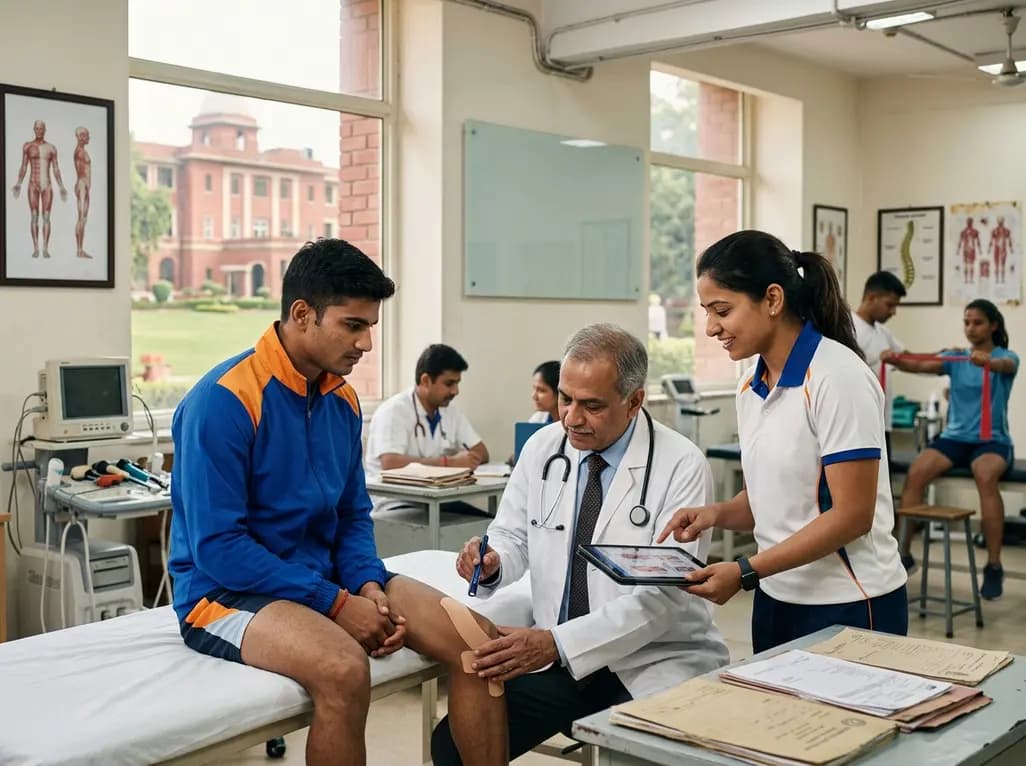
The Sports Injury Centre (SIC) at Safdarjung Hospital and the Sports Authority of India (SAI) recently signed a historic Memorandum of Understanding (MoU) to revolutionize athlete healthcare in India. This partnership brings together premier clinical expertise and an extensive athlete support network. It aims to deliver world-class medical facilities, injury management, and advanced rehabilitation services. Consequently, Indian athletes will now have streamlined access to high-performance medical infrastructure, ensuring optimal physical conditioning and long-term career longevity.
This milestone agreement establishes a robust clinical and scientific bridge between India’s premier healthcare providers and its elite sports administration. Specifically, the Sports Injury Centre (SIC) at Safdarjung Hospital serves as the clinical anchor, offering top-tier orthopedic and rehabilitative diagnostics. Meanwhile, the Sports Authority of India provides its vast countrywide network of training academies. By combining these unique assets, the alliance introduces a unified referral pathway for injured sportspeople. Therefore, young and elite sportspersons will experience minimal delays in receiving expert trauma care. Additionally, the ministries involved will ensure that health and sports departments work in close coordination. This collaborative framework addresses long-standing gaps in sports medicine access across rural and urban centers. Ultimately, this integration aims to establish a benchmark for national sports medicine delivery models.
To sustain these ambitious goals, the government intends to expand specialized clinical facilities across various states. For example, newer All India Institute of Medical Sciences (AIIMS) branches will receive active encouragement to establish dedicated sports injury units. Consequently, athletes in regional training camps will not need to travel to New Delhi for tertiary consultations. In addition, the Health Ministry plans to expand postgraduate medical education in this discipline to build a larger pool of certified sports medicine specialists. By strengthening academic curricula and fellowship programs, India can generate its own cadre of dedicated sports physiotherapists, orthopedic surgeons, and rehabilitation experts. This strategic expansion will also involve prestigious institutes like NIMHANS to address neuropsychiatric sports requirements. Thus, the country is building a comprehensive care network that covers both physical and mental athletic well-being.
A key focus of this partnership is the critical development of localized sports medicine research. Currently, many clinical guidelines and physical benchmarks rely almost entirely on Western anthropometric data. However, these parameters often fail to reflect the unique body composition, genetics, and environmental physiology of Indian athletes. Therefore, both institutions will co-design joint research initiatives to establish native scientific baselines. Through these studies, doctors can develop evidence-based treatment and training regimens tailored specifically to Indian demographics. For instance, customized hydration, nutrition, and biomechanical protocols will optimize training outcomes and prevent common musculoskeletal injuries. Furthermore, this research will foster home-grown technological innovations in rehabilitation. By generating indigenous scientific proof, the medical fraternity can provide highly precise, personalized interventions for competitive athletes.
Beyond surgical interventions, this MoU prioritizes preemptive injury prevention and structured rehabilitation protocols. Historically, incomplete recovery remains a leading cause of premature career termination among competitive sportspeople. To address this, the Sports Injury Centre will standardize return-to-play guidelines to ensure athletes resume high-impact training only when fully healed. Moreover, medical staff will conduct regular biomechanical screenings and musculoskeletal risk assessments at SAI centers. These proactive evaluations help spot physiological imbalances before they manifest as debilitating muscle tears or joint stress. Additionally, clinical teams will implement advanced physical therapy, hydrotherapy, and modern conditioning methods at the grassroots level. This preventive approach minimizes the overall incidence of severe ligament ruptures. Consequently, keeping athletes healthier for longer periods will enhance the national sporting ecosystem.
The operational success of this medical alliance relies heavily on linking local clinical networks. Indeed, the Sports Secretary has suggested connecting SAI’s specialized Centres of Excellence directly with nearby medical colleges. This localized integration ensures that regional athletes receive immediate diagnostic and therapeutic assistance without administrative hurdles. Furthermore, it creates invaluable opportunities for clinical training, academic exchanges, and hands-on residency programs for medical students. Doctors in training will gain direct exposure to complex sports injuries and advanced arthroscopic techniques. Simultaneously, sports science personnel will benefit from continuous medical education and clinical updates. This continuous exchange of knowledge elevates the overall quality of primary sports healthcare. Ultimately, such institutional linkages create a sustainable, self-reinforcing loop of medical education, advanced research, and peerless patient care.
Q1: What are the main objectives of the MoU signed between Safdarjung Hospital and SAI?
The memorandum aims to establish a highly coordinated, world-class athlete healthcare framework across India. It combines the advanced clinical expertise of Safdarjung Hospital's Sports Injury Centre with the Sports Authority of India's nationwide training network. The primary goals include improving sports injury prevention, offering accurate diagnoses, providing state-of-the-art rehabilitation, and fostering indigenous scientific research to help Indian athletes sustain peak physical performance throughout their careers.
Q2: Why is there a specific emphasis on developing indigenous sports medicine research in India?
Currently, most global sports medicine benchmarks and rehabilitation protocols are based on Western anthropometric and physiological data. However, these standards may not fully align with the body composition and genetic profiles of Indian sportspeople. Developing local, evidence-based research ensures that training, recovery, and nutritional protocols are customized to the distinct physiological requirements of Indian athletes, ultimately improving outcomes.
Q3: How does the Union Health Ministry plan to expand sports medicine facilities under this agreement?
The Ministry plans to encourage newer AIIMS institutions to build dedicated sports medicine units and prioritize specialized athlete care. Additionally, the government will expand postgraduate medical programs in sports medicine to train a larger pool of specialists. They also plan to involve specialized institutes like NIMHANS to address comprehensive athletic healthcare needs beyond traditional orthopedic interventions.
Disclaimer: This content is for informational and educational purposes only. It does not constitute medical advice or replace professional judgment. Refer to the latest local and national guidelines for clinical practice.
References

Read summarized clinical updates, watch expert medical content, and earn CME certifications right from your smartphone.
Open your smartphone camera to scan and install.





The Sports Injury Centre at Safdarjung Hospital and the Sports Authority of India signed a landmark MoU. This partnership aims to revolutionize athlete healthcare, sports medicine, injury rehabilitation, and indigenous research to support Indian athletes on their path to international success.
3 months ago
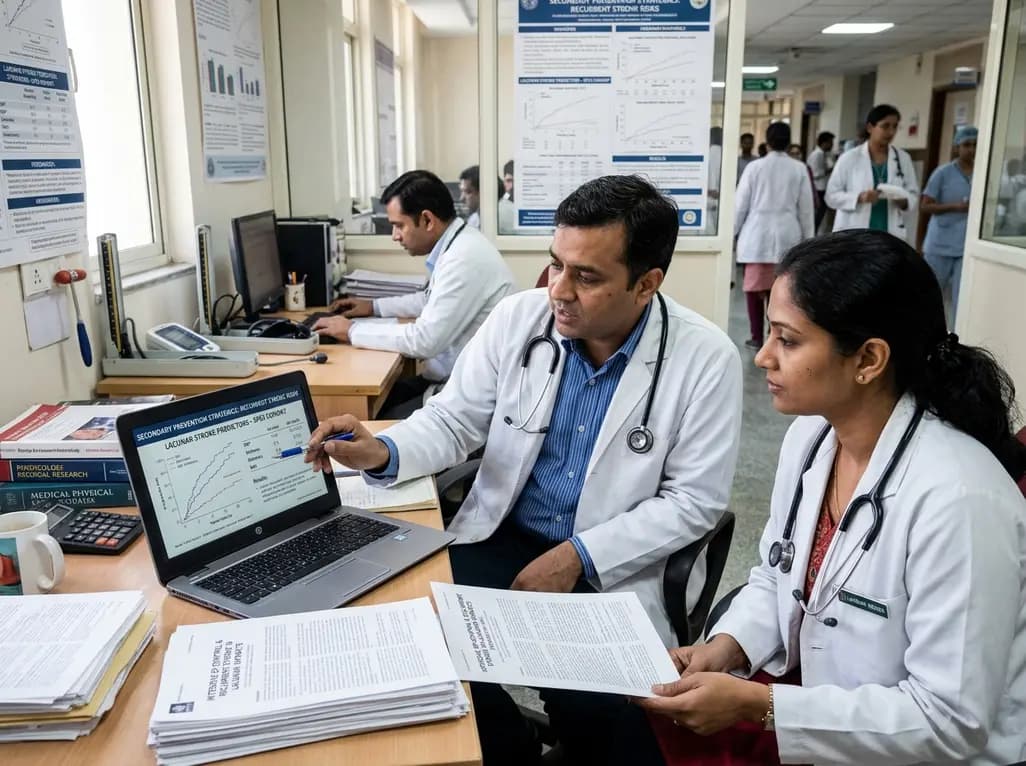
Explore vital recurrent stroke predictors in lacunar stroke patients managed with intensive blood pressure lowering. This analysis examines trial findings from SPS3 to uncover residual vascular risks, metabolic factors, and targeted secondary prevention strategies for high-risk neurological patients.
Today
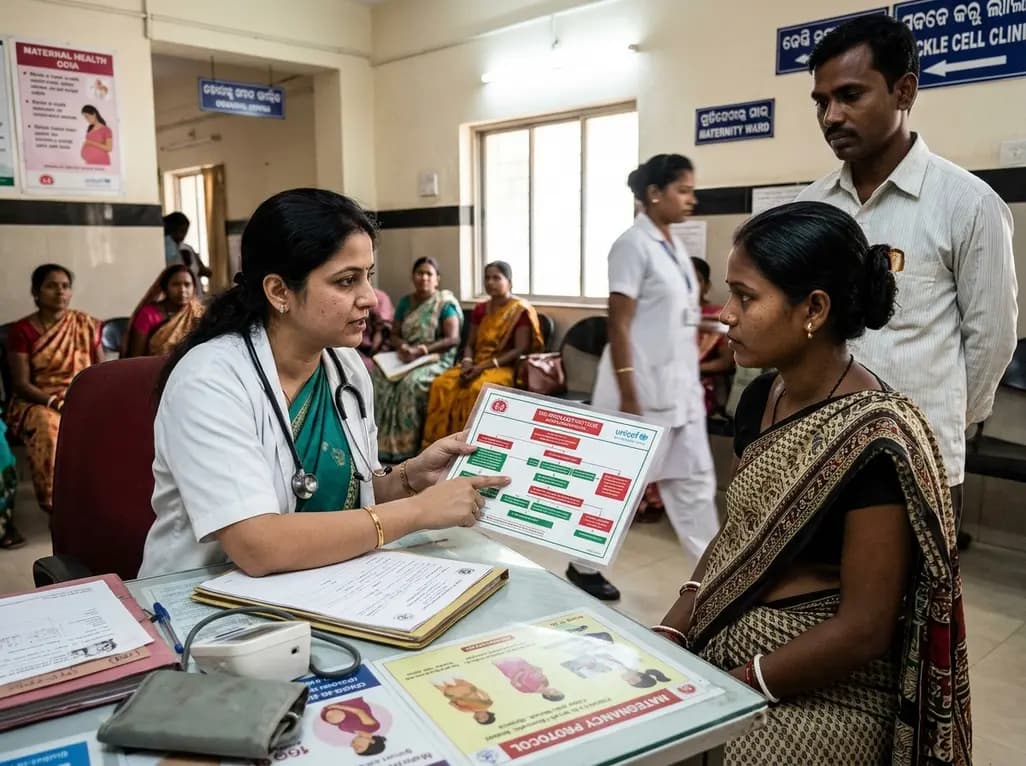
Odisha has established India's first state-level clinical protocol specifically tailored for pregnant women with sickle cell disease. Developed with NHM and UNICEF, the framework provides structured antenatal screening, crisis mitigation, standardized referral pathways, and specialized interdisciplinary care.
Today

The Directorate General of Health Services directs Indian states to halt the hazardous reuse and reprocessing of single-use medical devices. Discover regulatory implications under the Drugs and Cosmetics Act, critical infection risks, legal liabilities, and operational changes required across clinical specialties.
Today

Mitochondria-targeted nanoparticles self-assembled from EGCG and L-glutamic acid effectively restore mitochondrial homeostasis, suppress synovial inflammation, and attenuate chondrocyte senescence in osteoarthritis, offering a promising disease-modifying nanotherapy.
Today

India is advancing preventive healthcare by integrating genomics, artificial intelligence, and quantum technologies. With the SANGAM programme sequencing one million Indian genomes, clinicians can unlock personalized therapies, detect cardiometabolic risks early, and curb the burden of diabetes and heart disease.
Today
