.webp&w=384&q=75)

Loading, please wait...
Loading, please wait...
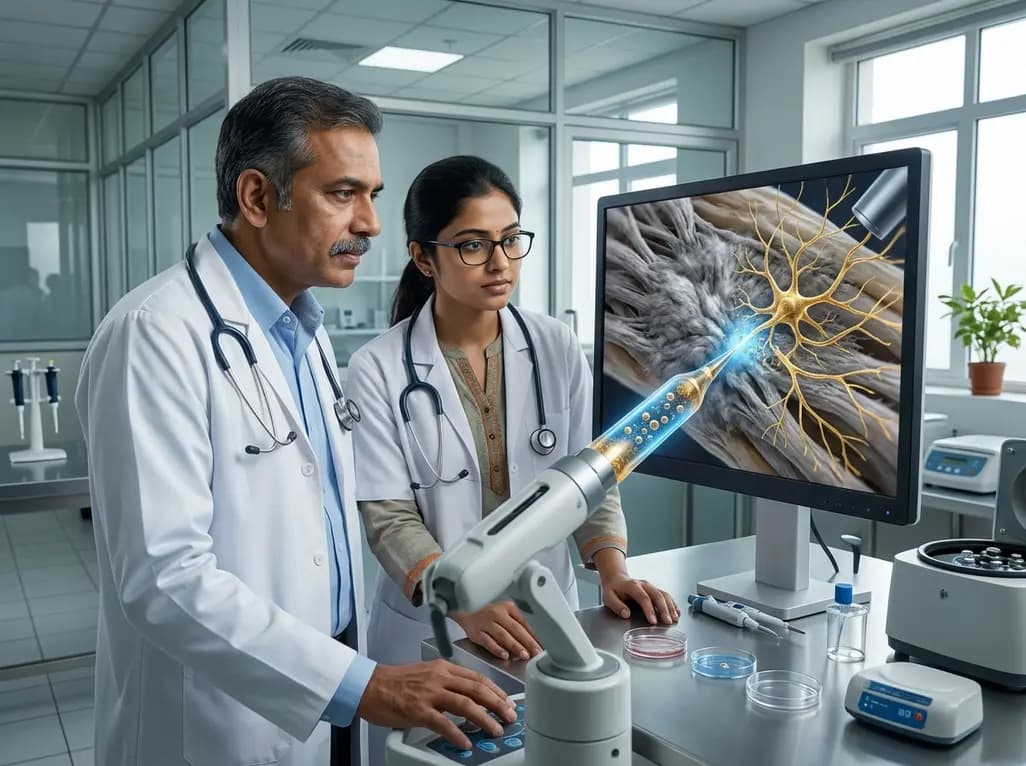
Spinal cord injury (SCI) remains one of the most challenging conditions in modern neurology due to the central nervous system's minimal regenerative capacity. When the spinal cord is damaged, the loss of neurons is often permanent, leading to significant sensory and motor deficits. However, a groundbreaking study recently published in Stem Cell Research & Therapy has introduced a promising solution: astroglia to neuron reprogramming using advanced nanotechnology. By utilizing biodegradable poly(beta-amino ester) (PBAE) nanoparticles, researchers successfully delivered specific genetic instructions directly into the site of injury. This approach allows resident glial cells to transform into functional neurons, effectively rebuilding the neural network from within.
Traditional regenerative therapies have often struggled with delivery efficiency and safety. Viral vectors, while effective at gene transfer, carry risks of genomic integration and immune responses. The move toward non-viral platforms represents a significant leap forward in translational medicine. By focusing on in situ reprogramming, scientists can bypass the complications associated with external cell transplantation, such as low cell survival and poor integration. This research demonstrates that the internal environment of the injured spinal cord can be harnessed for self-repair, providing a beacon of hope for patients suffering from chronic neurological impairment.
One of the primary obstacles to recovering from a spinal cord injury is the formation of a glial scar (GS). While the body initially creates this scar to seal the injury site and prevent further inflammation, the scar eventually becomes a permanent physical and biochemical barrier. It is composed largely of reactive astrocytes that secrete inhibitory molecules, preventing any surviving axons from regrowing. Consequently, even if new neurons were introduced to the site, the dense architecture of the glial scar would likely impede their ability to form meaningful connections. Addressing the neuronal loss without tackling the scar itself often results in limited functional improvement.
The innovative aspect of astroglia to neuron reprogramming is its dual-action mechanism. Instead of treating the glial scar as an obstacle to be avoided, this therapy uses the scar's own cellular components—the reactive astrocytes—as the raw material for regeneration. By converting these astrocytes into neurons, the therapy simultaneously replenishes the lost cell population and physically thins out the restrictive scar tissue. This "remodeling" of the injury site creates a more permissive environment for neural plasticity and circuit reintegration, which is essential for restoring complex motor functions in affected individuals.
The choice of delivery vehicle is critical for the success of gene therapy in the central nervous system. This study utilized poly(beta-amino ester) (PBAE) nanoparticles, which are synthetic, biodegradable polymers designed for high-efficiency gene transfer. Unlike viral vectors, PBAE nanoparticles do not integrate into the host genome, significantly reducing the risk of oncogenic mutations. Furthermore, these nanoparticles possess a unique pH-sensitive buffering capacity. This allows them to escape endosomes within the cell more effectively, ensuring that the therapeutic plasmids reach the nucleus to initiate the reprogramming process without being degraded prematurely.
Another advantage of the PBAE platform is its high degree of biocompatibility. As the polymer degrades into non-toxic small molecules, it minimizes the inflammatory response often seen with other synthetic materials. In the context of astroglia to neuron reprogramming, the ability to deliver multiple plasmids—specifically those encoding the transcription factors ASCL1 and NGN2—simultaneously is a major technical achievement. This co-delivery ensures that the target astrocytes receive the full set of instructions needed to complete the complex transition from a glial cell to a neuronal phenotype, maximizing the overall efficiency of the regenerative process.
The reprogramming process is driven by two master transcription factors: ASCL1 (Achaete-scute homolog 1) and NGN2 (Neurogenin 2). These proteins are essential during embryonic development for the specification of neuronal lineages. ASCL1 is particularly known for its ability to "dismantle" the existing epigenetic landscape of a non-neuronal cell, making it more receptive to change. Meanwhile, NGN2 acts as a powerful driver of the neuronal phenotype, promoting the expression of genes associated with axon growth and synaptic formation. When used together, they create a synergistic effect that is far more potent than using either factor in isolation.
In this research, the co-expression of ASCL1 and NGN2 was shown to successfully convert reactive astrocytes into functional neurons that exhibit mature characteristics. These "induced" neurons were not just morphological mimics; they demonstrated physiological properties indistinguishable from genuine endogenous neurons. They exhibited specialized calcium signaling, the ability to fire action potentials, and the capacity to form functional synapses with existing neural circuits. This level of functional integration is vital for the success of astroglia to neuron reprogramming, as the ultimate goal is not just cell replacement but the restoration of electrical communication across the injury site.
To ensure the safety and efficacy of any gene therapy, understanding the underlying molecular pathways is essential. The researchers identified that the conversion process is mediated by a tripartite interaction involving Cend1 (Cell cycle exit and neuronal differentiation protein 1), RanBPM, and Dyrk1 kinase. Cend1 is a neuronal lineage-specific protein that plays a pivotal role in synchronizing the moment a cell stops dividing and begins to differentiate. In a spinal cord injury, astrocytes are often in a highly proliferative, reactive state. The induction of Cend1 by ASCL1 and NGN2 forces these cells to exit the cell cycle, which is a prerequisite for becoming a stable, post-mitotic neuron.
Furthermore, the study highlighted a critical crosstalk with the Notch1/Cyclin D1 signaling axis. Notch1 signaling is typically high in glial cells and acts to maintain their identity while preventing neurogenesis. The reprogramming process actively suppresses Notch1 and downregulates Cyclin D1, which effectively "unlocks" the cell from its glial state. By modulating these downstream targets, the PBAE-mediated delivery of transcription factors ensures a clean transition. This deep mechanistic insight into astroglia to neuron reprogramming provides a roadmap for future optimizations, potentially allowing clinicians to fine-tune the speed and subtype of neurons produced depending on the specific nature of the injury.
The ultimate test of any SCI therapy is whether it leads to measurable behavioral improvements. In animal models, the local administration of PBAE-ASCL1/NGN2 nanoparticles into the glial scar resulted in significant amelioration of neurological deficits. Subjects treated with the nanoparticle-mediated reprogramming showed improved locomotor scores and better coordination compared to control groups. These improvements were directly correlated with the presence of new, integrated neurons and a noticeable reduction in the density of the glial scar. This suggests that the dual-action approach—replacing neurons and removing barriers—is highly effective for functional recovery.
Looking forward, the success of astroglia to neuron reprogramming in this study opens new doors for treating a variety of central nervous system disorders beyond spinal cord injury. Conditions such as traumatic brain injury, stroke, and even neurodegenerative diseases like Parkinson's could potentially benefit from in situ cell conversion. By refining non-viral delivery systems and identifying the most potent combinations of transcription factors, regenerative medicine is moving closer to a future where damaged neural tissue is no longer considered permanent. This study serves as a foundational step toward clinical applications that could one day restore mobility and independence to millions of patients worldwide.
PBAE nanoparticles offer a safer, non-viral alternative for gene delivery. Unlike viruses, they do not integrate into the patient's DNA, eliminating the risk of accidental mutations. These biodegradable polymers are specifically engineered to escape endosomes efficiently due to their pH-sensitive properties. This ensures the genetic material reaches the cell nucleus intact. Furthermore, PBAE particles are easy to manufacture and characterize, making them highly suitable for large-scale clinical applications in neurology.
ASCL1 and NGN2 are master transcription factors that work synergistically to transform astrocytes into neurons. ASCL1 acts as a pioneer factor, opening up the cell's chromatin and dismantling the existing glial identity. NGN2 then drives the expression of neuronal genes, facilitating the acquisition of mature features such as axon growth and synaptic connectivity. Together, they ensure a high-efficiency conversion that results in functional, electrically active neurons capable of integrating into surviving neural circuits.
This therapy addresses the glial scar through a process of active remodeling. Instead of trying to bypass the scar, it uses the reactive astrocytes that form the scar as the source for new neurons. As these astrocytes convert into neurons, the physical density of the scar is reduced, and the inhibitory environment is neutralized. This dual action—replenishing lost neurons while simultaneously dissolving the physical barrier—is essential for promoting successful axonal regrowth and functional recovery.
Disclaimer: This content is for informational and educational purposes only and does not constitute medical advice, diagnosis, or treatment. Always seek the advice of a qualified healthcare provider with any questions you may have regarding a medical condition. The use of experimental therapies should only be considered within the context of approved clinical trials. Refer to the latest local and national guidelines for clinical practice.
References
Guo J et al. PBAE nanoparticle-mediated delivery of ASCL1 and NGN2 genes for astroglia-to-neuron reprogramming to remodel glial scar for spinal cord injury repair. Stem Cell Res Ther. 2026 Jul 04. doi: 10.1186/s13287-026-05159-2. PMID: 42401982.
Niu W, Zang T, Zou Y, et al. In vivo reprogramming of reactive glia into induced neurons in the adult mouse brain. Nat Commun. 2013;4:2161. doi: 10.1038/ncomms3161.
Green JJ, Langer R, Anderson DG. A combinatorial polymer library for gene delivery. Acc Chem Res. 2008;41(12):1748-1759. doi: 10.1021/ar800109j.

Read summarized clinical updates, watch expert medical content, and earn CME certifications right from your smartphone.
Open your smartphone camera to scan and install.





Researchers have developed a non-viral nanoparticle platform to reprogram glial scar cells into functional neurons, offering a dual-action therapy for spinal cord injury by replacing lost cells and removing physical barriers to regeneration.
3 weeks back
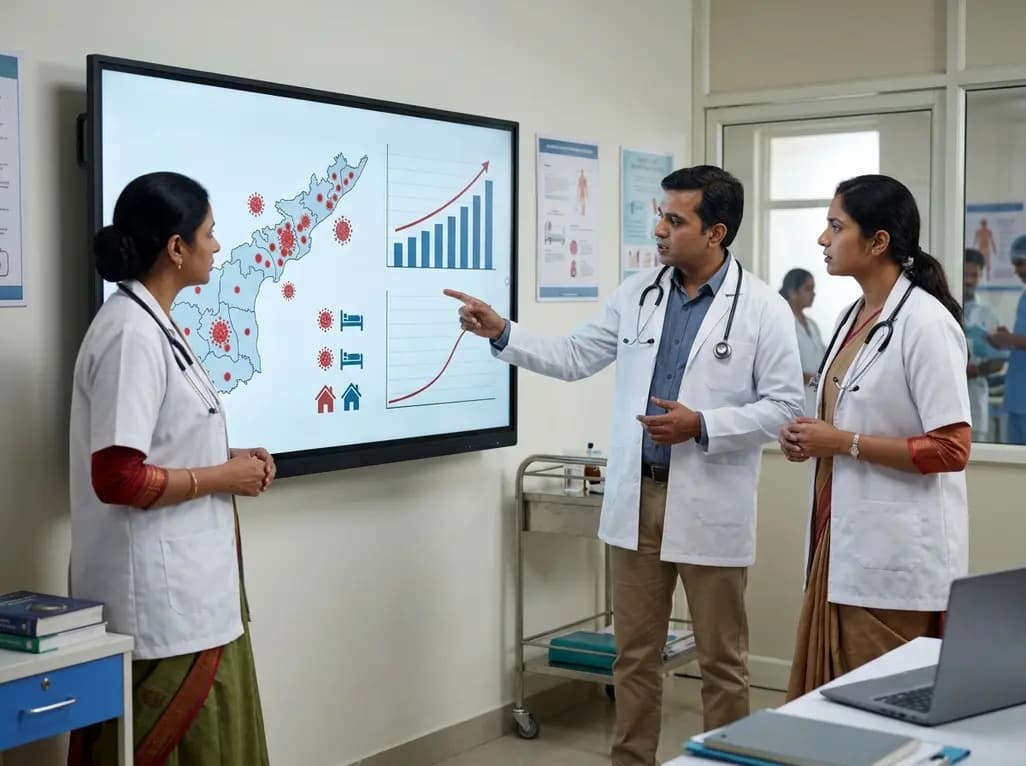
Andhra Pradesh reported 10 new Covid-19 cases, taking the state tally to 49 while deaths remain at four. With 24 patients hospitalized and 16 under home isolation, the Health Department has intensified monitoring. Medical professionals should review regional distribution, diagnostic protocols, and management plans.
Today

An 11-year Swedish registry study of 618 uterine sarcoma patients found that minimally invasive surgery yielded survival comparable to open surgery in early stages. However, adjuvant chemotherapy conferred no survival benefit in localized or advanced disease, highlighting stage and histology as key outcomes.
3 days back

A cross-sectional study evaluates post-intensive care syndrome in cardiac patients 2-4 weeks post-ICU discharge, highlighting cognitive, psychological, and functional impairments and the need for structured multidisciplinary rehabilitation.
3 days back

Anterior cruciate ligament reconstruction failure lacks uniform definition. A narrative review proposes an integrative framework incorporating objective and subjective instability, persistent pain, restricted motion, graft rupture, and secondary meniscal injury to standardize clinical reporting.
3 days back

With World Obesity Atlas data warning that over 41 million Indian children are overweight or obese, ICMR and NIN have unveiled a 10-point policy roadmap. The initiative calls for mandatory front-of-pack labeling, HFSS taxes, strict marketing bans, and healthier school environments to curb non-communicable diseases.
Today
