.webp&w=384&q=75)

Loading, please wait...
Loading, please wait...
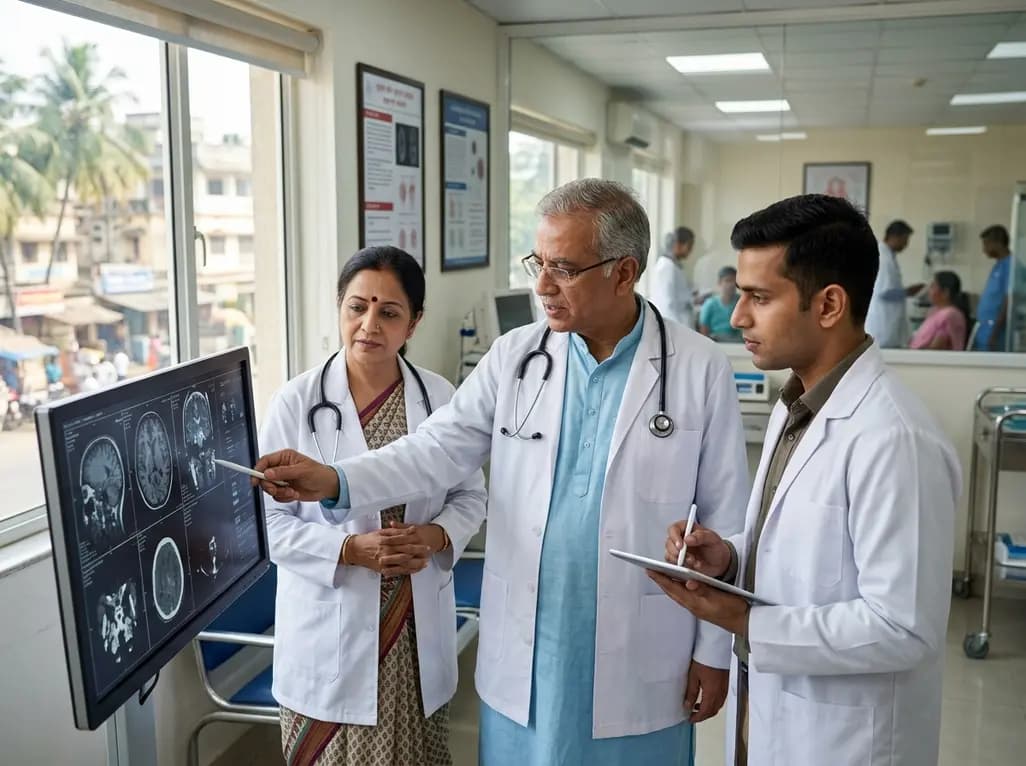
The successful execution of the Aster Quality Care merger marks a monumental shift in India's private healthcare sector. Consequently, this strategic integration creates one of the largest medical networks in the nation. This key development directly influences clinical delivery, medical infrastructure, and professional growth opportunities for healthcare practitioners. Ultimately, the consolidation signals a new era of decentralized medicine.
The corporate consolidation began in November 2024. At that time, Aster DM Healthcare and Quality Care India Limited announced their merger. Subsequently, both organizations worked diligently to secure necessary regulatory clearances. Consequently, they received an impressive approval vote from their shareholders. This massive transition officially establishes a unified platform named Aster DM Quality Care Limited. Historically, Aster DM Healthcare separated its Gulf Cooperation Council business to unlock maximum domestic value. Therefore, the company shifted its primary growth efforts to the Indian healthcare market. To execute this vision, the group finalized a strategic share-swap transaction. Indeed, Blackstone and TPG played pivotal roles as major backing partners. By combining their portfolios, the stakeholders successfully established a massive healthcare network. This legal amalgamation lays a rock-solid foundation for future medical excellence. Furthermore, it creates a robust framework for decentralized clinical operations across multiple states. Medical professionals across India will likely see substantial changes in resource allocation and infrastructure. Additionally, the newly formed entity will consolidate administrative functions to improve operational efficiency. As a result, individual hospitals can focus more resources on direct patient care and advanced clinical research.
The merged entity successfully integrates four distinct and highly respected healthcare brands under one group. Specifically, these brands include Aster DM, CARE Hospitals, Evercare, and KIMSHEALTH. As a result of this merger, the combined network now operates 39 hospitals across 28 cities. Moreover, the total infrastructure boasts an impressive capacity of over 10,600 beds. This scaled platform places the organization in the top tier of Indian private hospital operators. Previously, these brands operated independently in their respective regional markets. However, they will now function as a single, highly integrated clinical ecosystem. This structure allows for unified clinical protocols and collaborative medical practices. Additionally, more than 45,000 healthcare professionals, including thousands of specialized doctors, will serve patients under this group. Furthermore, the combination of these distinct brands enhances geographical diversification. The group now possesses a formidable footprint across South and Central India. Consequently, patients can access high-quality tertiary and quaternary treatments without traveling long distances. This massive operational scale ultimately strengthens clinical outcomes by standardizing medical pathways across all facilities. Indeed, shared clinical expertise allows doctors to handle extremely complex medical cases with greater confidence and resources. Subsequently, this collaborative environment will foster continuous medical education for junior doctors.
A central pillar of the group's long-term strategy involves expanding advanced medical care beyond major metro cities. Consequently, the network is uniquely positioned to address the massive healthcare gap in underpenetrated regional markets. Specifically, the group will target fast-growing urban centers in several states. These locations include Nagpur, Aurangabad, Vijayawada, Guntur, Bhubaneswar, Raipur, Nagercoil, Kolhapur, Kannur, Kasaragod, and Kottakkal. Previously, patients in these cities had to travel to distant metropolitan centers for advanced medical treatments. However, this strategic expansion brings specialist care directly to where patients reside. Therefore, local communities will benefit from rapid access to critical life-saving interventions. Furthermore, decentralizing specialized medicine is highly cost-effective for families. By avoiding expensive travel and lodging, patients can receive affordable care locally. Additionally, the group plans to establish robust hub-and-spoke models to connect smaller clinics with major tertiary hospitals. As a result, local medical practitioners can easily refer complex cases to specialized centers of excellence nearby. This aggressive regional focus fundamentally democratizes modern healthcare delivery across non-metropolitan India. Indeed, the group remains committed to providing international-standard healthcare to every segment of society. Subsequently, local doctors will receive specialized training to operate modern diagnostic equipment in these expanding branches.
The consolidation of clinical resources allows the merged group to invest heavily in cutting-edge medical technologies. Specifically, the network plans to accelerate the deployment of advanced diagnostic and surgical tools. For example, hospitals will receive upgrades in robotic surgery platforms and advanced oncology treatment systems. Consequently, surgeons can perform highly precise procedures with minimized recovery times for patients. Furthermore, the combined group will establish state-of-the-art centers of excellence. These specialized centers will focus on cardiology, neurology, orthopedics, and gastroenterology closer to patient communities. Therefore, patients will have local access to complex treatments like neurosurgery and organ transplants. Additionally, the integration enables a comprehensive digital healthcare platform. This platform will support telemedicine, electronic medical records, and remote patient monitoring across all 39 hospitals. As a result, doctors can consult with remote specialists instantly to make critical clinical decisions. Indeed, this technological push ensures that clinical quality remains uniform across the entire network. Subsequently, these advanced systems will elevate the standard of care in previously underserved tier-2 and tier-3 cities. Ultimately, integrating modern technology with clinical expertise drives superior patient recovery rates. Moreover, it empowers medical staff with the best tools available in contemporary medicine.
The leadership of the combined group has outlined highly ambitious growth targets for the coming years. Specifically, Dr. Azad Moopen continues as the Executive Chairman of the merged enterprise. Meanwhile, Mr. Varun Khanna will lead the daily business operations as the Managing Director and Group CEO. Under this experienced leadership, the network plans to expand its total capacity to over 15,000 beds. To achieve this scale, the group will allocate a substantial capital outlay of over 2,300 crore rupees. Consequently, this funding will support greenfield hospital projects and strategic regional acquisitions. For instance, the company is actively developing a 500-bed facility in Bengaluru. Additionally, they recently operationalized a state-of-the-art hospital in Kasaragod. Furthermore, this massive scale will drastically lower operational costs through centralized procurement of medical supplies. As a result, the group can pass these cost savings directly to patients. Therefore, advanced tertiary treatments will become far more affordable for the general public. Indeed, this strategic growth plan ensures long-term financial sustainability while fulfilling a vital social mission across India. Ultimately, this balanced approach positions the company to dominate the highly competitive Indian private healthcare sector. Subsequently, stakeholders can expect robust growth and improved service delivery metrics.
Q1: What is the primary objective of the Aster Quality Care merger?
The primary objective of this strategic corporate integration is to decentralize affordable tertiary healthcare across India's growing non-metropolitan hubs. Consequently, by combining four elite clinical brands, the network aims to expand specialized services directly to tier-2 and tier-3 cities. This regional focus significantly reduces the need for patients to travel long distances for complex, lifesaving treatments. Furthermore, this strategy establishes localized centers of excellence to treat cardiovascular and neurological disorders closer to patients.
Q2: Which major clinical brands are brought together under the newly merged entity?
This landmark consolidation successfully brings four highly respected healthcare brands under a single, unified operational structure. Specifically, these brands include Aster DM, CARE Hospitals, Evercare, and KIMSHEALTH. As a result, the combined group operates 39 hospitals across 28 cities with over 10,600 beds. Moreover, this vast integration provides patients with a seamless continuum of medical care in underserved regional markets.
Q3: How does this consolidation benefit medical professionals and doctors practicing in India?
For medical professionals, this integration creates exceptional opportunities for clinical collaboration and professional growth across a massive national network. Specifically, doctors can leverage shared medical technologies and participate in centralized research initiatives. Additionally, the group's aggressive expansion into regional markets will open numerous clinical posts for young specialists. Consequently, doctors can establish advanced practices close to underserved communities, supported by a world-class corporate ecosystem.
Disclaimer: This content is for informational and educational purposes only. It does not constitute medical advice or replace professional judgment. Refer to the latest local and national guidelines for clinical practice.
References

Read summarized clinical updates, watch expert medical content, and earn CME certifications right from your smartphone.
Open your smartphone camera to scan and install.





Discover how the strategic consolidation of Aster DM Healthcare and Quality Care India creates one of India's largest healthcare networks. This comprehensive overview examines the merger's reach across 39 hospitals, its focus on tier-2 and tier-3 cities, and the implications for clinical practice and technology.
3 months ago

A breakthrough study evaluated H5N1 transmission efficiency across mammalian isolates. Researchers discovered that human-derived D1.1 harboring the PB2 D701N mutation spread efficiently in ferrets, unlike strains carrying PB2 E627K. This finding highlights critical genetic markers for zoonotic surveillance.
Today

A comparative cohort study evaluates vNOTES vs TLH hysterectomy for benign conditions, demonstrating shorter operative duration, faster return to daily activities, and equivalent female sexual function scores without increased dyspareunia.
Today

Review how tailored exercise programs benefit frail older patients with heart failure. Explore pathophysiological mechanisms, individualized training prescriptions, and strategies to overcome adherence barriers in clinical practice.
Yesterday

This comparative study evaluates posterior labral tears with and without glenohumeral instability, highlighting distinct demographic patterns, MRI underestimation in stable shoulders, and successful arthroscopic repair outcomes.
Yesterday

A clinical study demonstrates that early intervention with tocilizumab, either as monotherapy or bridged with corticosteroids, achieves significant proptosis reduction and resolves active inflammation in treatment-naive thyroid eye disease.
Today
