

Loading, please wait...
Loading, please wait...

Elective joint arthroplasty carries a recognized risk of deep vein thrombosis and pulmonary embolism. Consequently, selecting an optimal regimen for venous thromboembolism prophylaxis remains a vital clinical objective for orthopedic surgeons worldwide. The randomized PEPPER trial evaluated whether aspirin provides noninferior protection compared to standard anticoagulant therapies following total hip and knee replacement.
Surgeons have debated the comparative merits of antiplatelet agents and formal anticoagulants for decades. Although oral anticoagulants like rivaroxaban and warfarin effectively prevent clot formation, they historically heighten bleeding concerns. Consequently, postoperative hematomas, persistent wound discharge, and unplanned reoperations trouble surgical teams. In response, many orthopedic centers embraced aspirin as an inexpensive, convenient alternative that requires no laboratory monitoring. Earlier observational studies and smaller clinical trials suggested that low-dose aspirin provided adequate thromboprophylaxis with minimal bleeding liability. However, significant controversy persisted because prior investigations lacked adequate statistical power to settle the debate definitively. Clinicians also questioned whether aspirin could truly match the potency of direct factor Xa inhibitors or vitamin K antagonists across diverse patient populations. Furthermore, guideline recommendations remained divided between orthopedic associations and hematologic societies. While orthopedic guidelines frequently favored aspirin due to its benign bleeding profile, chest physicians prioritized potent anticoagulation to prevent fatal pulmonary embolism. Therefore, establishing conclusive comparative data became essential for guiding perioperative care, ensuring patient safety, and clarifying optimal thromboprophylaxis protocols following major joint arthroplasty.
The PEPPER trial was an extensive, multi-center, randomized comparative-effectiveness trial designed with noninferiority parameters. Investigators enrolled adult patients undergoing elective primary or revision total hip arthroplasty or total knee arthroplasty across thirty North American academic and community hospitals. The trial randomized participants to receive one of three regimens for 30 days: enteric-coated aspirin at 81 mg twice daily, adjusted-dose warfarin targeting an international normalized ratio of 2.0, or oral rivaroxaban at 10 mg once daily. In addition, all patients utilized in-hospital pneumatic compression devices as standard supportive care to prevent venous stasis. The researchers established a composite primary effectiveness outcome encompassing symptomatic venous thromboembolism or death from any cause over a six-month follow-up period. Meanwhile, the primary safety outcome tracked clinically significant bleeding, reoperation for wound complications, or myocardial infarction within six months. The researchers predetermined a noninferiority margin of 0.69 percentage points for the risk difference. Furthermore, independent adjudicators reviewed all suspected clinical endpoints in a blinded manner to ensure rigorous, unbiased outcome assessment across all surgical study sites.
Among 18,883 randomized patients, 15,317 met all criteria for the primary per-protocol analysis, comprising 7,214 hip arthroplasties and 8,103 knee arthroplasties. Primary effectiveness outcome events occurred in 1.26% of patients receiving aspirin, 1.23% of those receiving warfarin, and 0.94% of participants assigned to rivaroxaban. In pairwise comparative analyses, the six-month risk difference between aspirin and rivaroxaban reached 0.30 percentage points, with a 95% confidence interval ranging from -0.20 to 0.81. Because the upper confidence limit exceeded the prespecified noninferiority margin of 0.69 percentage points, aspirin failed to demonstrate noninferiority to rivaroxaban. Similarly, the risk difference between aspirin and warfarin was 0.23 percentage points, yielding a 95% confidence interval from -0.34 to 0.81. Consequently, aspirin also failed to establish noninferiority when compared directly with warfarin. In contrast, warfarin demonstrated noninferiority compared to rivaroxaban, displaying a minimal risk difference of 0.03 percentage points. Furthermore, secondary intention-to-treat analyses mirrored these per-protocol findings, confirming consistent trends across hip and knee procedures, and demonstrating that anticoagulant regimens provided numerically superior thrombosis prevention.
Safety analysis revealed critical tradeoffs between potent clot prevention and adverse surgical complications. Primary safety outcome events occurred in 2.91% of participants in the aspirin cohort, 3.36% in the warfarin group, and 3.48% in the rivaroxaban arm. When examining pairwise safety differences, rivaroxaban showed a higher risk compared to aspirin, with a risk difference of 0.68 percentage points and a confidence interval spanning -0.04 to 1.41. Similarly, warfarin carried a higher event rate than aspirin, demonstrating a risk difference of 0.77 percentage points. Because the upper bounds exceeded the margin, neither rivaroxaban nor warfarin met noninferiority criteria relative to aspirin for safety. Meanwhile, safety events were essentially identical between rivaroxaban and warfarin, reflecting a negligible difference of -0.02 percentage points. Wound healing issues, excessive surgical site drainage, and hematomas occurred less frequently among aspirin-treated patients. Therefore, although direct oral anticoagulants and adjusted-dose warfarin reduced symptomatic thrombosis, they introduced measurable bleeding burdens. Excessive bleeding remains a major determinant of persistent arthroplasty stiffness, deep periprosthetic infection, and prolonged hospital stays.
These benchmark findings significantly reshape clinical decision-making for perioperative joint care teams. Because aspirin failed noninferiority for thromboembolism prevention, clinicians cannot consider aspirin biologically equivalent to modern anticoagulants. However, because rivaroxaban and warfarin caused more bleeding and wound reoperations, surgeons must avoid a uniform prescribing approach. Instead, multidisciplinary teams should personalize thromboprophylaxis based on individual patient risks. For patients possessing heightened baseline thromboembolic risks, such as previous unprovoked deep vein thrombosis, direct oral anticoagulants like rivaroxaban offer superior protective efficacy. Conversely, for patients with elevated bleeding vulnerabilities, fragile soft tissues, or complex revision exposures, aspirin provides an appealing safety profile that protects the surgical site. Furthermore, incorporating shared decision-making allows patients to weigh the fear of venous thrombosis against the distress and morbidity of wound complications. Modern fast-track arthroplasty pathways with early ambulation, neuraxial anesthesia, and mechanical compression complement these pharmacological strategies. Ultimately, these results provide robust, high-caliber evidence that helps clinicians navigate the delicate balance between systemic thrombosis prevention and localized wound healing.
Aspirin failed to achieve noninferiority because the upper boundary of its confidence interval exceeded the prespecified noninferiority threshold of 0.69 percentage points. Specifically, patients receiving aspirin experienced a slightly higher rate of symptomatic thromboembolism and mortality compared to those receiving rivaroxaban or warfarin. Although the absolute event rate difference remained modest, the rigorous statistical parameters demonstrated that aspirin did not match the clot-preventing efficacy of dedicated anticoagulants.
Aspirin demonstrated a noticeably superior safety profile regarding bleeding and wound-related complications compared to both anticoagulants. Specifically, safety events occurred in only 2.91% of aspirin patients, compared to 3.36% for warfarin and 3.48% for rivaroxaban. Furthermore, neither warfarin nor rivaroxaban met noninferiority standards for safety against aspirin. Consequently, while potent anticoagulants prevented slightly more clots, they consistently increased wound drainage, hematomas, and surgical reoperations.
Clinicians should tailor prophylactic regimens to individual patient risk profiles rather than applying a universal standard. Patients with prior venous thromboembolism, high body mass index, or hypercoagulable states benefit most from rivaroxaban due to its superior efficacy. Conversely, individuals with heightened bleeding risks, extensive soft tissue trauma, or history of gastrointestinal hemorrhage are safer candidates for aspirin, which minimizes major hematomas and reoperations.
Disclaimer: This content is for informational and educational purposes only and should not be considered medical advice. Always consult a qualified healthcare professional regarding any medical condition or treatment. Refer to the latest local and national guidelines for clinical practice.
References

Read summarized clinical updates, watch expert medical content, and earn CME certifications right from your smartphone.
Open your smartphone camera to scan and install.





The PEPPER trial evaluated aspirin against rivaroxaban and warfarin for venous thromboembolism prophylaxis after hip or knee arthroplasty. Aspirin was not noninferior for effectiveness, while anticoagulants had higher bleeding and wound complication rates, underscoring the need for individualized thromboprophylaxis.
Today

Targeting bacterial signaling pathways marks a major shift in antimicrobial strategies. By disrupting quorum sensing and biofilm formation, anti-virulence tools suppress foodborne pathogens without driving antimicrobial resistance, protecting vulnerable patients and the broader food ecosystem.
Today

A new comparative study demonstrates that intraoperative imprint cytology achieves 96.6% diagnostic accuracy in ovarian tumours, outperforming frozen section in sensitivity for borderline lesions and offering an accessible, rapid alternative for resource-constrained surgical centres.
Today

Thoracic aortic aneurysm lacks etiologic medical therapy. A new study reveals that targeting specific αV integrins with Cilengitide attenuates TGF-β and mechanotransduction pathways, effectively limiting pro-fibrotic remodeling and aortic bulb dilation in both syndromic and sporadic disease models.
Today
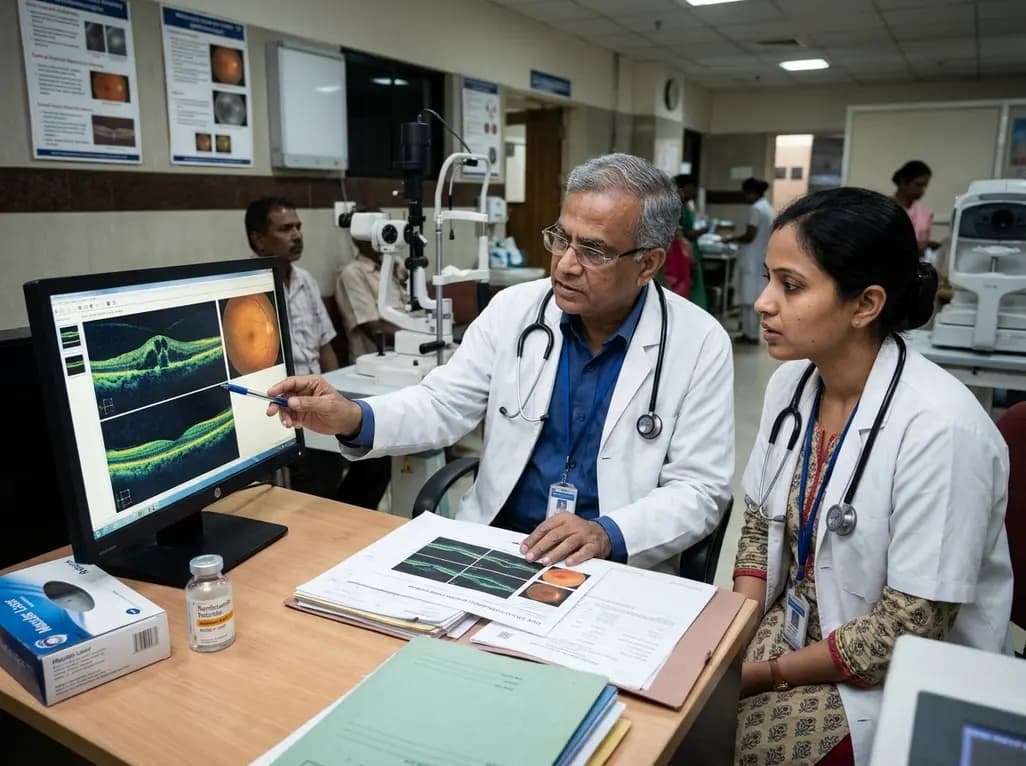
A real-world retrospective study demonstrates that combining intravitreal ranibizumab with focal/grid macular laser significantly improves visual acuity and central macular thickness compared to laser monotherapy in patients with center-involved diabetic macular edema.
Today
