.webp&w=384&q=75)

Loading, please wait...
Loading, please wait...

Because asbestos-related respiratory diseases remain a significant global health challenge, researchers recently analyzed data from the Spanish Registry to understand national trends. Although many Spanish workers historically faced exposure, official reports in the country were previously limited. Consequently, this retrospective observational study provides a vital first overview. Furthermore, the analysis covers 1,721 cases reported across 11 autonomous communities between 2018 and 2023. In addition to clinical data, the researchers examined demographics and exposure types. Similarly, the results show that 96.7% of the affected individuals were men. Therefore, occupational history plays a major role in these health outcomes.
Specifically, occupational exposure was the primary cause for 98.3% of the registry cases. Thus, the naval sector was the most significant source, accounting for 70% of incidents. Moreover, a high percentage of patients were current or former smokers. However, pleural plaques emerged as the most prevalent diagnosis, affecting 82.1% of the cohort. In the same way, asbestosis appeared in 14.9% of the patients. For example, lung cancer was identified in 11% of the initial reports. Consequently, clinicians must prioritize long-term surveillance for workers with a history of shipyard employment. In other words, regular monitoring is essential for identifying secondary malignancies that appear during follow-up.
As a result of continuous monitoring, 181 new diagnoses were made during the follow-up period. For instance, these new cases included lung cancer and mesothelioma. Therefore, the overall mortality rate for the group reached 13.4%. Notably, lung cancer was the leading cause of death among the participants. In conclusion, the study emphasizes that early diagnosis is vital to mitigate adverse health effects. Finally, continuous surveillance remains necessary for all individuals with known exposure history to improve survival outcomes.
Asbestos-related conditions typically have a long latency period, often ranging from 20 to 50 years between the initial exposure and the manifestation of clinical symptoms.
Yes, historical industrial data indicates that shipyard workers face significant risks due to the extensive use of asbestos in naval insulation, repairs, and construction during the 20th century.
Pleural plaques are the most common radiological finding in exposed individuals; while they are often asymptomatic, they serve as a clear marker of past asbestos exposure and necessitate regular follow-up.
Disclaimer: This content is for informational and educational purposes only. It does not constitute medical advice or establish a doctor-patient relationship. Clinicians should use their professional judgment. Refer to the latest local and national guidelines for clinical practice.
References
Granados G et al. Asbestos-Related Respiratory Diseases in Spain: Insights From the Spanish Registry. Am J Ind Med. 2026 May 17. doi: 10.1002/ajim.70093. PMID: 42143561.
World Health Organization. Asbestos: Elimination of asbestos-related diseases. Fact Sheet. 2024.
National Institute for Occupational Safety and Health (NIOSH). Asbestos: Occupational Health and Safety. Centers for Disease Control and Prevention. 2025.

Read summarized clinical updates, watch expert medical content, and earn CME certifications right from your smartphone.
Open your smartphone camera to scan and install.





A study of 1,721 cases from the Spanish Registry provides insights into asbestos-related diseases, occupational risks in shipyards, and mortality patterns....
5 months ago

Recent epidemiological data reveals a dramatic surge in summer heat mortality driven by human-induced climate warming. This analysis explores the pathophysiological impacts on cardiac and renal systems, diagnostic dilemmas in death certification, and essential emergency cooling protocols for acute clinical care.
Today

Odisha has established India's first state-level clinical protocol specifically tailored for pregnant women with sickle cell disease. Developed with NHM and UNICEF, the framework provides structured antenatal screening, crisis mitigation, standardized referral pathways, and specialized interdisciplinary care.
Today

India is advancing preventive healthcare by integrating genomics, artificial intelligence, and quantum technologies. With the SANGAM programme sequencing one million Indian genomes, clinicians can unlock personalized therapies, detect cardiometabolic risks early, and curb the burden of diabetes and heart disease.
Today
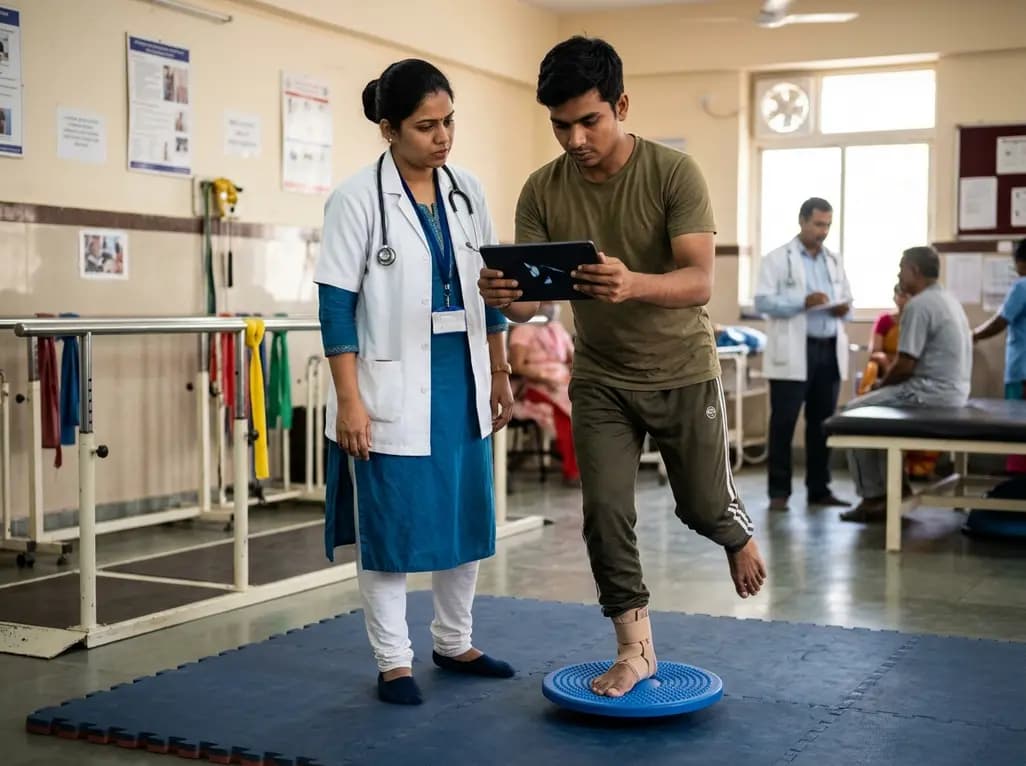
A randomized controlled trial demonstrates that an eight-week dual-task training intervention significantly improves static and dynamic postural control over standard balance exercises in individuals with chronic ankle instability, addressing critical neurocognitive deficits during athletic and daily activities.
Today

A retrospective cohort study of 7,716 ICU patients from the MIMIC-IV database demonstrates that Gradient Boosting Decision Trees significantly outperform traditional SOFA scores in predicting in-hospital mortality among patients with sepsis and diabetes, with SHAP analysis providing clinical interpretability.
Today
