.webp&w=384&q=75)

Loading, please wait...
Loading, please wait...
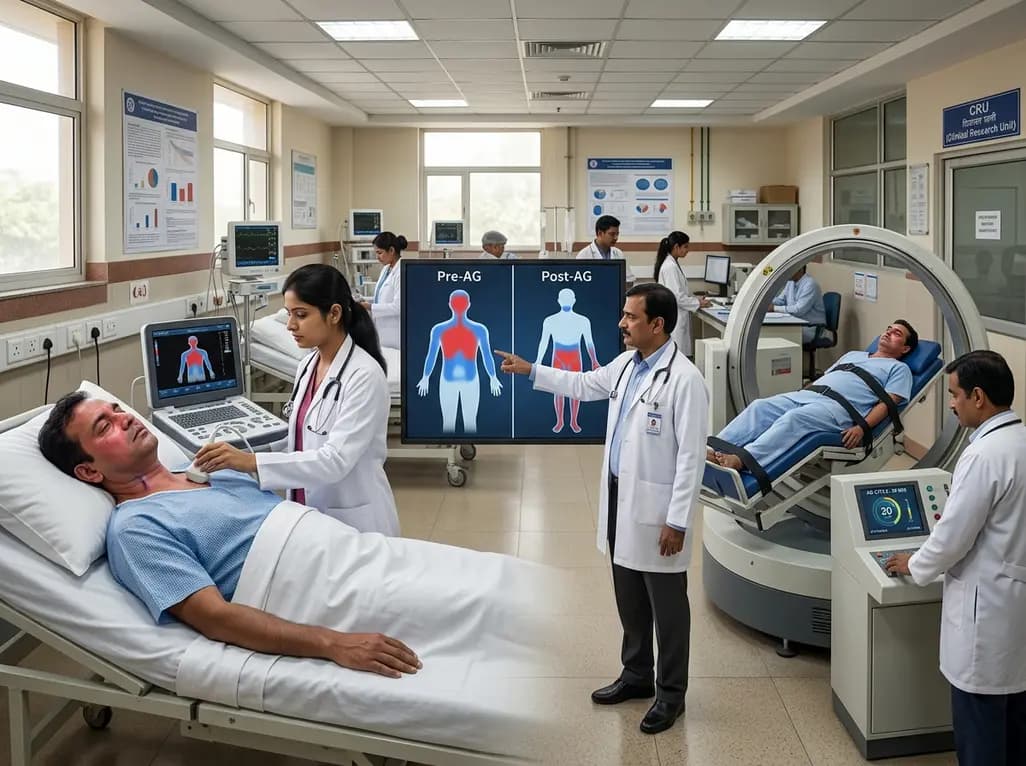
Spaceflight causes a significant headward fluid shift, which likely drives pathophysiological changes in the cardiovascular and central nervous systems. Consequently, researchers evaluated if daily 30-minute artificial gravity therapy could reverse these physiological changes. They studied 24 subjects during 60 days of strict 6° head-down tilt bedrest, an established terrestrial analog for weightlessness.
Scientists monitored the right internal jugular vein (IJV) area and total hemoglobin concentration in the prefrontal cortex and gastrocnemius muscle. Moreover, centrifugation protocols included both intermittent and continuous exposures to determine their comparative efficacy. The results showed that IJV area decreased from 0.88 cm² to 0.33 cm² during the intervention. Furthermore, hemoglobin levels dropped in the prefrontal cortex while increasing in the gastrocnemius muscle. This redistribution confirms that artificial gravity therapy successfully moves fluid toward the lower body, mimicking Earth-like conditions. Notably, both centrifugation methods provided similar physiological benefits. Therefore, human centrifugation serves as a potent countermeasure for long-duration missions. In addition, these findings help clinicians understand fluid management in immobilized patients on Earth.
This therapy uses centrifugation to create a hydrostatic pressure gradient. This gradient pulls fluid away from the head and toward the lower extremities, which reduces venous congestion in the neck and brain.
According to the study, both 30-minute continuous sessions and intermittent sessions (six 5-minute bouts) effectively redistributed fluid. Both protocols successfully reduced internal jugular vein area and prefrontal hemoglobin levels.
These findings offer valuable insights for managing patients who require long-term bedrest. By understanding how artificial gravity influences fluid distribution, clinicians can better prevent complications like intracranial hypertension and orthostatic intolerance.
Disclaimer: This content is for informational and educational purposes only. It does not constitute medical advice or a professional relationship. Refer to the latest local and national guidelines for clinical practice.
References
Marshall-Goebel K et al. Effects of Artificial Gravity on the Vascular System during 60 days of Strict Head-Down Tilt Bedrest. J Appl Physiol (1985). 2026 Jun 09. doi: 10.1152/japplphysiol.00667.2025. PMID: 42262748.
Watenpaugh DE. Fluid and electrolyte-correcting countermeasures for spaceflight and bed rest. Am J Nephrol. 2001;21(5):352-358.
"
Read summarized clinical updates, watch expert medical content, and earn CME certifications right from your smartphone.
Open your smartphone camera to scan and install.





A 60-day study shows that 30 minutes of daily artificial gravity reverses headward fluid shifts, providing a countermeasure for microgravity-induced changes...
4 months ago

A breakthrough study evaluated H5N1 transmission efficiency across mammalian isolates. Researchers discovered that human-derived D1.1 harboring the PB2 D701N mutation spread efficiently in ferrets, unlike strains carrying PB2 E627K. This finding highlights critical genetic markers for zoonotic surveillance.
Today

A comparative cohort study evaluates vNOTES vs TLH hysterectomy for benign conditions, demonstrating shorter operative duration, faster return to daily activities, and equivalent female sexual function scores without increased dyspareunia.
Today

Review how tailored exercise programs benefit frail older patients with heart failure. Explore pathophysiological mechanisms, individualized training prescriptions, and strategies to overcome adherence barriers in clinical practice.
Yesterday

This comparative study evaluates posterior labral tears with and without glenohumeral instability, highlighting distinct demographic patterns, MRI underestimation in stable shoulders, and successful arthroscopic repair outcomes.
Yesterday

A clinical study demonstrates that early intervention with tocilizumab, either as monotherapy or bridged with corticosteroids, achieves significant proptosis reduction and resolves active inflammation in treatment-naive thyroid eye disease.
Today
