.webp&w=384&q=75)

Loading, please wait...
Loading, please wait...
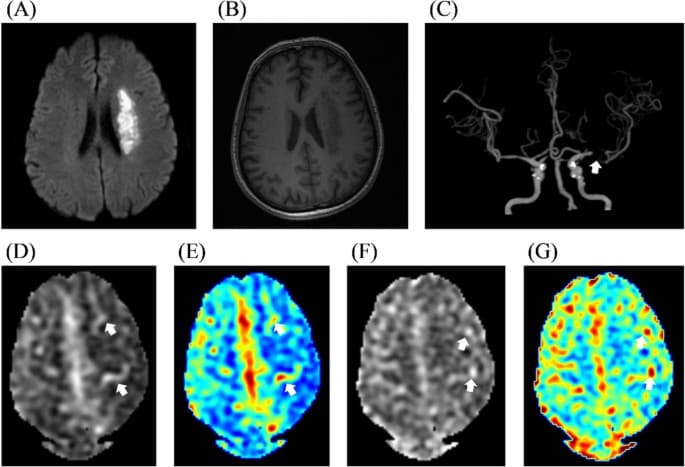
A study investigated the association between arterial transit artifact (ATA) and functional outcomes at 3 months in acute ischemic stroke (AIS) patients. Analysis of 98 AIS patients revealed that ATA was associated with better functional outcomes at 3 months, particularly in the large-artery atherosclerosis (LAA) subtype. However, this association was not observed in cardioembolism and small artery occlusion (SVO) subtypes.

Read summarized clinical updates, watch expert medical content, and earn CME certifications right from your smartphone.
Open your smartphone camera to scan and install.





A study investigated the association between arterial transit artifact (ATA) and functional outcomes at 3 months in acute ischemic stroke (AIS) patients. Analysis of 98 AIS patients revealed that ATA was associated with better functional outcomes at 3 months, particularly in the large-artery atherosclerosis (LAA) subtype. However, this association was not observed in cardioembolism and small artery occlusion (SVO) subtypes.
2 months ago

A breakthrough study evaluated H5N1 transmission efficiency across mammalian isolates. Researchers discovered that human-derived D1.1 harboring the PB2 D701N mutation spread efficiently in ferrets, unlike strains carrying PB2 E627K. This finding highlights critical genetic markers for zoonotic surveillance.
Today

A comparative cohort study evaluates vNOTES vs TLH hysterectomy for benign conditions, demonstrating shorter operative duration, faster return to daily activities, and equivalent female sexual function scores without increased dyspareunia.
Today

Review how tailored exercise programs benefit frail older patients with heart failure. Explore pathophysiological mechanisms, individualized training prescriptions, and strategies to overcome adherence barriers in clinical practice.
Yesterday

This comparative study evaluates posterior labral tears with and without glenohumeral instability, highlighting distinct demographic patterns, MRI underestimation in stable shoulders, and successful arthroscopic repair outcomes.
Yesterday

A clinical study demonstrates that early intervention with tocilizumab, either as monotherapy or bridged with corticosteroids, achieves significant proptosis reduction and resolves active inflammation in treatment-naive thyroid eye disease.
Today
