

Loading, please wait...
Loading, please wait...

Early identification of psychiatric vulnerability during developmental transitions remains critical for preventing chronic mental illness. In community settings, psychotic-like experiences represent notable subclinical phenomena that occur frequently among late adolescents and young adults. These unusual perceptual abnormalities and delusional ideations often cause noticeable psychological distress. However, clinicians rarely encounter these symptoms early because affected youth hesitate to seek help voluntarily. Consequently, primary care practitioners and psychiatrists require accessible, brief, and validated screening instruments to identify high-risk individuals promptly.
Historically, extensive diagnostic interviews presented substantial administrative burdens in high-volume clinics. In addition, lengthy self-report scales frequently reduced patient compliance across large community surveys. Therefore, researchers developed the Adolescent Psychotic-Like Symptom Screener to assess subclinical symptoms rapidly. While prior investigations confirmed the utility of a five-item version in younger Chinese adolescents, its psychometric properties across older cohorts remained uncertain. Addressing this vital gap, modern psychiatric research now examines whether this abbreviated tool maintains validity across late adolescence and early adult life.
To establish empirical validation across diverse transitional stages, investigators analyzed data from the nationwide Taiwan Birth Cohort Study. This comprehensive epidemiological initiative systematically followed participants through late adolescence into emerging adulthood. Specifically, researchers collected standardized survey responses from distinct developmental cohorts across three successive age milestones. The assessment evaluated 3,811 individuals at age seventeen, 4,052 participants at age eighteen, and 8,210 individuals at age nineteen.
Furthermore, this massive longitudinal sample provided unprecedented statistical power for rigorous psychometric scrutiny. Investigators evaluated internal consistency separately within each age cohort to ensure developmental stability. Additionally, the team conducted exploratory factor analysis to understand latent variable distribution across varied symptom dimensions. Subsequently, confirmatory factor analysis tested the structural model against observed clinical responses across all participant groups. Through these rigorous analytical methods, the authors determined whether the brief instrument retained reliable measurement properties across evolving demographic cohorts.
Initial exploratory factor analyses revealed that the original screening questionnaire divided into a two-factor dimensional structure. Notably, items measuring mind-reading and television or radio broadcasting loaded separately from the remaining clinical symptoms. These telecommunication and passive thought phenomena introduced statistical noise into community-based assessments. Consequently, researchers removed these two problematic questions to optimize scale parsimony and structural integrity.
The resulting five-item screener, designated as the APSS-5, retained five core subclinical phenomena. Specifically, the refined instrument evaluates paranoia regarding being spied upon, auditory hallucinations, feelings of mind control, visual hallucinations, and grandiosity. Following this streamlining, the APSS-5 demonstrated markedly improved internal consistency across all three cohorts. In particular, Cronbach's alpha reached 0.708 at age seventeen, 0.711 at age eighteen, and an impressive 0.809 at age nineteen. Moreover, confirmatory factor analyses verified robust structural validity across all developmental age groups. Thus, the streamlined five-item tool offers exceptional psychometric elegance without sacrificing core diagnostic signals.
Screening for subclinical psychiatric vulnerability holds substantial relevance for community healthcare providers, especially in busy outpatient clinics. In clinical practice, subclinical psychotic-like experiences rarely indicate an imminent conversion to schizophrenia. Instead, these perceptual and cognitive markers frequently signal broader psychological distress, affective disturbance, or trauma. Therefore, identifying these symptoms early allows practitioners to intervene long before severe psychosocial deterioration emerges.
Furthermore, primary care physicians often serve as the first contact point for distressed adolescents and young adults. In low-resource healthcare environments, complex diagnostic batteries are practically impossible to implement during brief consultations. In contrast, the five-item APSS screener requires less than two minutes for complete administration. As a result, busy physicians can seamlessly incorporate this instrument into standard adolescent health checkups. Early detection helps doctors differentiate benign developmental variations from concerning psychiatric pathology. Ultimately, this proactive approach facilitates timely referrals to mental health specialists while reducing disease stigma among young patients.
Integrating brief screening tools into established clinical pathways demands thoughtful implementation strategies. When patients endorse subclinical symptoms on the screener, clinicians must avoid premature diagnostic labeling. Rather, practitioners should view elevated scores as an urgent indication for compassionate clinical dialogue and thorough longitudinal follow-up. Medical teams must carefully explore co-occurring substance use, sleep disturbances, anxiety, and school-related stressors that frequently amplify perceptual distress.
Moreover, future longitudinal studies must evaluate the exact predictive validity of the APSS-5 for long-term psychotic disorders. Although the cohort findings confirm excellent structural reliability, prospective conversion data will clarify precise positive predictive values. Meanwhile, healthcare institutions can utilize this validated tool to monitor symptom trajectory across late adolescence. By tracking symptom persistence over time, clinicians can allocate specialized interventions to individuals facing the greatest psychiatric risk. Consequently, the APSS-5 represents an invaluable asset for adolescent medicine, public health initiatives, and community psychiatry worldwide.
The APSS-5 screener comprises five core items assessing distinct subclinical phenomena. Specifically, these items evaluate feelings of being spied on, auditory hallucinations, controlled experiences, visual hallucinations, and grandiosity. Consequently, the brief tool eliminates noisy broadcaster questions, maintaining robust psychometric reliability across community adolescents and young adults.
Subclinical psychotic symptoms often signal elevated risk for diverse psychiatric disorders rather than schizophrenia alone. Therefore, early population-level screening identifies vulnerable youth before severe functional impairment occurs. Furthermore, early detection enables primary care clinicians and psychiatrists to provide timely psychosocial interventions, psychoeducation, and longitudinal monitoring to prevent worsening clinical outcomes.
No, the APSS-5 functions solely as a brief screening questionnaire and cannot diagnose psychiatric illness. Therefore, clinicians must never treat positive screening scores as diagnostic confirmation. Instead, practitioners should use positive results to trigger comprehensive secondary evaluations, including structured psychiatric interviews, developmental reviews, and functional assessments by qualified mental health professionals.
Disclaimer: This content is for informational and educational purposes only... Refer to the latest local and national guidelines for clinical practice.
References

Read summarized clinical updates, watch expert medical content, and earn CME certifications right from your smartphone.
Open your smartphone camera to scan and install.





The Taiwan Birth Cohort Study demonstrates sound psychometric properties for the 5-item Adolescent Psychotic-Like Symptom Screener (APSS-5) across ages 17 to 19. By refining factor structure and boosting internal consistency, the screener provides a practical tool for community-level early psychiatric detection.
Today

The 2025 Australian meningococcal surveillance report shows a 13% decline in invasive meningococcal disease notifications to 118 cases. Genogroup B accounted for 82.2% of typed infections, predominantly impacting infants and young adults, highlighting critical vaccination and rapid diagnostic imperatives.
Today

Doctors at AIIMS New Delhi have achieved a historic milestone by performing India's first open prenatal myelomeningocele repair on a 25-week unborn fetus. This landmark multidisciplinary procedure provides vital neuroprotective benefits, lowers hydrocephalus risks, and transforms maternal-fetal medicine nationwide.
Today
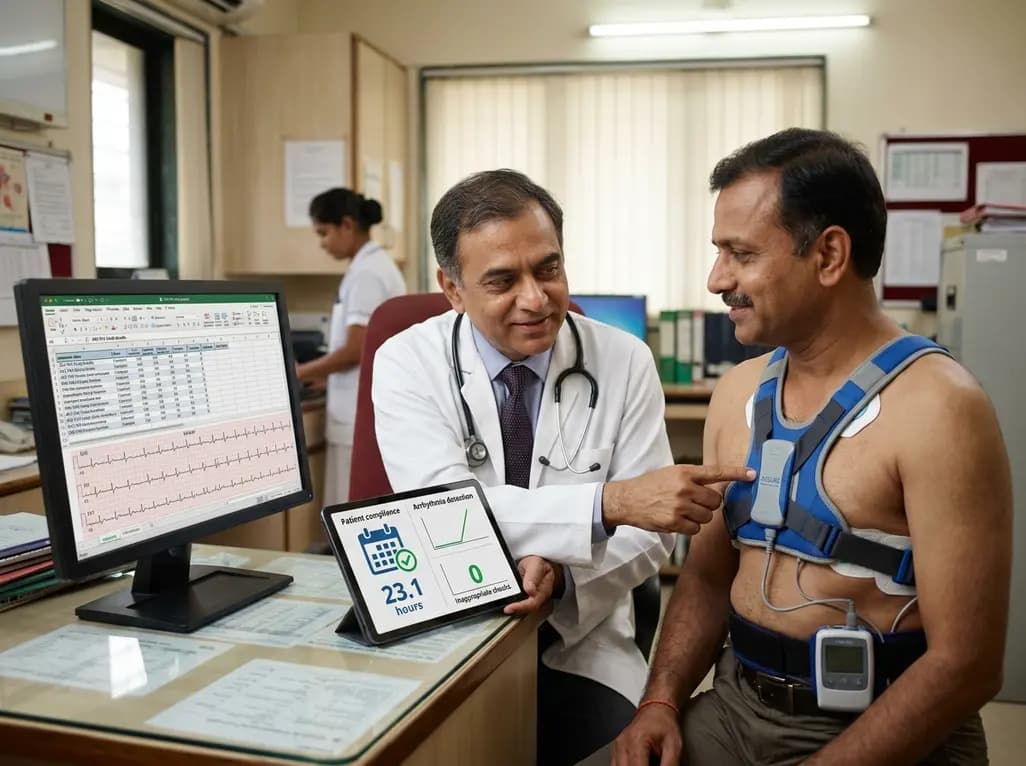
The ACE-PAS registry evaluated 21,612 patients fitted with the ASSURE wearable cardioverter defibrillator. The study demonstrated a 100% ventricular arrhythmia conversion rate, an inappropriate shock incidence of 0.0065 per patient-month, and high daily compliance of 23.1 hours, confirming real-world safety.
Today

A clinical overview of resveratrol supplementation in mitigating exercise-induced muscle damage. This narrative review explores physiological mechanisms, reductions in soreness markers like creatine kinase, dosage strategies, and bioavailability enhancements for sports medicine and nutrition practitioners.
Today

Childhood insulinoma is a rare cause of recurrent hyperinsulinemic hypoglycemia that often eludes early diagnosis. Advanced GLP-1 receptor-targeted PET/CT imaging using 68Ga-exendin-4 complements anatomic MRI to localize occult pancreatic lesions, facilitating focused, curative surgical enucleation.
Today
