.webp&w=384&q=75)

Loading, please wait...
Loading, please wait...

Recent breakthroughs identify apoptotic extracellular vesicles bone healing properties as a transformative force in regenerative medicine. These natural bilayer nanoparticles emerge during programmed cell death. Historically, scientists viewed these vesicles as mere cellular debris. However, we now recognize them as pivotal regulators that coordinate complex interactions within the bone healing niche. By managing osteogenesis and angiogenesis, ApoEVs provide a sophisticated, cell-free platform for tissue repair.
Furthermore, these vesicles function as innate multimodal signaling entities. They expertly integrate signals for innervation and immunomodulation. Consequently, they ensure a balanced environment for successful bone restoration. This dual role makes them superior to traditional synthetic nanoparticles for treating bone-related disorders.
Orchestrating the apoptotic extracellular vesicles bone healing niche requires precise biogenesis and isolation. These vesicles carry bioactive molecules, including proteins and lipids, that target specific bone cells. For instance, T cell-derived ApoEVs use surface enzymes to hydrolyze extracellular ATP into adenosine. This process significantly reduces inflammation and promotes bone formation in osteoporotic patients.
Moreover, Mesenchymal Stem Cell (MSC) derived ApoEVs show immense promise. They activate the Ras/Raf1/Mek/Erk pathway after phagocytosis by endogenous cells. Additionally, these vesicles facilitate vascularization, which is critical for the survival of new bone tissue. Notably, emerging engineering strategies now enhance their specificity, allowing for targeted delivery to fracture sites or arthritic joints.
Despite their potential, standardization and scalable production remain significant challenges for clinical adoption. Researchers are now deploying artificial intelligence (AI) tools to overcome these translational hurdles. AI-driven design helps optimize the cargo and delivery mechanisms of engineered ApoEVs. Furthermore, these digital tools assist in identifying the most effective cellular origins to prevent potential negative side effects. Eventually, the convergence of biology and AI will position ApoEVs as a next-generation treatment for intractable bone and joint disorders.
ApoEVs are natural nanoparticles released by cells during apoptosis. They carry signaling molecules that help regulate bone regeneration and immune responses.
ApoEVs promote the differentiation of bone-forming cells and reduce bone loss by modulating inflammation and activating regenerative pathways like Ras/Raf1/Mek/Erk.
AI tools help researchers design more effective vesicles and solve problems related to large-scale production and therapeutic specificity.
Disclaimer: This content is for informational and educational purposes only. It does not constitute medical advice or establish a doctor-patient relationship. Refer to the latest local and national guidelines for clinical practice.
References
Guo Y et al. Apoptotic extracellular vesicles act as master regulators of the bone healing niche. J Nanobiotechnology. 2026 Apr 05. doi: 10.1186/s12951-026-04351-z. PMID: 41937211.
Li M, Tang Q, Liao C, et al. Extracellular vesicles from apoptotic BMSCs ameliorate osteoporosis via transporting regenerative signals. Theranostics. 2024;14(9):3583-3602. doi: 10.7150/thno.96174.
Yang X, et al. T Cell-Derived Apoptotic Extracellular Vesicles Ameliorate Bone Loss via CD39 and CD73-Mediated ATP Hydrolysis. J Nanobiotechnology. 2025 Jan 27.
"
Read summarized clinical updates, watch expert medical content, and earn CME certifications right from your smartphone.
Open your smartphone camera to scan and install.





A review of how apoptotic extracellular vesicles (ApoEVs) regulate the bone healing niche and their potential in treating osteoporosis and osteoarthritis....
6 months ago
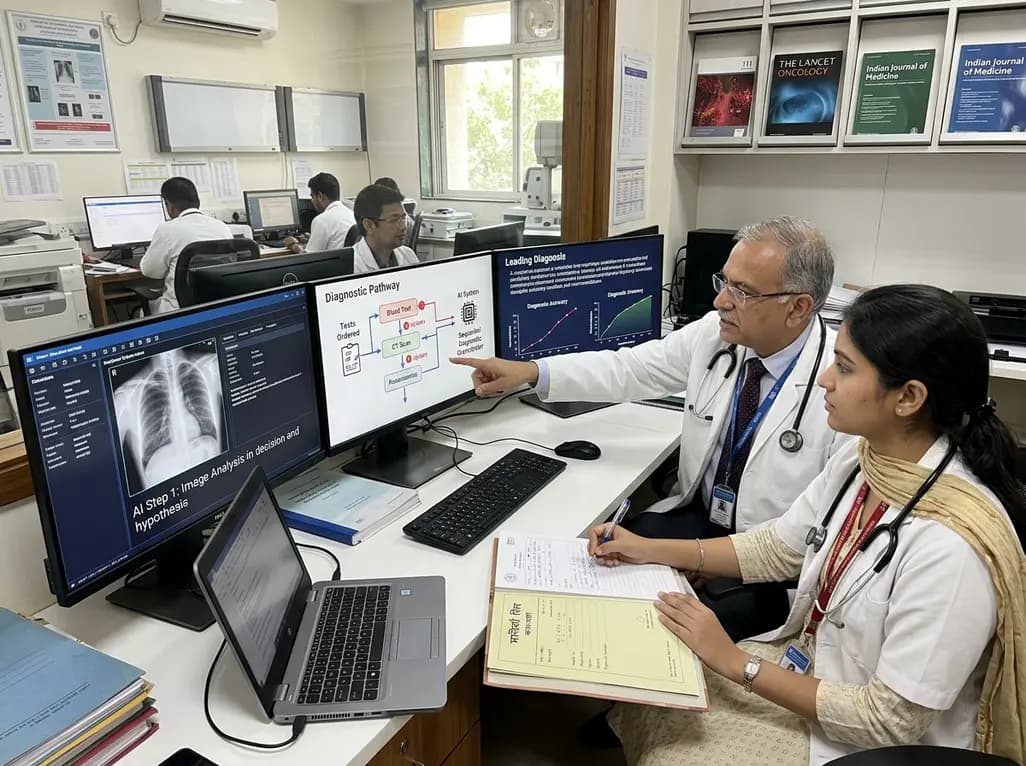
A breakthrough peer-reviewed study demonstrates that a sequential AI diagnosis system can mirror real-world clinical reasoning. By ordering stepwise tests and updating hypotheses dynamically, this multi-agent orchestrator achieved superior diagnostic accuracy while reducing investigative costs.
Today

A prenatal case highlights severe glutaric acidemia type II presenting as bilateral hyperechoic cystic kidneys at 18 weeks. Whole-exome sequencing revealed a novel homozygous ETFDH frameshift variant, demonstrating the power of rapid genetic testing in fetal renal anomalies.
Today

Review how tailored exercise programs benefit frail older patients with heart failure. Explore pathophysiological mechanisms, individualized training prescriptions, and strategies to overcome adherence barriers in clinical practice.
Yesterday

This comparative study evaluates posterior labral tears with and without glenohumeral instability, highlighting distinct demographic patterns, MRI underestimation in stable shoulders, and successful arthroscopic repair outcomes.
Yesterday

A clinical study demonstrates that early intervention with tocilizumab, either as monotherapy or bridged with corticosteroids, achieves significant proptosis reduction and resolves active inflammation in treatment-naive thyroid eye disease.
Yesterday
