.webp&w=384&q=75)

Loading, please wait...
Loading, please wait...

Retinal vascular diseases like neovascular age-related macular degeneration and diabetic macular edema cause major vision loss in India. While anti-VEGF therapy is the gold standard, high treatment costs often lead to patient non-adherence. The emergence of anti-VEGF biosimilars India offers a vital solution to these accessibility barriers. These biological agents provide comparable efficacy while significantly reducing the financial burden on the Indian healthcare system.
Specifically, the development of ranibizumab biosimilars has transformed the management of chorioretinal conditions. Researchers have conducted extensive multicenter trials to validate their clinical utility. These studies consistently demonstrate that biosimilars are non-inferior to their reference molecules in terms of visual and anatomical outcomes. Furthermore, the safety profiles are highly comparable. These agents show low immunogenicity and a minimal incidence of serious adverse events across various studies.
Moreover, real-world data from large Indian cohorts provides further reassurance regarding the routine use of these agents. Consequently, the availability of lower-cost alternatives has improved treatment initiation rates. Additionally, patients are more likely to complete their full course of therapy when costs remain manageable. Therefore, clinicians can confidently integrate these cost-effective options into their standard protocols to preserve vision in resource-limited settings.
Biosimilars significantly lower the cost of therapy. This improvement in affordability enhances patient access and long-term treatment adherence. They offer clinical outcomes similar to innovator drugs without compromising safety.
Yes. Phase 3 trials and large-scale real-world studies in India have confirmed that ranibizumab biosimilars have equivalent safety and efficacy. They also demonstrate low immunogenicity profiles compared to the reference products.
Disclaimer: This content is for informational and educational purposes only... Refer to the latest local and national guidelines for clinical practice.
References
1. Chakraborty D et al. Biosimilar anti-vascular endothelial growth factor agents: Clinical outcomes, safety, and cost-effectiveness in India. Indian J Ophthalmol. 2026 May 01. doi: 10.4103/IJO.IJO_3222_25. PMID: 42054089.
2. Verma L et al. Clinical efficacy and safety of Razumab® (CESAR) study: Our experience with the world's first biosimilar Ranibizumab. Indian J Ophthalmol. 2021;69(2):347-351.
3. Sharma S et al. Long-term efficacy and safety of RazumabTM (biosimilar ranibizumab) in Indian patients with retinal diseases. Int J Clin Trials. 2022;9(4):255-262.
4. Sharma A et al. Biosimilar anti-VEGF: transforming retina treatment economics in South Asia. GaBI Online. 2023.

Read summarized clinical updates, watch expert medical content, and earn CME certifications right from your smartphone.
Open your smartphone camera to scan and install.





A review of clinical outcomes, safety, and cost-effectiveness of biosimilar anti-VEGF agents in India, highlighting their role in improving retinal care....
5 months ago
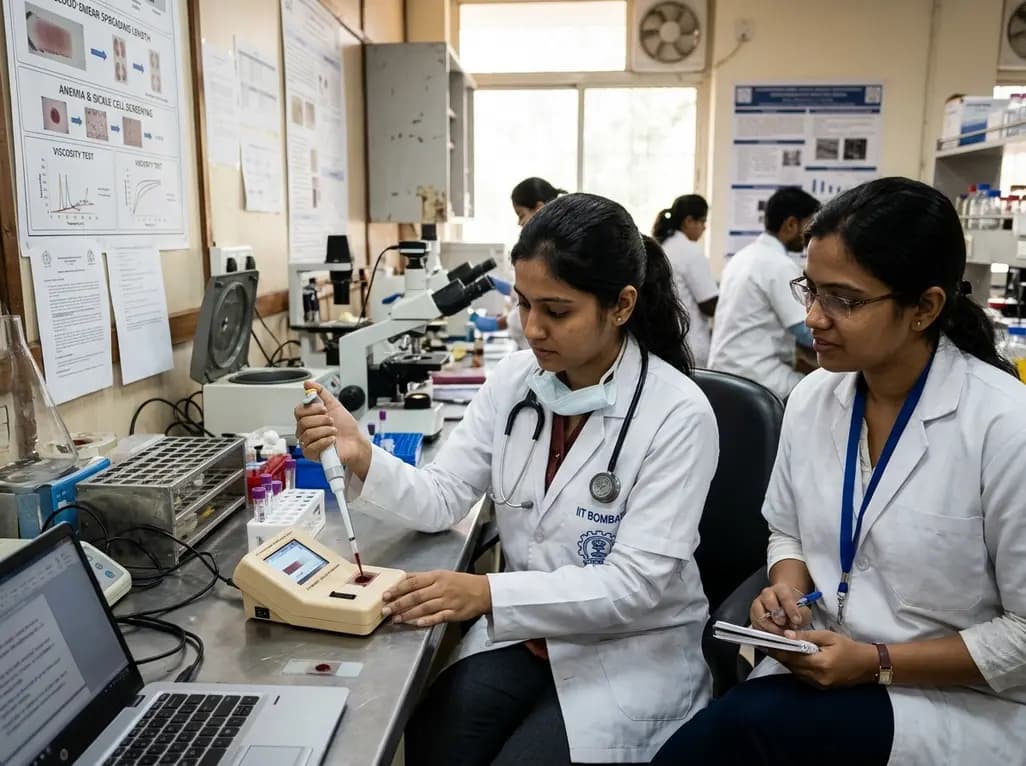
Researchers at IIT Bombay have engineered an automated, cost-effective point-of-care device that diagnoses anaemia and sickle cell disease from a single drop of blood. By measuring blood smear spreading length, this portable tool assesses blood viscosity to offer rapid screening in resource-limited healthcare centers.
Today
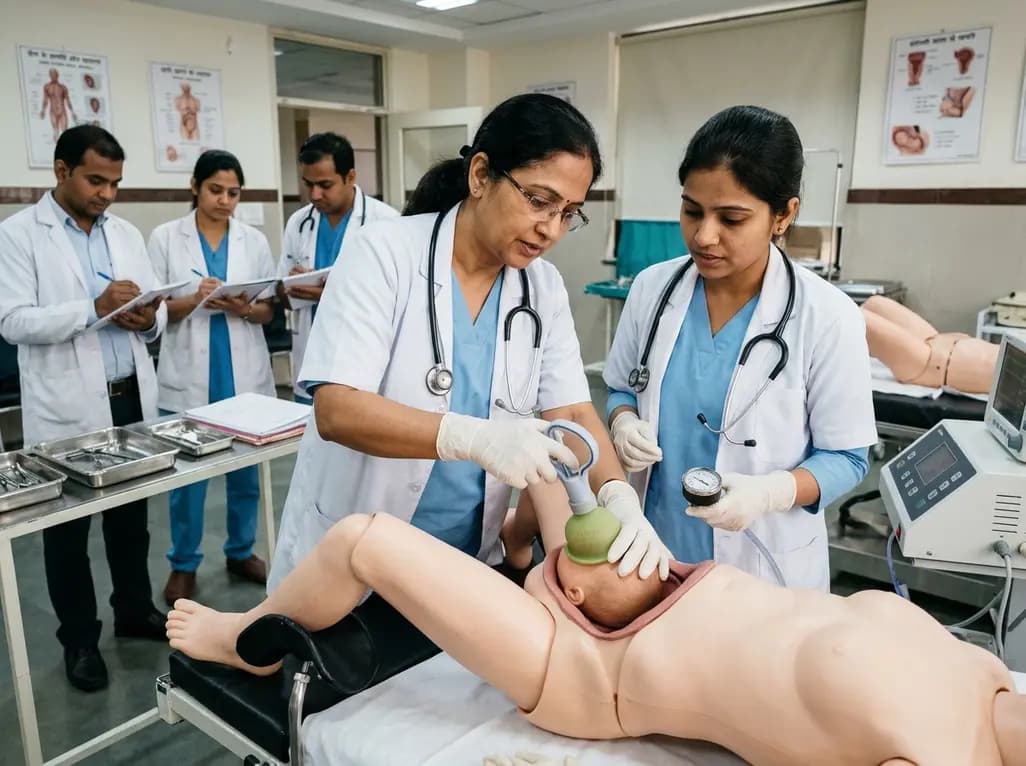
A multicenter study evaluates whether standardized simulation training reduces cup detachment during vacuum-assisted vaginal birth. Evidence-based simulation equips obstetricians to improve cup placement, reduce maternal-fetal trauma, and optimize clinical decision-making during operative deliveries.
Today
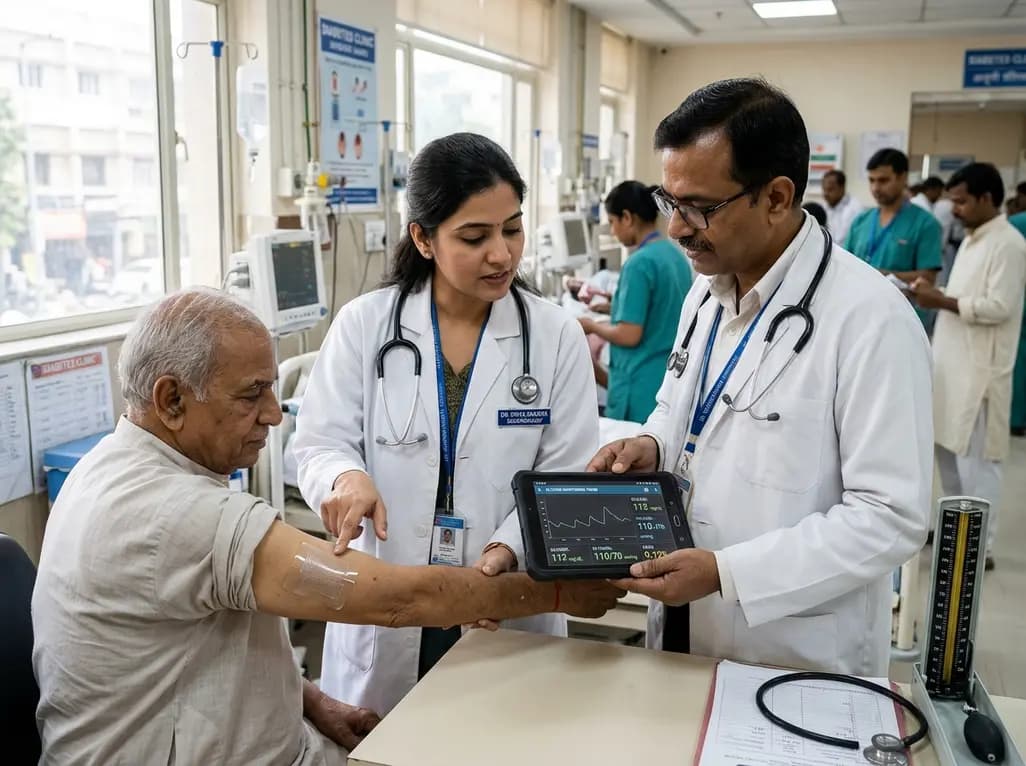
A breakthrough ultrathin multimodal sensor decouples physical hemodynamic monitoring from disposable electrochemical calibration, achieving long-term wearable glucose prediction with 81.36% accuracy and a 9.12% MARD. This offers a robust, drift-free solution for outpatient metabolic surveillance.
Today

A comparative review of tension band wiring and intramedullary screw fixation in thumb metacarpophalangeal arthrodesis, evaluating union rates, hardware complications, and clinical outcomes.
Today

Following regulatory scrutiny from FSSAI regarding promotional representations and lean muscle preservation claims, Dr. Reddy's Laboratories and Nestlé Health Science are currently reviewing the branding and marketing strategy for their joint nutritional supplement Celevida GLP+.
Today
