.webp&w=384&q=75)

Loading, please wait...
Loading, please wait...

The World Health Organization (WHO) recently confirmed a significant Andes virus outbreak on a cruise ship. Currently, health officials have identified six laboratory-confirmed cases among eight suspected individuals. Consequently, this development highlights the critical nature of monitoring viral pathogens in enclosed environments. As of May 8, reports indicate three fatalities among the confirmed cases. This results in a high case fatality ratio of 38%.
Laboratory tests identified the specific strain as the Andes virus (ANDV). Therefore, medical professionals must remain vigilant regarding respiratory symptoms in returning travelers. Although the event is concerning, the WHO assesses the global risk as low. However, the risk for passengers and crew on the specific vessel remains moderate. Furthermore, Andes virus is unique because it can occasionally spread from person to person. Therefore, strict isolation protocols are essential for suspected patients.
Q1: What is the reported case fatality ratio for this outbreak?
The case fatality ratio is currently 38%, with three deaths reported out of the eight identified cases.
Q2: How does the Andes virus typically spread?
Andes virus usually spreads through contact with infected rodents or their excreta, though limited human-to-human transmission can occur through close contact.
Disclaimer: This content is for informational and educational purposes only. It does not constitute medical advice or replace professional judgment. Refer to the latest local and national guidelines for clinical practice.
References

Read summarized clinical updates, watch expert medical content, and earn CME certifications right from your smartphone.
Open your smartphone camera to scan and install.





WHO confirms six Andes virus cases and three deaths on a cruise ship, reporting a 38% fatality rate. Global risk is low, but ship risk is moderate....
5 months ago
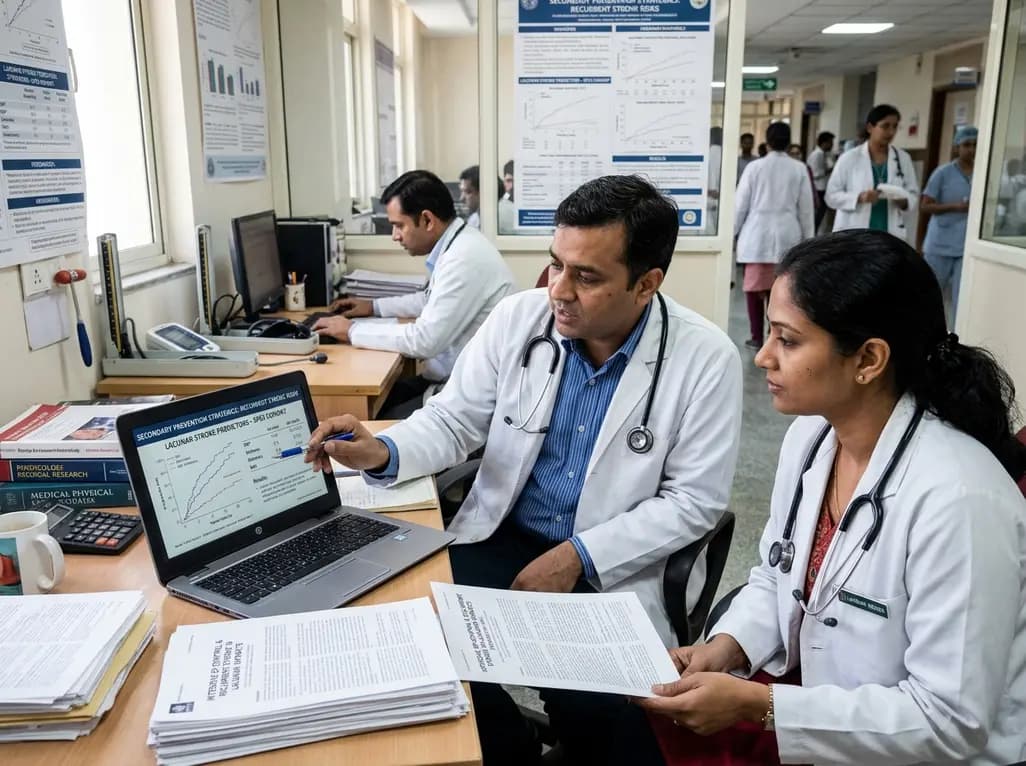
Explore vital recurrent stroke predictors in lacunar stroke patients managed with intensive blood pressure lowering. This analysis examines trial findings from SPS3 to uncover residual vascular risks, metabolic factors, and targeted secondary prevention strategies for high-risk neurological patients.
Today

Odisha has established India's first state-level clinical protocol specifically tailored for pregnant women with sickle cell disease. Developed with NHM and UNICEF, the framework provides structured antenatal screening, crisis mitigation, standardized referral pathways, and specialized interdisciplinary care.
Today

The Directorate General of Health Services directs Indian states to halt the hazardous reuse and reprocessing of single-use medical devices. Discover regulatory implications under the Drugs and Cosmetics Act, critical infection risks, legal liabilities, and operational changes required across clinical specialties.
Today

Mitochondria-targeted nanoparticles self-assembled from EGCG and L-glutamic acid effectively restore mitochondrial homeostasis, suppress synovial inflammation, and attenuate chondrocyte senescence in osteoarthritis, offering a promising disease-modifying nanotherapy.
Today

India is advancing preventive healthcare by integrating genomics, artificial intelligence, and quantum technologies. With the SANGAM programme sequencing one million Indian genomes, clinicians can unlock personalized therapies, detect cardiometabolic risks early, and curb the burden of diabetes and heart disease.
Today
