.webp&w=384&q=75)

Loading, please wait...
Loading, please wait...
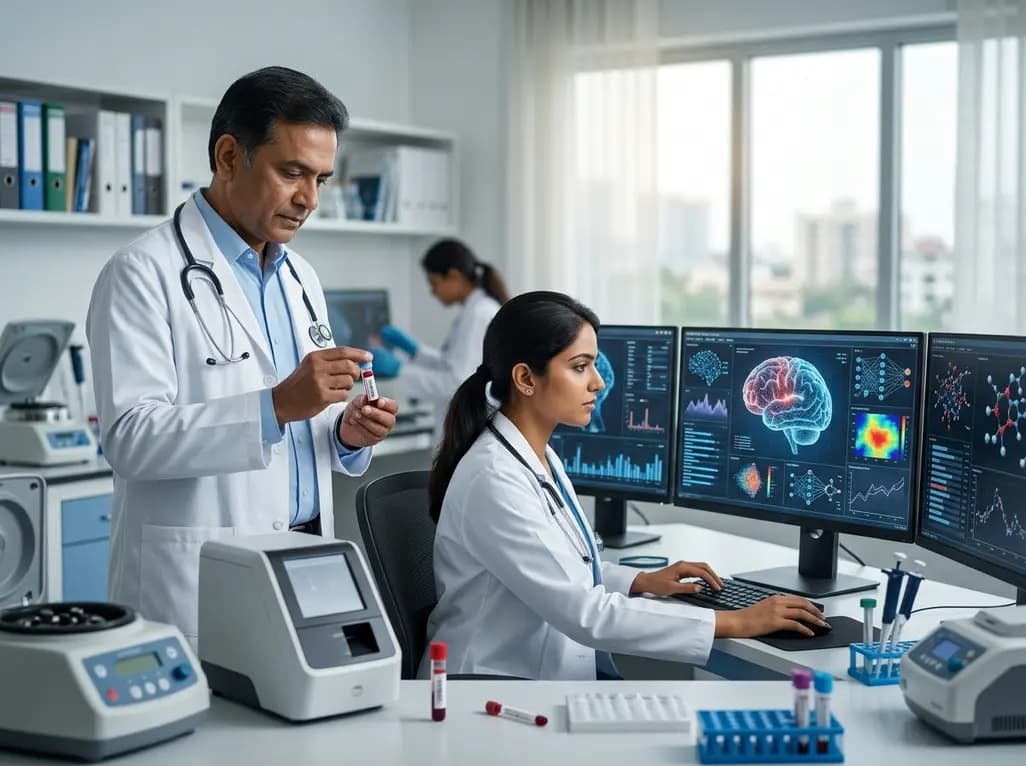
Clinicians in India face immense challenges when managing neurodegenerative diseases. Currently, early intervention remains difficult because patients usually present after cognitive decline has already set in. Fortunately, deeptech startup Enlife Research is working to change this paradigm. The company recently secured Rs 6 crore in seed funding to build an innovative diagnostic platform. This breakthrough centers on a simple Alzheimer's blood test that could detect molecular changes up to 15 years before symptoms emerge. Consequently, this technology could bridge the massive gap in early dementia care.
In clinical neurology, timely intervention is everything. However, current diagnostic frameworks do not allow for early detection at the pre-symptomatic stage. An advanced Alzheimer's blood test offers a highly viable alternative to expensive, late-stage imaging protocols. By analyzing subtle molecular shifts in blood, this diagnostic approach can identify the earliest biological signatures of disease onset. Specifically, it focuses on tracking pathogenic protein accumulations years before neuronal damage becomes irreversible.
Consequently, clinicians will soon have the tools to initiate therapies during the most therapeutic window. Additionally, early detection enables families to plan for long-term care before cognitive deterioration accelerates. Therefore, the medical community in India is watching these deeptech advancements with great anticipation. Ultimately, this scalable method could democratize neurodegenerative screening in both urban centers and rural areas. Consequently, clinics can easily integrate this tool into routine physical examinations for older adults.
Currently, standard Alzheimer's diagnosis relies heavily on positron emission tomography (PET) scans, magnetic resonance imaging (MRI), and cerebrospinal fluid (CSF) analysis. Although these tools are highly accurate, they present significant clinical and economic hurdles in developing countries. For instance, PET and MRI facilities remain concentrated in major metropolitan hospitals. Consequently, patients residing in tier 2 and tier 3 cities face immense geographical barriers to accessing these services. Furthermore, CSF analysis requires an invasive lumbar puncture, which many elderly patients choose to avoid.
Moreover, these traditional imaging and invasive methods typically identify the disease only one to two years before symptoms manifest. In contrast, Enlife Research aims to bypass these limitations entirely. Their platform uses a single blood draw to deliver rapid results within two to five hours. Therefore, this non-invasive test significantly reduces both patient discomfort and diagnostic waiting times. Ultimately, replacing invasive scans with blood-based assays will reshape clinical pathways for cognitive screening. Additionally, this transition will dramatically lower the overall cost burden of healthcare for families.
Most existing diagnostic models in neurodegenerative medicine were developed using Western patient cohorts. However, genetic variations and lifestyle risk profiles differ significantly across diverse global populations. To address this disparity, Enlife is collaborating with prestigious domestic institutions to build India-specific biomarker datasets. Specifically, they are working alongside researchers at the Indian Institute of Science (IISc), the National Institute of Mental Health and Neurosciences (NIMHANS), and the Tata Institute of Fundamental Research (TIFR).
Currently, the startup's assay analyzes five to seven core biomarkers, including amyloid beta and abnormal tau proteins. Furthermore, the company intends to expand this panel to analyze between 25 and 100 biomarkers simultaneously. This comprehensive approach will allow their AI engine to map complex biological signatures associated with multiple forms of dementia. Consequently, Indian physicians will gain access to highly specific diagnostic tools calibrated for local patients. Therefore, this population-specific data will enhance diagnostic accuracy and reduce false-positive rates. Additionally, these regional datasets will help researchers identify unique environmental risk factors present within the subcontinent.
Developing novel diagnostic assays historically required years of tedious, manual laboratory experimentation. To bypass this bottleneck, deeptech platforms leverage machine learning algorithms to simulate complex molecular interactions. For example, AI allows researchers to evaluate thousands of candidate biomarker binders in a virtual environment. Consequently, this technology dramatically reduces both the time and expenses associated with early-stage assay development.
Moreover, the proprietary AI platform does not merely assist in laboratory development. It also plays a vital role in clinical interpretation. Specifically, the machine learning engine analyzes subtle correlations between multiple fluid biomarkers. Human eyes might overlook these complex, multi-variable patterns, but AI identifies them with high precision. Additionally, this methodology accelerates the pathway toward clinical-grade validation and regulatory approval. Consequently, healthcare providers can expect a rapid transition from research prototype to active bedside application. Ultimately, integrating computer science with biochemical research establishes a highly efficient paradigm for future medical innovations.
The commercialization of this AI-powered diagnostic platform will follow a business-to-business (B2B) model. Specifically, the startup plans to partner directly with hospital chains, diagnostic laboratories, and pharmaceutical companies. Through this collaborative approach, hospitals can seamlessly deploy the test in outpatient departments. Meanwhile, pharmaceutical entities can utilize the collected biomarker datasets to advance clinical research and streamline drug development trials.
To secure its intellectual property, the company plans to file patents over the next nine to 18 months. These patents will cover unique biomarker binders, diagnostic assays, and their core detection platform. Consequently, this robust legal framework will pave the way for widespread commercial adoption. As India's aging population grows rapidly, the burden of untreated cognitive diseases will inevitably rise. Therefore, affordable and scalable diagnostic platforms are not just luxury items; they are national necessities. Ultimately, this deeptech initiative aims to equip healthcare networks with the tools needed to manage dementia proactively. Subsequently, early interventions will help patients preserve their cognitive functions for a much longer duration.
Q1: How does the AI blood test detect Alzheimer's disease up to 15 years before clinical symptoms appear?
The AI blood test analyzes a highly specific panel of five to seven fluid biomarkers, including amyloid beta and pathogenic tau proteins. These biological molecules begin accumulating in the brain and leaking into the bloodstream decades before cognitive decline manifests. By utilizing advanced machine learning algorithms, the platform identifies subtle, complex patterns in these biomarker concentrations. Consequently, this dual approach allows clinicians to detect neurodegenerative progression at the molecular stage, long before structural damage appears on traditional scans.
Q2: Why is it critical to build India-specific biomarker datasets for neurodegenerative diagnostic tools?
Almost all global diagnostic models currently rely on data collected from Western patient cohorts. However, genetic backgrounds, lifestyle factors, and environmental influences vary significantly across different populations. By collaborating with leading domestic institutions like IISc and NIMHANS, Enlife aims to build datasets tailored specifically to Indian patient demographics. Consequently, this localized approach improves diagnostic accuracy for domestic clinics. Therefore, it ensures the test remains highly relevant, reliable, and effective for patients across various Indian regions.
Q3: How will the B2B business model help make this diagnostic technology accessible across India?
The company will partner directly with established hospital chains, diagnostic laboratories, and pharmaceutical companies. Rather than establishing independent testing centers, Enlife will integrate its diagnostic assays and AI platform into existing medical infrastructures. Consequently, this model enables local clinics in tier 2 and tier 3 cities to offer the test without purchasing expensive imaging equipment. Ultimately, this collaborative B2B approach dramatically lowers overhead costs, making early Alzheimer's screening highly affordable and widely accessible for the general public.
Disclaimer: This content is for informational and educational purposes only. It does not constitute medical advice or replace professional judgment. Refer to the latest local and national guidelines for clinical practice.
References

Read summarized clinical updates, watch expert medical content, and earn CME certifications right from your smartphone.
Open your smartphone camera to scan and install.





Bengaluru-based Enlife Research has raised Rs 6 crore to develop an AI-powered blood test capable of detecting Alzheimer's up to 15 years early. By analyzing key biomarkers, the startup aims to replace expensive, invasive scans with an affordable diagnostic solution tailored for the Indian population.
3 months ago

A multicenter study from Southeastern Türkiye identified rare alpha-1 antitrypsin deficiency variants, including the homozygous Malton genotype, among COPD patients. Half were never-smokers, highlighting the critical need for comprehensive genetic screening beyond common S and Z alleles.
Today
A comprehensive scoping review synthesises evidence linking prenatal maternal mental health to long-term offspring neurodevelopment, evaluating neuroendocrine, inflammatory, and epigenetic pathways while highlighting clinical screening and future research priorities.
Today

The Directorate General of Health Services directs Indian states to halt the hazardous reuse and reprocessing of single-use medical devices. Discover regulatory implications under the Drugs and Cosmetics Act, critical infection risks, legal liabilities, and operational changes required across clinical specialties.
Today
A 25-year multi-institutional cohort reveals high recurrence rates in pediatric giant cell tumor of bone, particularly in patients with open physes and bone marrow edema on preoperative MRI. Early surveillance and careful balance between growth plate preservation and tumor clearance are essential.
Today

India is advancing preventive healthcare by integrating genomics, artificial intelligence, and quantum technologies. With the SANGAM programme sequencing one million Indian genomes, clinicians can unlock personalized therapies, detect cardiometabolic risks early, and curb the burden of diabetes and heart disease.
Today
