.webp&w=384&q=75)

Loading, please wait...
Loading, please wait...
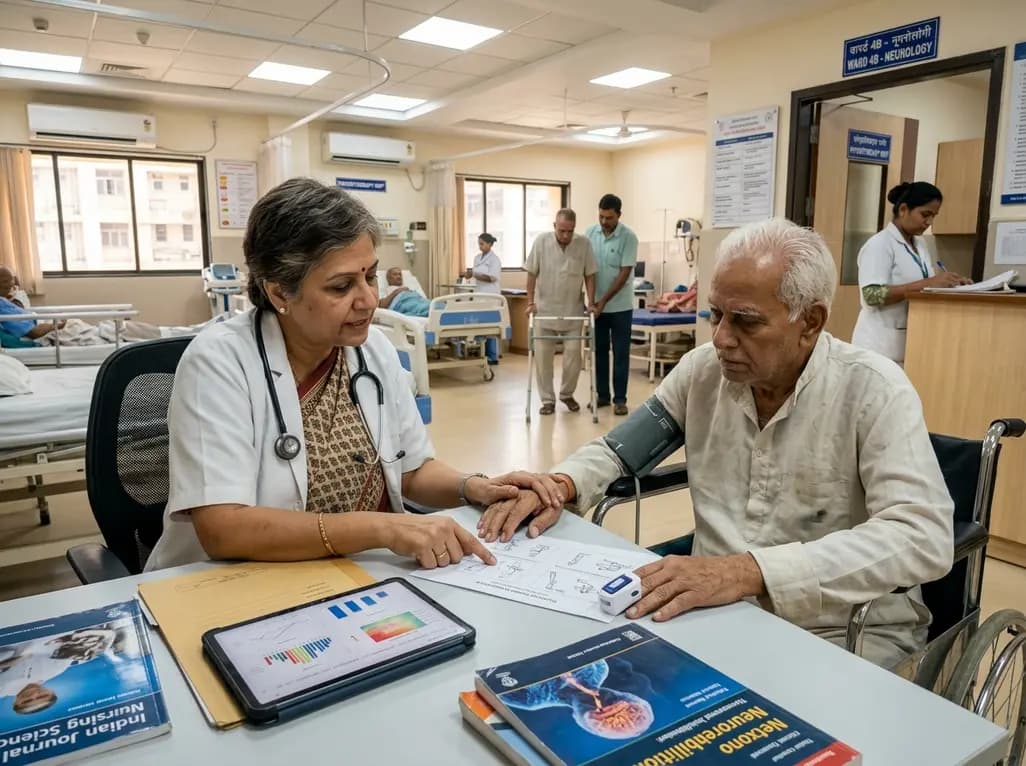
Elderly stroke survivors frequently experience significant neurocognitive decline during their recovery trajectory. Among these complications, post-stroke cognitive impairment represents a critical clinical challenge that drastically diminishes quality of life and complicates daily self-care. While clinicians understand that acute vascular injury disrupts neural networks, cumulative physiological wear and tear also plays a massive role in neurovascular vulnerability. Allostatic load reflects this cumulative multisystem dysregulation resulting from chronic stress, metabolic disturbance, and neuroendocrine imbalance. However, conventional composite scoring methods often obscure meaningful biological patterns among older patients. To address this limitation, researchers recently conducted a comprehensive investigation to categorize empirical allostatic load profiles and determine their precise relationship with cognitive outcomes in geriatric stroke populations.
Allostatic load represents the biological price the human body pays for adapting to repeated psychological and physiological stressors. Consequently, when chronic stress overwhelms homeostatic mechanisms, multi-organ systems experience steady degradation over time. In elderly individuals, this cumulative strain damages cardiovascular integrity, blunts metabolic flexibility, and induces systemic low-grade inflammation. Therefore, understanding allostatic load provides profound insight into post-stroke cognitive impairment mechanisms beyond focal ischemic damage alone.
Traditional scoring methods simply sum up individual abnormal biomarkers into a single aggregate score. Although this traditional approach offers general prognostic utility, it inherently treats distinct physiological systems as interchangeable. As a result, subtle phenotypic nuances among high-risk elderly patients remain hidden from clinicians. By adopting person-centered statistical approaches, healthcare professionals can more effectively uncover heterogeneous stress response patterns. Furthermore, distinguishing these complex physiological subtypes allows clinical teams to tailor neurological rehabilitation and nursing care pathways. Ultimately, recognizing distinct biological configurations enables earlier identification of patients who face elevated risks of long-term neurocognitive decline.
To capture multi-system biological variability, investigators utilized latent profile analysis across a cohort of older stroke survivors. This advanced modeling technique identifies unobserved homogenous subgroups within complex multivariate datasets. Specifically, the researchers evaluated thirteen continuous biomarkers spanning neuroendocrine, cardiovascular, metabolic, and inflammatory axes. These parameters included essential markers such as systolic and diastolic blood pressure, glycated hemoglobin, lipid fractions, serum albumin, and high-sensitivity C-reactive protein.
The investigative team fitted diagonal Gaussian mixture models ranging from one to five classes using rigorous statistical protocols. Moreover, they executed multiple random starts to avoid local likelihood maxima and ensure reproducible cluster solutions. Model selection strictly followed the Bayesian information criterion alongside formal convergence checks and minimum class size requirements. Through this robust analytical framework, the investigators separated the cohort into distinct, biologically meaningful latent profiles. Each profile demonstrated a unique signature of systemic dysregulation, highlighting how diverse physiological pathways interact to drive post-stroke vulnerability.
The study evaluated cognitive function using the validated Mini-Mental State Examination to identify individuals meeting criteria for cognitive impairment. Notably, the distribution of cognitive scores differed markedly across the identified allostatic load latent profiles. Patients assigned to profiles characterized by severe metabolic dysregulation and elevated systemic inflammation demonstrated significantly higher rates of cognitive decline. Conversely, individuals maintaining low biological strain profiles exhibited substantially better preserved neurocognitive performance throughout their follow-up assessments.
Furthermore, multivariable regression models confirmed that high allostatic load profiles remained robust independent predictors of cognitive impairment after adjusting for age, educational attainment, stroke severity, and baseline functional status. Consequently, these findings illustrate that cumulative physiological wear directly undermines post-stroke cerebral resilience. Chronic microvascular injury, endothelial activation, and impaired blood-brain barrier integrity likely explain this biological vulnerability. Therefore, multidimensional biomarker profiling provides superior predictive discrimination compared to isolated single-biomarker assessments or standard clinical risk factors alone.
These findings hold profound practical implications for nursing staff and multidisciplinary geriatric care teams managing post-stroke recovery. Because nurses maintain continuous direct patient contact, they occupy an ideal vantage point for implementing proactive risk stratification protocols. Incorporating latent profile insights into admission assessments helps nurses quickly identify vulnerable seniors before cognitive deficits worsen. In addition, early stratification empowers care teams to design personalized nursing interventions that directly address multi-system stress.
Targeted nursing strategies should address both physiological stability and psychosocial stress mitigation. For instance, structured sleep hygiene programs, individualized nutritional support, and graded physical mobility exercises can reduce systemic neuroendocrine activation. Moreover, nurses can coordinate closely with clinical pharmacists to optimize cardiovascular and metabolic medications, thereby systematically reducing physiological allostatic burden. By integrating holistic stress-reduction techniques alongside standard medical therapies, nursing professionals can directly support neurocognitive preservation and long-term functional recovery in older stroke survivors.
Translating allostatic load profiling into routine clinical workflows requires coordinated institutional protocols across acute and post-acute settings. Hospital systems should consider integrating automated risk-calculation algorithms within electronic health record systems. Specifically, these digital tools can dynamically analyze routine laboratory panels and vital signs upon admission to assign relevant physiological risk tiers. Consequently, physicians and nursing leaders can allocate specialized rehabilitation resources to patients demonstrating high-strain profiles.
In addition, longitudinal outpatient follow-up must monitor dynamic changes in allostatic biomarkers over extended recovery periods. Because allostatic load fluctuates with therapeutic interventions and lifestyle modifications, serial assessments can track biological recovery trajectories accurately. Furthermore, community health teams and family caregivers should receive structured education regarding the interconnected nature of metabolic health, chronic psychological stress, and cognitive maintenance. Ultimately, adopting a multi-system paradigm transforms post-stroke care from reactive symptom management into proactive, neuroprotective rehabilitation.
Allostatic load reflects cumulative multi-system wear caused by chronic stress, inflammation, and metabolic disturbances. In post-stroke recovery, elevated allostatic load impairs cerebral microcirculation, compromises blood-brain barrier integrity, and reduces neuroplasticity. Consequently, stroke survivors with high cumulative physiological strain experience significantly greater risks of long-term physical disability and severe neurocognitive decline compared to those with balanced physiological systems.
Latent profile analysis identifies distinct, homogeneous patient subgroups based on continuous multi-system biomarker patterns rather than simple additive sums. This statistical approach captures complex biological interactions across metabolic, inflammatory, and cardiovascular axes. As a result, clinicians can identify specific physiological phenotypes at elevated risk for cognitive impairment, enabling highly targeted, personalized therapeutic strategies rather than generalized one-size-fits-all management.
Effective mitigation requires a multidisciplinary combination of medical optimization, tailored nutrition, and structured lifestyle modifications. Clinicians must tightly control blood pressure, blood glucose, and lipid levels while managing systemic inflammation. Concurrently, nursing interventions emphasizing restorative sleep hygiene, supervised physical rehabilitation, and psychosocial stress-reduction techniques significantly decrease neuroendocrine strain, thereby fostering an optimal environment for cognitive recovery.
Disclaimer: This content is for informational and educational purposes only and does not constitute medical advice, diagnosis, or treatment. Healthcare professionals must exercise independent clinical judgment. Refer to the latest local and national guidelines for clinical practice.
References
Xue C et al. Latent Profiles of Allostatic Load and Their Association With Post-stroke Cognitive Impairment in Elderly Patients: A Nursing Risk Stratification Study. Biol Res Nurs. 2026 Aug 17. doi: 10.1177/10998004261478508. PMID: 42608353.
Zhu J, et al. Association of allostatic load index with cognitive impairment in high-risk stroke populations. BMC Geriatr. 2026;26(1):154.
Palix C, et al. Allostatic load, a measure of cumulative physiological stress, impairs brain structure in older adults. Neurobiol Stress. 2025;35:100712.

Read summarized clinical updates, watch expert medical content, and earn CME certifications right from your smartphone.
Open your smartphone camera to scan and install.





A new nursing study evaluates allostatic load latent profiles using 13 continuous biomarkers in elderly stroke survivors, identifying distinct physiological stress patterns strongly associated with post-stroke cognitive impairment risk to refine targeted care.
last month

A nationwide English cohort study shows that interstitial lung diseases are no longer rare, with incidence jumping 30% and 200,000 active cases. This analysis highlights clinical implications for diagnosis, multi-disciplinary management, and global health priorities across respiratory and internal medicine.
Today

A nationwide South Korean study shows underreporting of smoking among women dropped from 57.4% to 36.4% between 2008 and 2021. However, over one-third of female smokers still conceal their habit, highlighting the critical role of cotinine verification in clinical risk assessment.
Today

PepsiCo and Monster Beverage have challenged the FSSAI ban on the energy drink label in Indian courts. While companies highlight supply disruptions, regulatory actions spotlight severe cardiovascular and metabolic risks associated with excessive caffeine, sugar, and taurine consumption, especially in adolescents.
Today

A new study evaluates the rheological stability of decellularized peripheral nerve matrix hydrogels under varied storage conditions. Findings show -80°C storage and freeze-drying preserve gelation kinetics and mechanical stiffness, offering key insights for shipping and translational clinical applications.
Today

A qualitative meta-synthesis highlights the complex interplay between gender dysphoria, minority stress, and eating disorders in transgender and gender-diverse individuals. Clinicians must recognize these distinct drivers to offer supportive, gender-affirming, and interdisciplinary eating disorder care.
Today
