.webp&w=384&q=75)

Loading, please wait...
Loading, please wait...

Patients presenting with functional motor disorders often face complex diagnostic and therapeutic journeys. Functional motor disorders represent common neurological conditions characterized by abnormal movements that demonstrate inconsistency and incongruity with known organic neurological lesions. Historically, clinicians classified these presentations as conversion disorders, attributing the symptoms to repressed psychological trauma. However, modern neuropsychiatry recognizes functional neurological disorders as multicausal conditions involving intricate neurobiological, cognitive, and affective mechanisms. Among these affective variables, alexithymia has emerged as a particularly influential trait. Alexithymia involves a profound difficulty in identifying, describing, and regulating emotional experiences. Consequently, affected individuals frequently misinterpret emotional arousal as somatic dysfunction. When patients cannot verbalize psychic distress, the brain may translate emotional tension into physical symptoms. Despite increasing awareness, systematic investigations into alexithymia across large clinical cohorts have remained scarce. A multicenter team evaluated this phenomenon through a rigorous cross-sectional analysis of the Italian Registry of Functional Motor Disorders. Their findings provide robust evidence regarding how emotional processing deficits exacerbate psychiatric morbidity and physical disability. Therefore, modern clinicians must re-evaluate how they assess emotional literacy in patients presenting with unexplained motor phenomena.
The study investigators evaluated a nationwide cohort drawn from the Italian Registry of Functional Motor Disorders. Between November 2011 and January 2023, participating academic medical centers enrolled eligible adult patients diagnosed with clinically definite functional motor phenotypes according to established Gupta and Lang criteria. The research team captured detailed sociodemographic profiles, clinical motor features, disease duration, and relevant medical history. Furthermore, participants completed comprehensive psychological and neurological evaluation batteries using standardized, validated psychometric instruments. The primary predictor variable was the 20-item Toronto Alexithymia Scale. This well-established scale assesses three core domains: difficulty identifying feelings, difficulty describing feelings, and externally oriented thinking. In addition, investigators administered validated rating scales to quantify depression, state and trait anxiety, somatic symptom burden, pain intensity, motor disability, and overall quality of life. The authors constructed multivariable linear regression models to analyze the data. Crucially, their statistical framework adjusted for key confounding factors, including age, biological sex, educational level, and disease duration. The statisticians also applied stringent false discovery rate corrections to prevent spurious associations from multiple statistical testing.
The statistical analysis encompassed a final cohort of 483 thoroughly evaluated individuals. Remarkably, more than half of the study participants displayed clinically significant emotional processing deficits. Specifically, 20.7% of the cohort met criteria for possible alexithymia, while 31.5% exhibited definite alexithymia. Consequently, 52.2% of the entire cohort experienced impaired emotional awareness. Furthermore, regression analyses revealed that higher alexithymia scores correlated strongly with increased severity across multiple clinical domains. Patients with elevated alexithymia showed substantially greater depressive morbidity and significantly higher anxiety scores. Additionally, these individuals reported more severe somatic symptom burdens and widespread bodily pain. Importantly, alexithymia was not merely an epiphenomenon of subjective mood changes. The data demonstrated that higher alexithymia scores directly predicted greater clinician-rated motor disability and worse physical functional impairment. Similarly, patients with pronounced alexithymia experienced significantly degraded health-related quality of life. Thus, alexithymic traits appear to amplify both subjective suffering and objective motor impairment in individuals living with functional movement phenotypes.
When the investigators analyzed the subscales of the Toronto Alexithymia Scale, a striking pattern emerged. The subscale evaluating difficulty identifying feelings accounted for the vast majority of the observed clinical associations. Specifically, difficulty identifying feelings strongly correlated with depression severity, generalized anxiety, somatization, pain severity, and diminished quality of life. Conversely, difficulty describing feelings and externally oriented thinking exhibited much weaker or non-significant links after correcting for multiple comparisons. This critical nuance provides profound insights into the underlying pathophysiological mechanisms. Patients who struggle to identify their inner emotional states cannot differentiate autonomic arousal from physical illness. For instance, tachycardia, muscle tension, or visceral sensations caused by anxiety may be misinterpreted as primary neurological deficits. This cognitive misattribution reinforces somatic hyperfocus and aberrant motor control loops. Moreover, patients unable to label their feelings cannot deploy effective cognitive emotion-regulation strategies. As a result, unmodulated emotional distress channels into motor circuitry, exacerbating tremors, dystonia, gait abnormalities, or weakness. Addressing this specific deficit represents a vital clinical priority.
These findings carry immediate, practical implications for neurological and psychiatric practice. Clinicians frequently encounter diagnostic dilemmas and therapeutic resistance when managing functional neurological disorders. However, screening for alexithymia upon initial presentation can fundamentally transform the care trajectory. Rather than dismissing symptoms as psychogenic, clinicians should validate the patient's physical disability while introducing the concept of altered emotional processing. Neurologists should collaborate closely with psychiatrists, clinical psychologists, and physical therapists from the outset. Furthermore, traditional psychotherapy that relies heavily on verbalizing emotional states may fail in patients with severe alexithymia. Instead, therapists should implement structured, emotionally focused interventions. Approaches such as mindfulness-based therapy, interoceptive exposure, and mentalization-based therapy can teach patients to recognize somatic signs of emotional arousal safely. Concurrently, specialized neurological physiotherapy helps retrain normal movement patterns through distraction and motor reprogramming. Therefore, integrating emotional recognition training with targeted physical rehabilitation offers the most promising strategy for durable recovery in this challenging population.
Alexithymia refers to a psychological construct characterized by substantial difficulty in identifying, recognizing, and describing subjective emotional feelings. In addition, affected individuals struggle to differentiate bodily sensations from emotional arousal. Consequently, patients often externalize affective distress as physical complaints, which frequently complicates diagnostic evaluation and psychiatric intervention in clinical practice.
Clinicians assess alexithymia primarily with the 20-item Toronto Alexithymia Scale. This validated self-report instrument measures three specific domains: difficulty identifying feelings, difficulty describing feelings, and externally oriented thinking. Moreover, high scores alert healthcare providers to covert psychological vulnerabilities that can exacerbate functional neurological symptoms.
Medical teams should avoid purely confrontational interpretations. Instead, clinicians must offer transparent communication, validating physical symptoms while addressing emotional processing deficits. Integrating specialized physiotherapy with cognitive behavioral psychotherapy helps patients recognize affective triggers. Furthermore, this collaborative approach improves long-term motor outcomes and reduces healthcare utilization.
Disclaimer: This content is for informational and educational purposes only... Refer to the latest local and national guidelines for clinical practice.
References

Read summarized clinical updates, watch expert medical content, and earn CME certifications right from your smartphone.
Open your smartphone camera to scan and install.





A cross-sectional study of 483 patients from the Italian Registry reveals that over half of individuals with functional motor disorders exhibit possible or definite alexithymia. Difficulty identifying feelings strongly correlates with depression, anxiety, physical disability, and impaired health-related quality of life.
Today
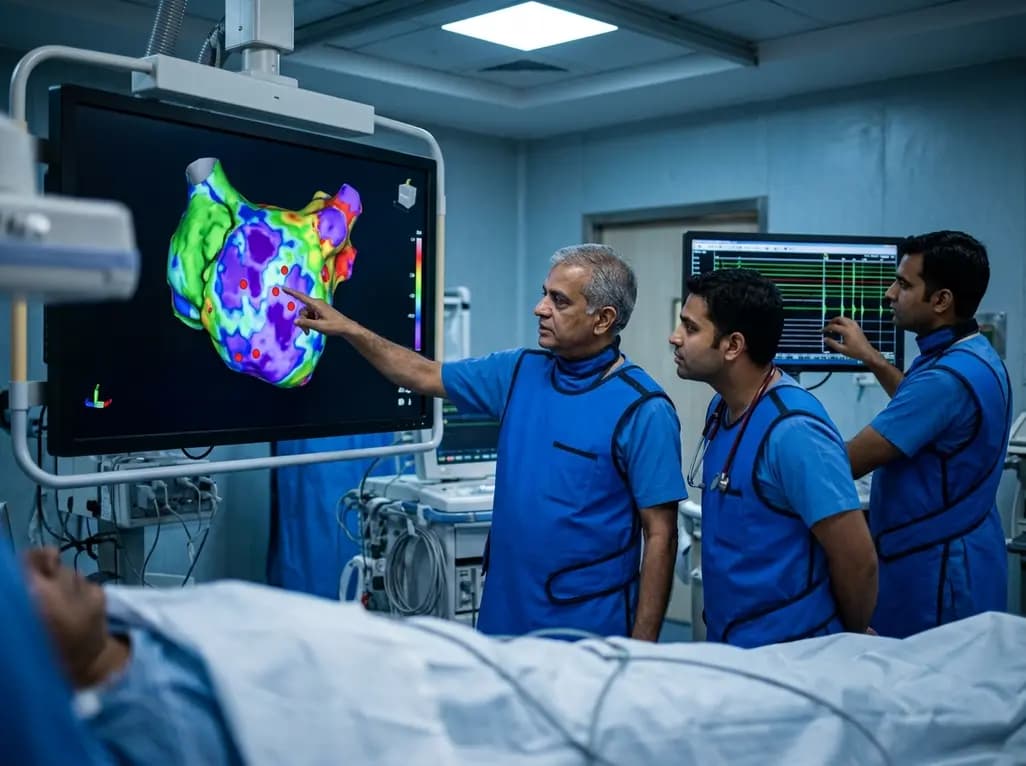
A study of 1,428 AF ablation patients reveals that over 60% of left atrial non-PV triggers arise within low-voltage areas, with anterior and roof triggers colocalizing entirely within fibrotic substrate. Identifying and ablating these sites is critical for long-term arrhythmia freedom.
Today

A comprehensive meta-analysis of over 278,000 women demonstrates that maternal atopic dermatitis significantly increases risks of premature rupture of membranes and low birth weight. Discover essential clinical insights on disease mechanisms, serial antenatal growth monitoring, and safe therapeutic interventions.
Today

A pioneering study highlights the first United States experience using the FARAPOINT focal pulsed-field ablation catheter for refractory ventricular tachycardia. The catheter achieved complete acute non-inducibility across tested patients without procedural complications, marking a milestone in ventricular ablation.
Today

A biomechanical study shows that augmenting thin fascia lata grafts with a reinforced polyester patch doubles ultimate tensile strength and stiffness, matching the performance of thick grafts for superior capsule reconstruction while reducing donor-site morbidity.
Today

A cross-sectional study reveals that elevated METS-IR is independently associated with higher myopia odds in adolescents, showing biological synergy with obesity and highlighting the need for metabolic screening in pediatric eye care.
Today
